The main points
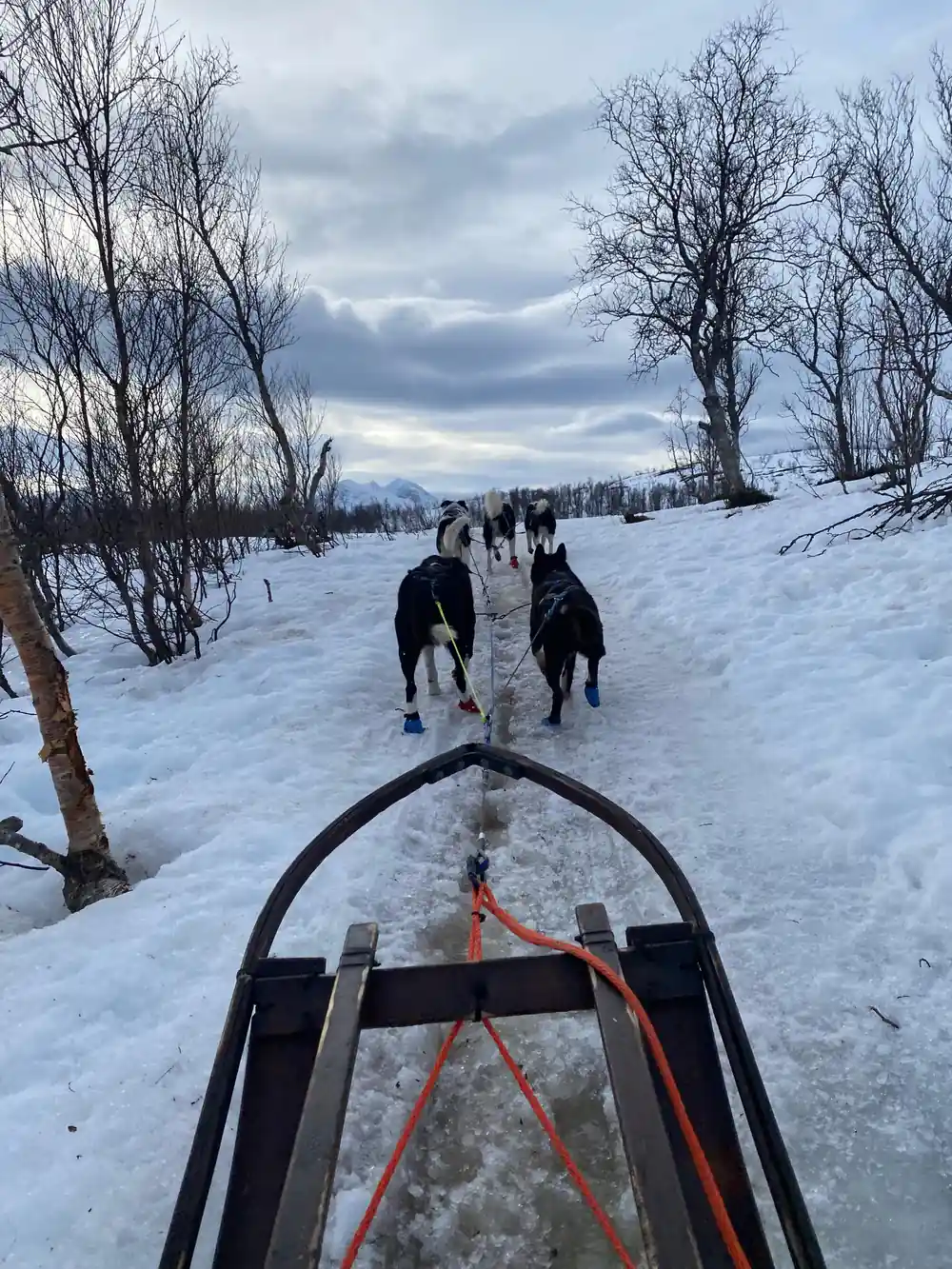
- The sled itself is a light frame on runners, with a basket or seat for a passenger and a footboard where the musher stands.
- A central line runs forward from the sled, and each dog's harness is clipped to it by a tug line that spreads the pull evenly.
- Lead dogs run at the front and set the pace, swing dogs turn the team, and the wheel dogs nearest the sled take the heaviest load.
- A snow hook bites into the snow as a parking brake, while the drag mat and the musher's weight on the runners shape the turns.
- On a self-drive tour you stand on the runners and work the brake, with an instructor beside you and the huskies doing the hard part.
- Top choice Self-Drive Husky Sledding from US$351 Duration4 hours[1]Rating4.91 from 4,408 reviews[1]GuideInstructor: English[1]CancellationCancel up to 24 hours in advance[1] Check availability
- Husky Sled Self-Drive from US$355 Duration4 hours[2]Rating4.86 from 2,050 reviews[2]GuideLive tour guide: English[2]CancellationCancel up to 24 hours in advance[2] See this tour
- Fun and Easy Dog Sledding from US$305 Duration4.5 hours[3]Rating4.88 from 2,077 reviews[3]GuideLive tour guide: English[3]CancellationCancel up to 24 hours in advance[3] See this tour
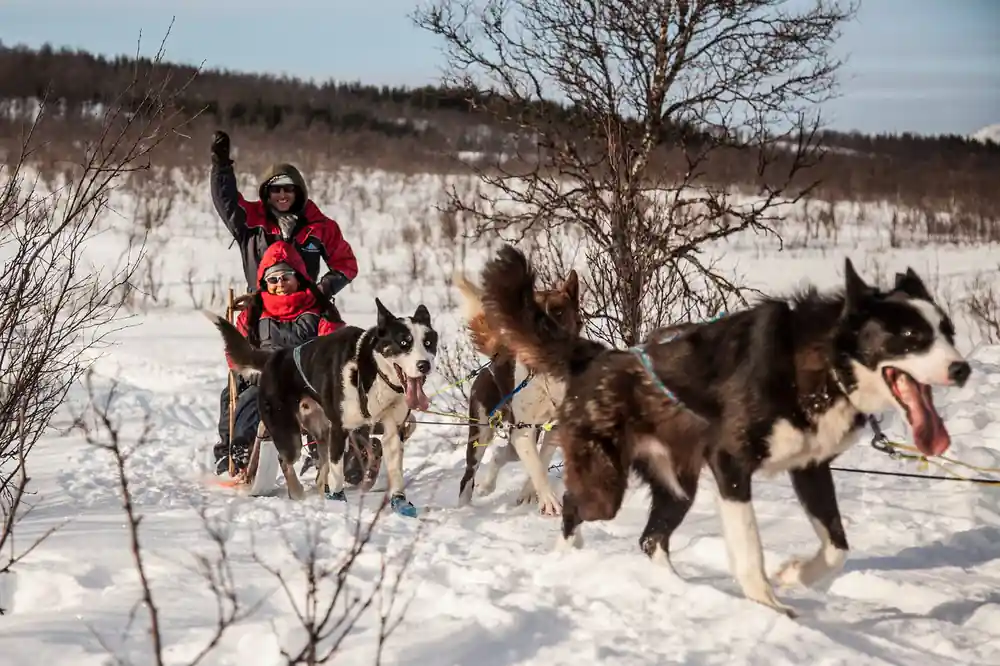
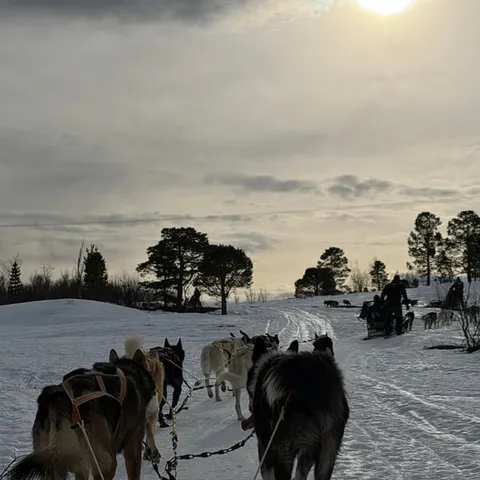
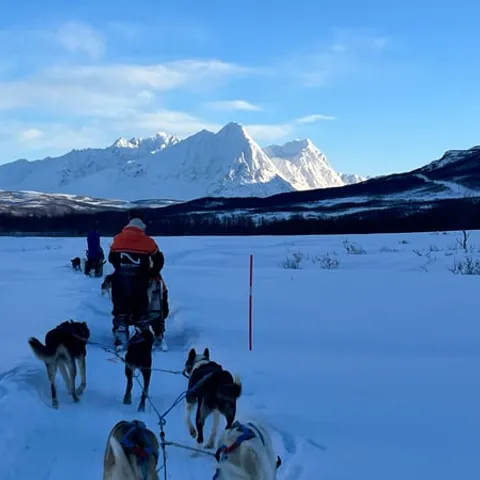
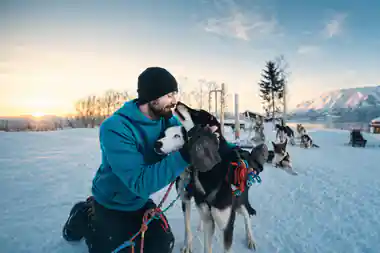
For over three decades and through two generations, our family has raised and raced Alaskan Huskies bred for endurance, resilience, and heart.
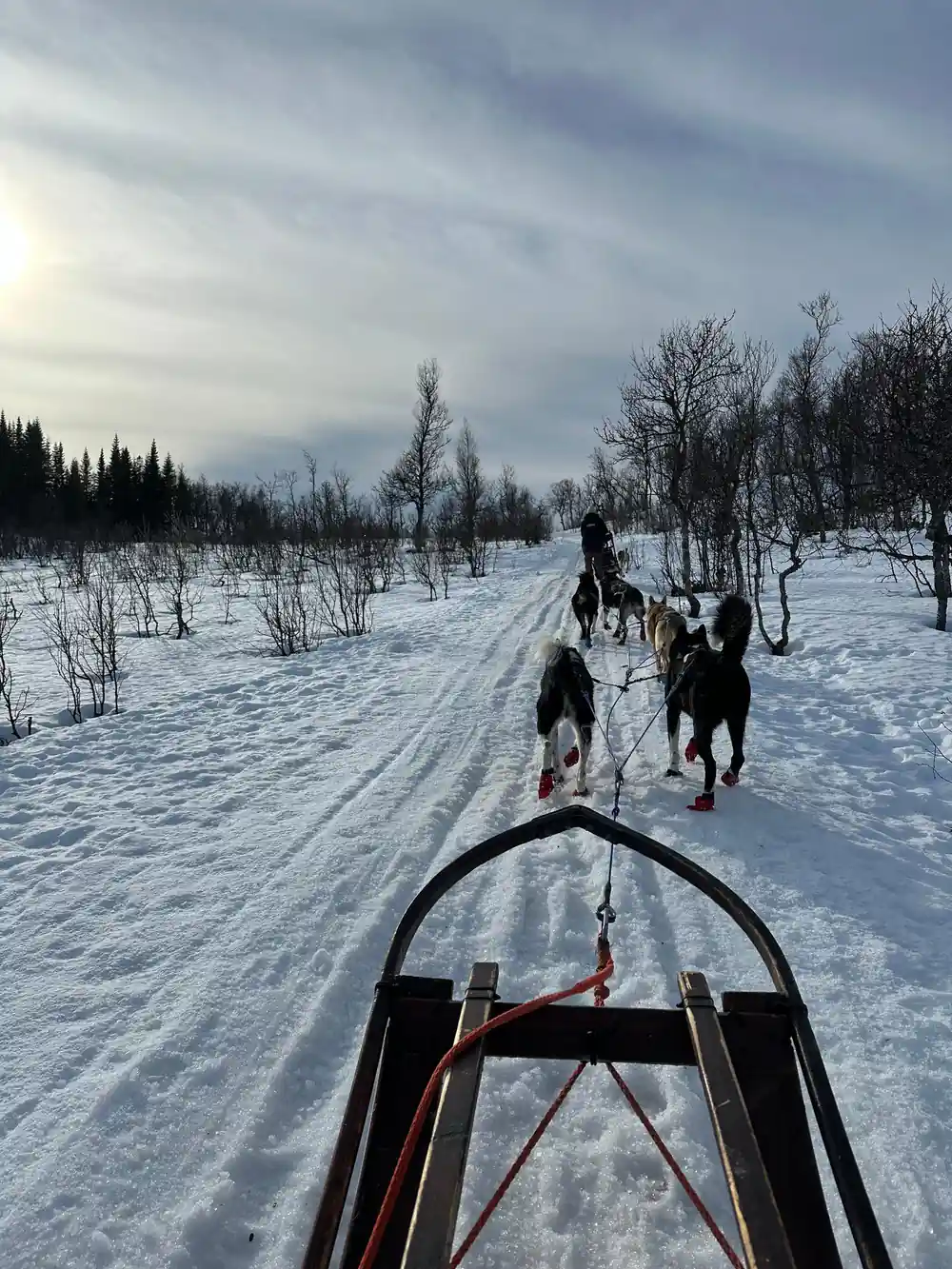
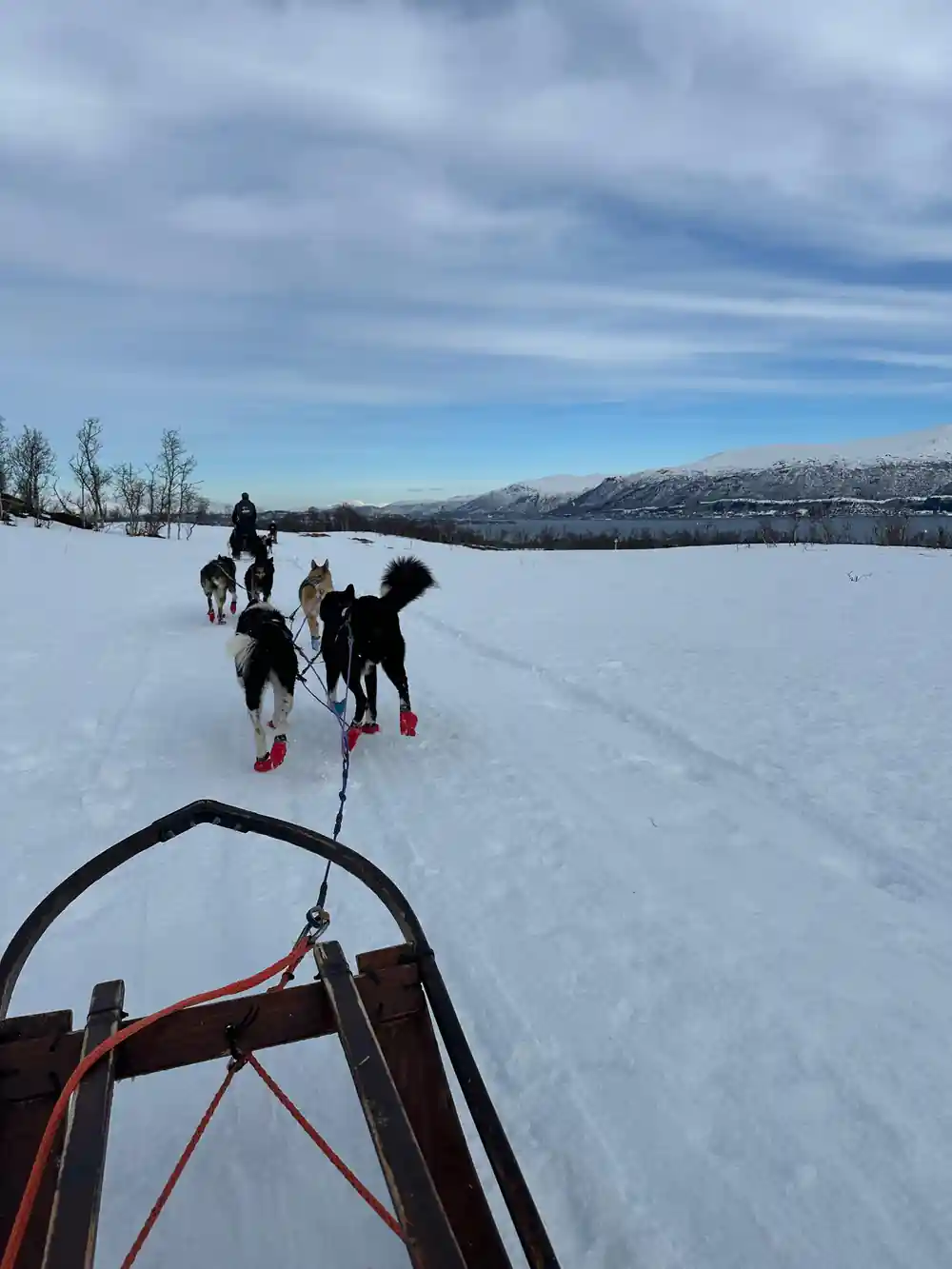
Driving the team yourself on a Kvaløya trail
Check before booking
The Anatomy of a Modern Dog Sled
A dog sled is a study in subtraction. Strip away the romance and you are left with a frame, runners underneath, a footboard, a handlebar to grip, and a line of dogs pulling from the front. Touring sleds usually carry a shallow basket or a padded seat for a passenger, which doubles as somewhere to strap a bag. Nothing on a sled is there for show. Each part has a job, and the whole thing is built light. Extra kilos are weight the huskies have to drag through snow.
Materials vary with the maker. Some sleds are laminated wood, warm to the touch and easy to patch on a trail with a spare spindle and a length of line. Others use aluminium or tough plastic for the runners and the basket, which shrugs off the knocks of a busy hire season. Steering comes down to your feet and your weight. The runners are edged with steel or plastic strips, and pressing one into the snow is how a sled turns.
How Runners Glide Across Snow and Ice
The long boards at the bottom are the runners, and everything else sits on them. Underneath, touring sleds often carry a replaceable plastic skin that slides over hard-packed snow and takes the wear instead of the wood. Cold, dry snow gives a fast, squeaky glide; wet spring snow sucks at the runners and slows a team right down. Guides sometimes rub on wax or a liquid glide product before a run, much like ski wax.
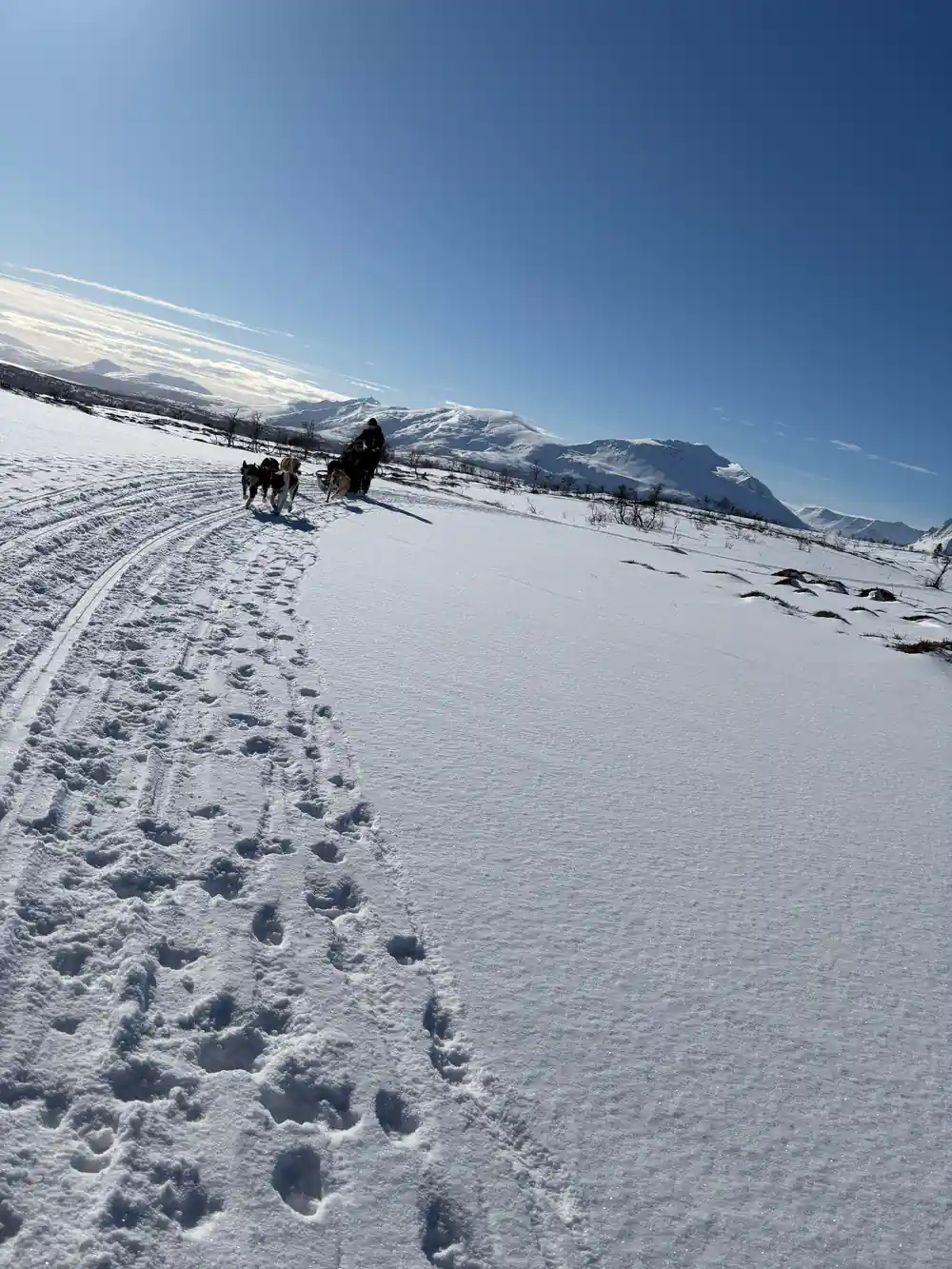
Runners are narrow, so a sled follows a track rather than floating on top of loose snow. On a groomed trail it tracks straight and quick. In deep powder the dogs break the trail and you follow in the furrow they cut, with snow spraying up from their paws. Take a corner too fast and the sled leans and skids, so a musher shifts weight onto the inside runner to hold the line through the bend.
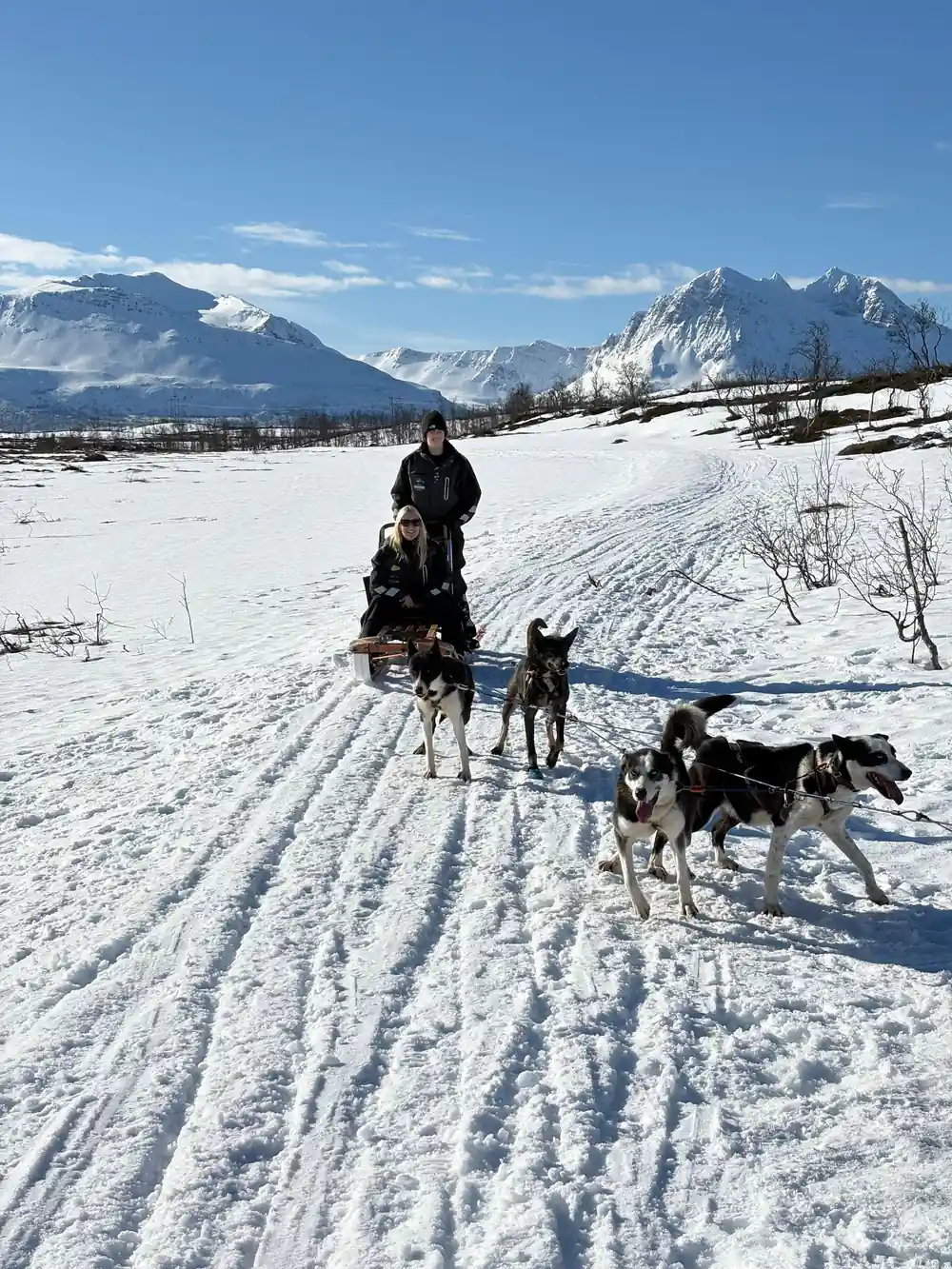
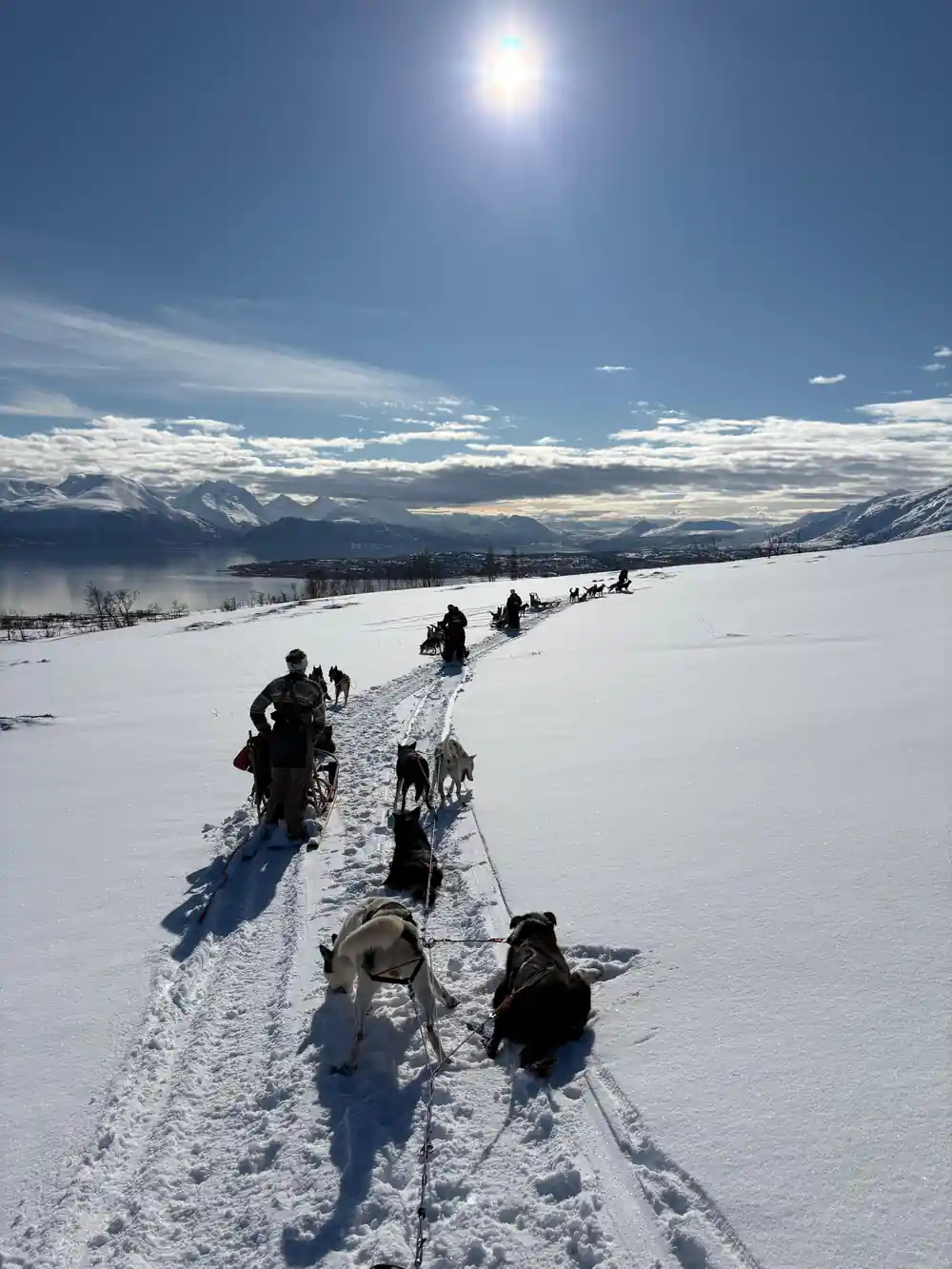
A husky team leans into the harness and the gangline goes taut as the sled pulls away from the kennel.
The Gangline and Harness System
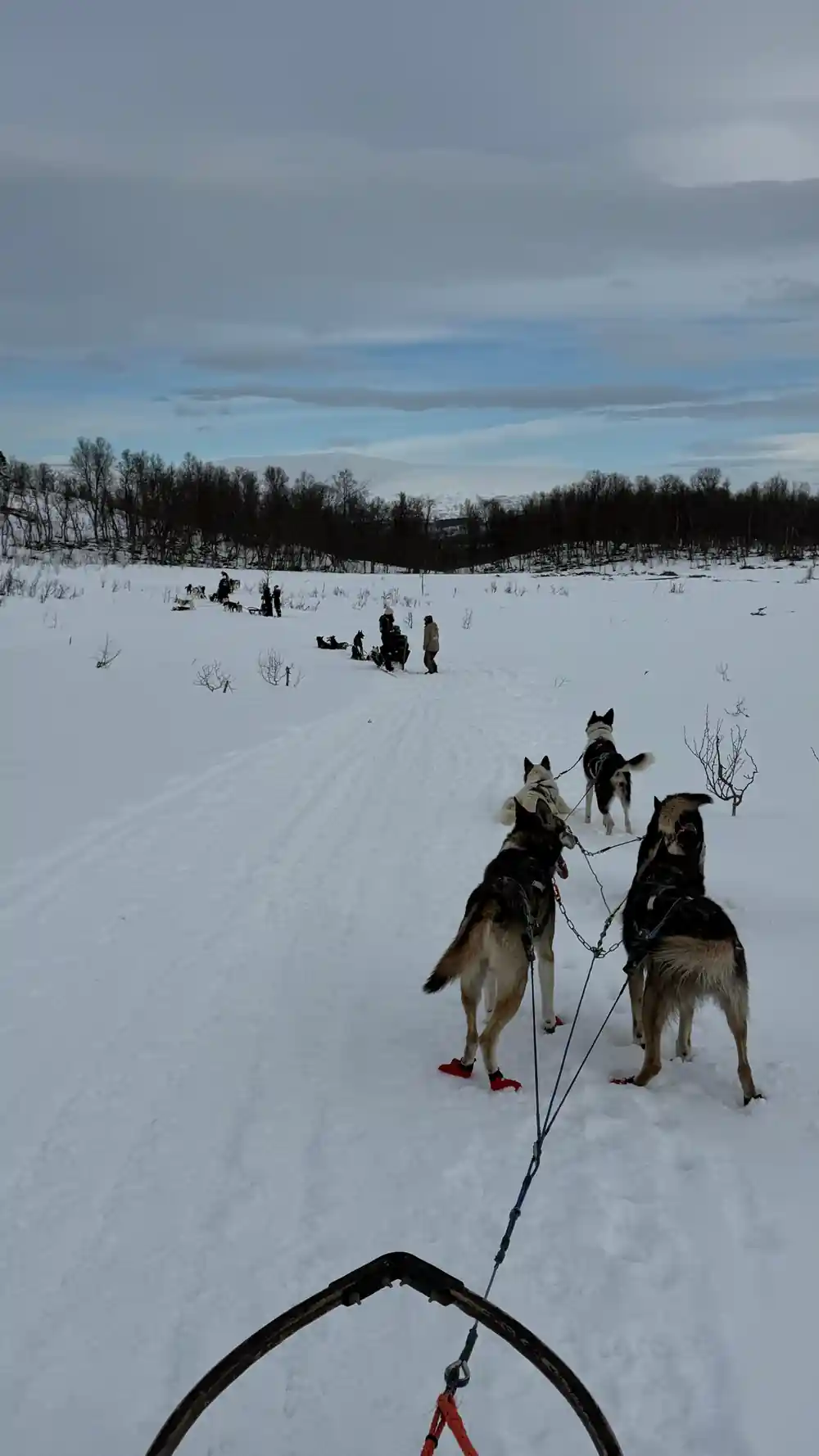
The gangline is the spine of the team. It is a strong central rope running forward from the sled, usually with a shock-absorbing section near the front to soak up the jolt when the dogs lunge. Dogs are not tied to the gangline directly. Each wears a padded harness, and a shorter tug line runs back from the harness to the gangline with a snap hook. Neck lines link neighbouring dogs so they stay together and pull as one unit.
A working harness sits low across the chest and shoulders, spreading the pull over the strongest part of the dog rather than the throat. Fit matters more than fashion. Too loose and the harness rubs; too tight and the dog cannot breathe or stride freely. At a husky kennel you are usually shown how to hold a harness open, how to guide a front leg through, and how to check the fit before the dog is clipped in.
Dog Team Positions: Lead, Swing, and Wheel
Dogs are not harnessed at random. The dogs at the very front are the lead dogs, and they read the trail, hold a line through drifting snow and answer the musher's calls for left and right. Behind them come the swing dogs, whose job is to bring the rest of the team around a corner after the leaders have turned. Further back are the middle dogs, the engine room of the string, and last of all the wheel dogs, closest to the sled, who take the strain when it starts moving.
Breeding and experience shape that line-up. At a husky lodge in the region, a family has raised and raced Alaskan Huskies bred for endurance, resilience, and heart for over three decades and through two generations.[7] Racing lines like these are tested in events such as Finnmarksløpet, the longest dog-sled race in Europe.[8] Tour operators usually mix steady older dogs with younger ones, and on a short run with guests, temperament matters as much as speed.
from US$351
The self-drive husky tour is rated 4.91 from 4,408 reviews, runs 4 hours and offers free cancellation up to 24 hours before.[1]
The Snow Hook: Holding a Team in Place
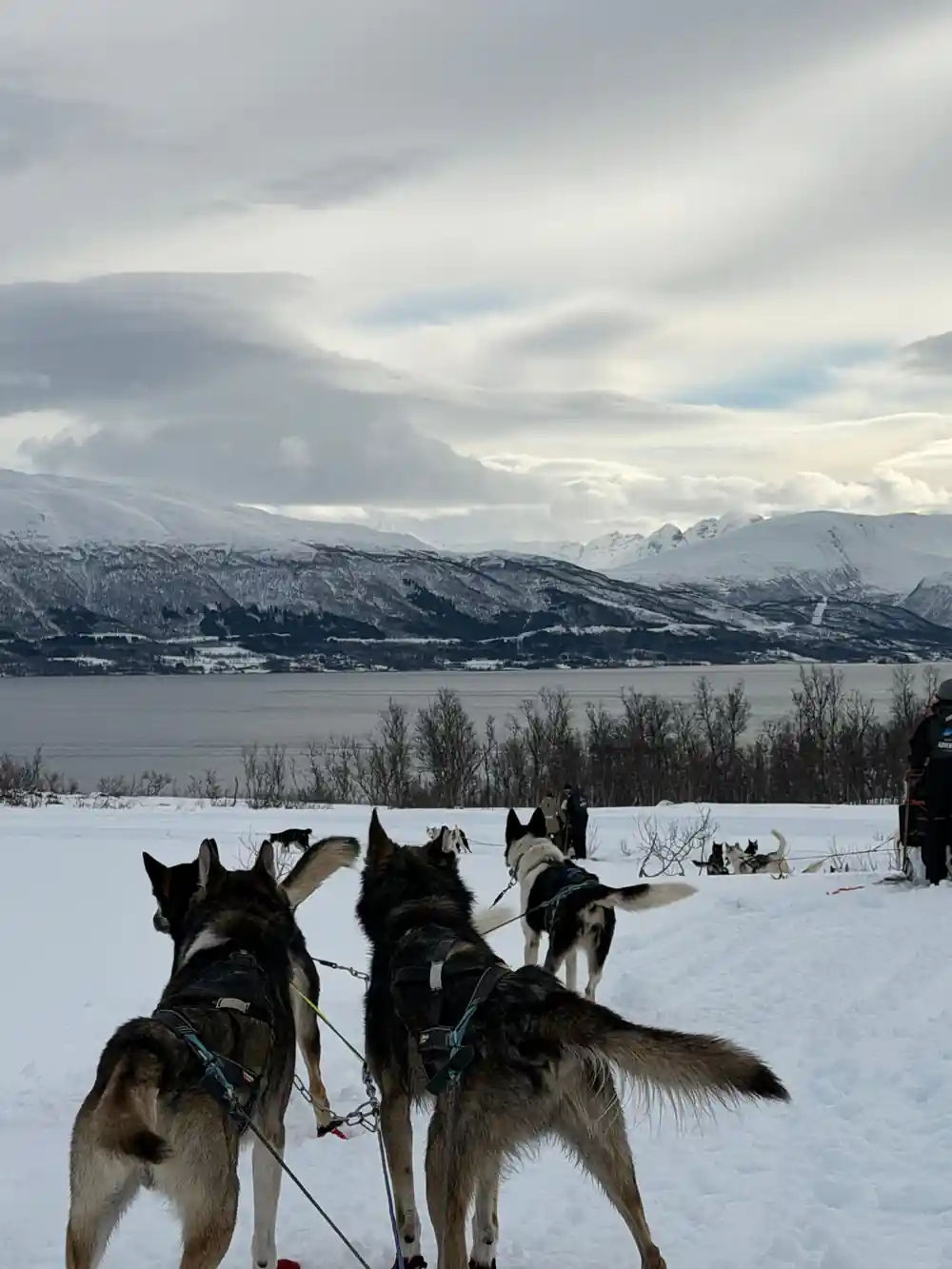
A husky team at rest is not really at rest. It whines, jumps against the gangline, and would happily set off without you. That is what the snow hook is for. It is a stout metal hook on a line, and the musher stamps it deep into the snow beside the sled. A hook that skitters across hard ice will not hold, so guides look for a soft drift or a patch of loose snow to bury it in.
The snow hook is a parking brake, not a running brake. You set it when you stop to swap a dog, adjust a harness or take a photograph, and you keep a hand on the sled and an eye on the team the whole time. Some mushers wrap the hook line around a tree or a post for extra security. If the hook pops out the sled moves, so it is the first thing a guide points at during the briefing.
Brake Systems and Steering Control
For slowing down while moving, sleds carry a brake. The common touring version is a drag mat or claw brake: a rubber mat or a set of metal claws on a hinged frame between the runners. Standing on the frame presses it into the snow, and lifting your weight lets it ride clear. Many sleds also have a lighter secondary brake for fine control on descents, and guides show you which is which before you set off.
Steering is done with the runners and your body. The musher stands on the footboard, holds the handlebar, and shifts weight from one runner to the other to lean into a turn. On firm snow a sled carves the corner; on soft snow it skids. Commands are short and consistent, and lead dogs learn them quickly. The rest of the team follows the leaders, so much of the musher's work is balance, timing and a firm hand on the brake before a downhill.
How Sled Design Has Evolved Across Centuries
Sled design has always followed the snow. Northern peoples built freight sleds from driftwood, birch and bone, lashed with rawhide and sinew so the joints stayed flexible in deep cold, and every part was simple enough to be repaired on the trail. Racing and long polar expeditions pushed the same shapes further, with lighter frames, better harnesses and lines that spread the pull evenly across a team. The tourist sled you stand on is a working descendant of those designs: light, repairable, and steered by your feet.
You can see that design in action around Tromsø. The self-drive husky tour leaves the city by bus or coach and runs on Kvaløya, an island that begins less than 5 km from central Tromsø.[9] Longer options reach further into the region, and the Tromsø Ice Domes sit 95 km from Tromsø, deep in Tamok Valley.[10] For a sense of the terrain before you go, ride the Fjellheisen cable car: Storsteinen, its upper station, is 421 meters above sea level, with the trails and the sound laid out below.[11]
From-prices for husky tours from Tromsø
Each bar is the from-price shown on one GetYourGuide listing.[1][2][3][12][13]
What a husky tour costs
From-prices in US dollars on GetYourGuide listings.[1][2][3][12]
When to plan a Tromsø sledding trip
How a team is lined up
Harness the dogs
Guides fit each dog with a padded harness, checking that the chest strap sits clear of the throat and that nothing rubs behind the front legs.
Clip onto the gangline
Dogs are clipped along the central line in a set order, working forward from the wheel position nearest the sled to the leaders at the front.
Set the lead pair
The most experienced dogs go first. They read the trail, hold the line through soft snow and answer the musher's calls for left and right.
Stand on the runners
The musher stands on the footboard, grips the handlebar, and checks the brake and the snow hook before the team is released.
Run the trail
Commands, weight shifts and a light touch on the brake keep the sled on track until the team slows and the snow hook goes back into the snow.
See the sled in person on a self-drive husky tour from Tromsø
from US$351Reserve now & pay later