The main points
- Tromso was a supply harbour for ice-bound expeditions, and sled dogs were bought, trained and shipped north from here, often never to come back down the gangplank.
- The dog sledding season in Northern Norway typically runs from December to March, depending on snow conditions.[16]
- The self-drive husky dog sledding adventure from Tromso takes 4 hours, starts from US$351 and is rated 4.91 from 4,408 reviews.[17]
- Working kennels keep Alaskan Huskies bred for endurance, resilience, and heart, a line one lodge family has kept for over three decades and two generations.[18]
- Polar Night in Tromso runs from November 27th to January 15th, and the Northern Lights season runs from late August to early April.[19][20]
- Top choice Self-Drive Husky Adventure from US$351 Duration4 hours[17]Rating4.91 from 4,408 reviews[17]GuideInstructor: English[17]CancellationFree cancellation, 24 hours ahead[17] Check availability
- Husky Self-Drive with Lunch from US$355 Duration4 hours[21]Rating4.86 from 2,050 reviews[21]GuideLive tour guide: English[21]CancellationFree cancellation, 24 hours ahead[21] See this tour
- Fun and Easy Dog Sledding from US$305 Duration4.5 hours[22]Rating4.88 from 2,077 reviews[22]GuideLive tour guide: English[22]CancellationFree cancellation, 24 hours ahead[22] See this tour
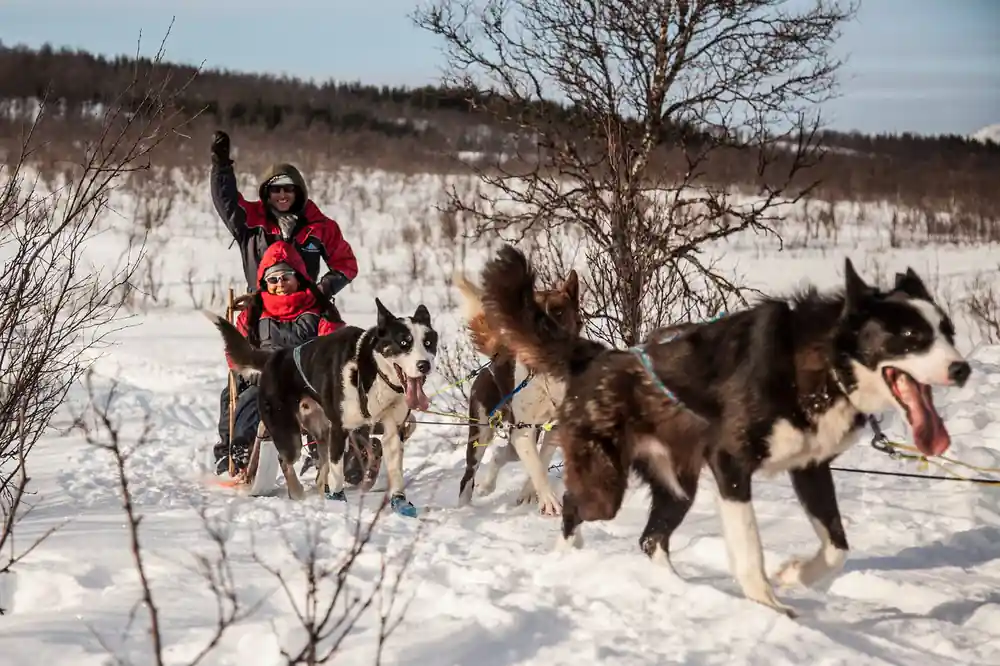
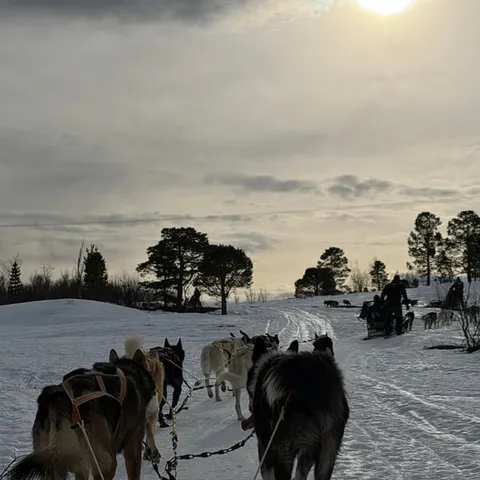
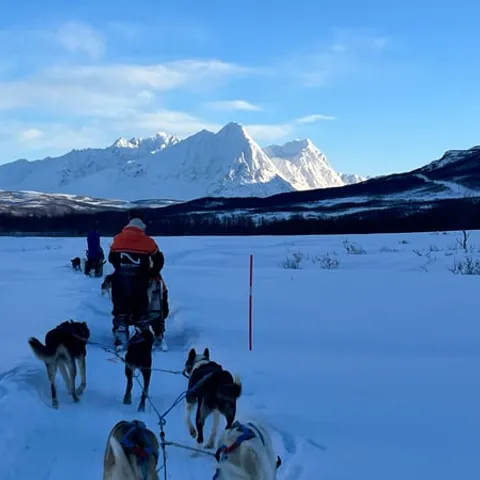
Just 95 km from Tromsø, hidden deep in the heart of Tamok Valley, lies a snow-covered wonderland waiting to be explored.
Worth it for the working dogs
Wear and carry
- Thermal base layers, wool socks and a windproof shell over the top
- Sunglasses for glare off the snow and a head torch for dark afternoons
- Warm gloves you can grip a sled handle with, plus a spare pair
- A balaclava or buff, because wind on open snow bites
Check before booking
- Kennels usually sit outside the city, and tours normally include the transfer
- Allow a full morning or afternoon rather than squeezing it between other plans
- Small group departures fill first, so lock in your date early
- Listing prices are from-prices in US dollars, not fixed totals
Why Tromso became a sled dog town
Tromso sits on an island in the middle of a fjord system, with open sea to the west and mountains behind it. Deep water and a sheltered sound gave ships somewhere to lie. That geography made the town a natural last stop before the ice. Ships could load here, crews could rest, and supplies that would never be found further north could be bought on the quay. Sled dogs were part of that trade. They arrived by boat, worked the snow around the city, and left again with the expeditions that needed them. For a small wooden town with one good harbour, that was an outsized role to play.
Walk the harbour today and you will not see dog crates stacked on the quay, but the shape of the place has not changed. Kvaloya, the island on the western side of the city, starts where the Sandnessund Bridge ends, less than 5 km from central Tromso.[23] That short hop puts snowy open country within reach of a hotel breakfast. A city break in Tromso can turn into a morning on the runners without a long drive or a domestic flight. The kennels out there keep the working side of the town visible, whether or not any expedition ship is in port.
The dogs that left with polar expedition dog teams
The polar expeditions of the heroic age did not travel light. They carried sledges, tents, food for months and dogs, because a dog team could keep working in deep cold without fuel or spare parts. Tromso was one of the harbours where such teams were assembled, fed and tested before a ship turned north. The vessels that left here were workplaces rather than cruise ships, and the dogs were crew. Some of the animals that walked up a gangplank here never walked back down it. They finished their working lives on sea ice, and the ice kept them.
The phrase polar expedition dog teams conjures a tidy picture: huskies fanned out on a white plain, breath steaming in the cold. The reality was logistics. Animals had to be bought, shipped, fed through a long voyage and matched to a sledge and a driver. Dogs were sold, borrowed and lent between parties, and northern traders stood in the middle of that chain. It is the reason Tromso's dog history is bigger than its own trail network. Many of the animals that ran here were simply passing through on their way somewhere harder.
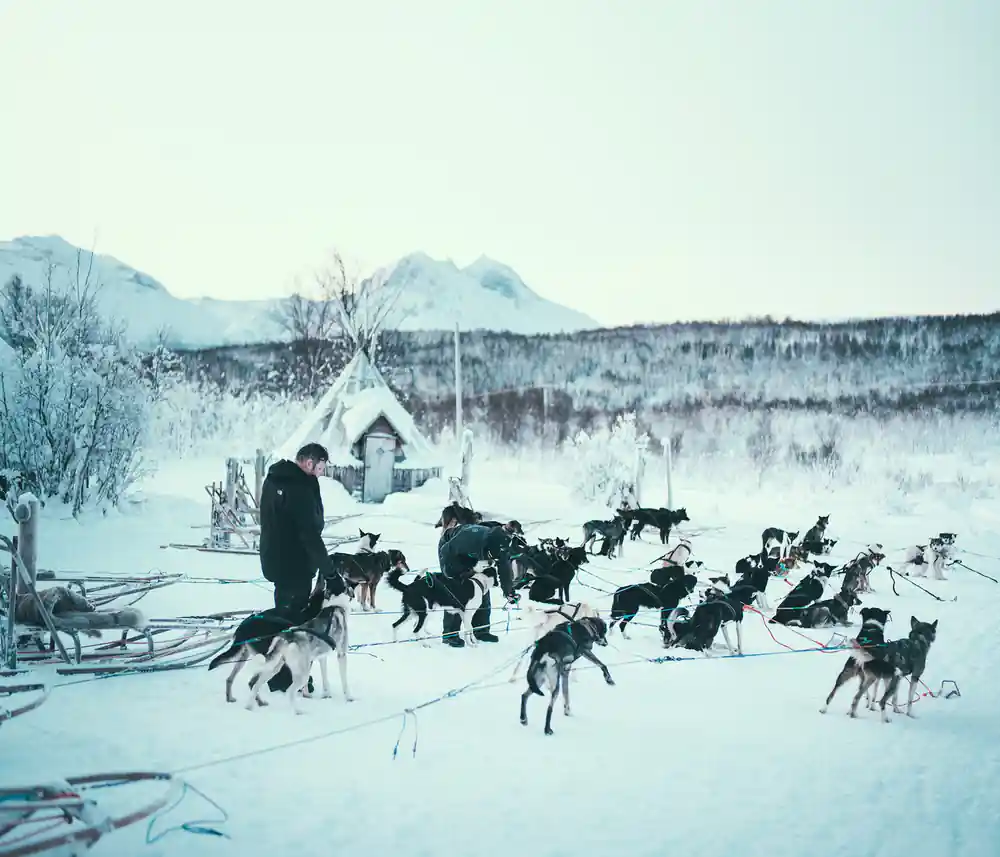
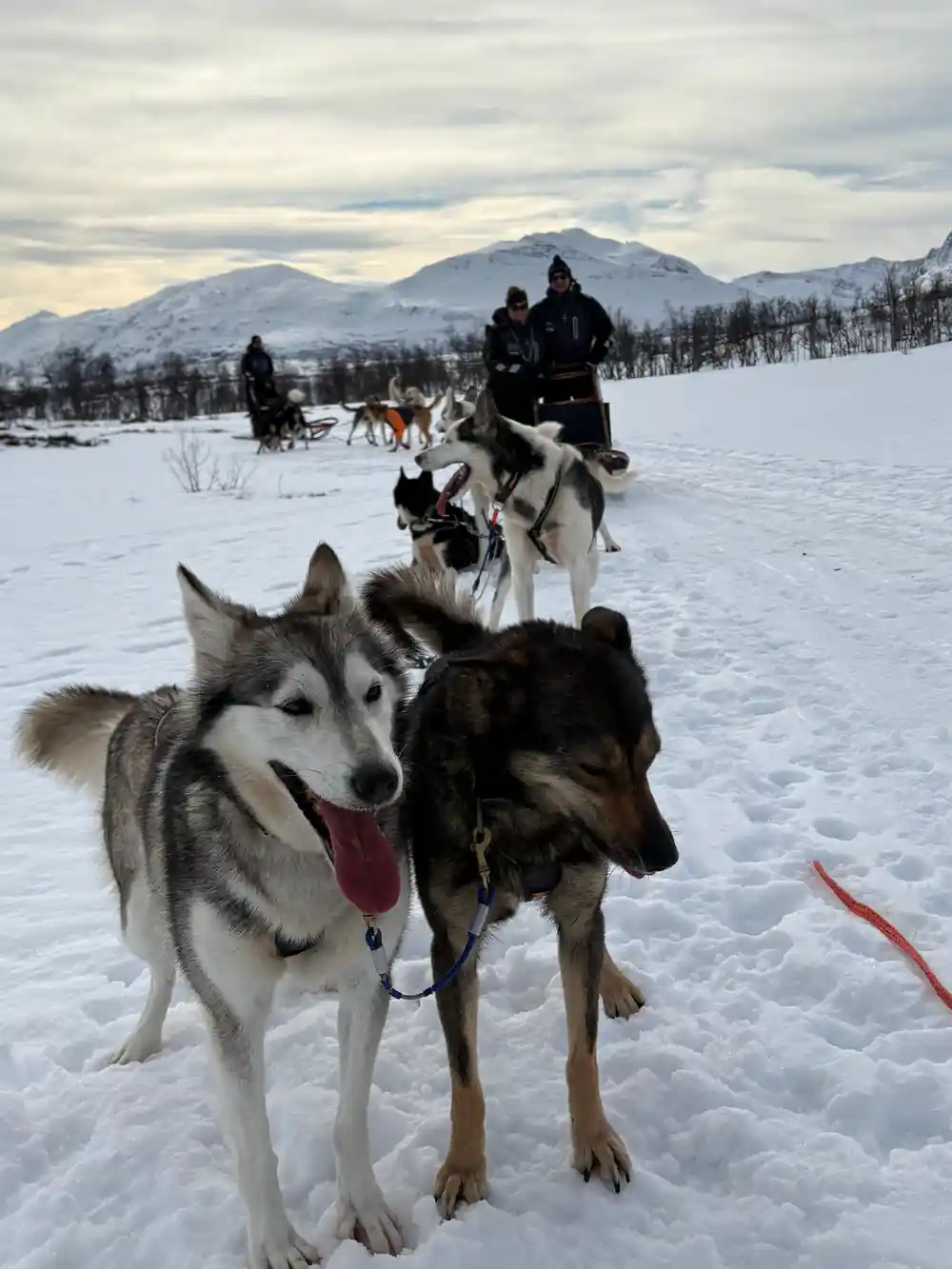
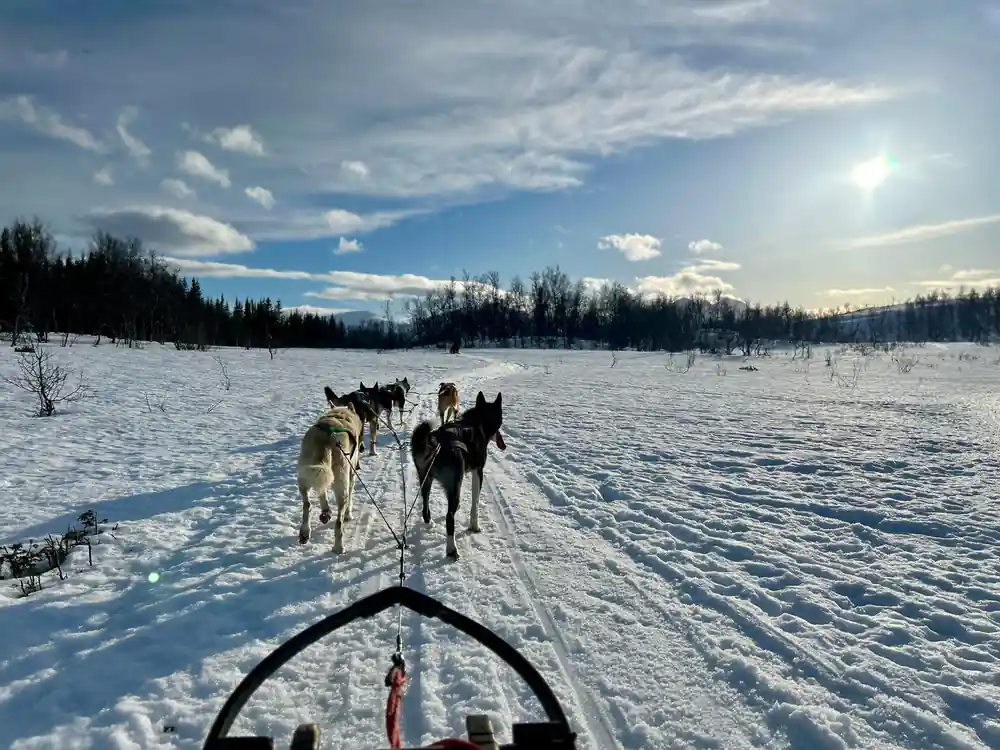
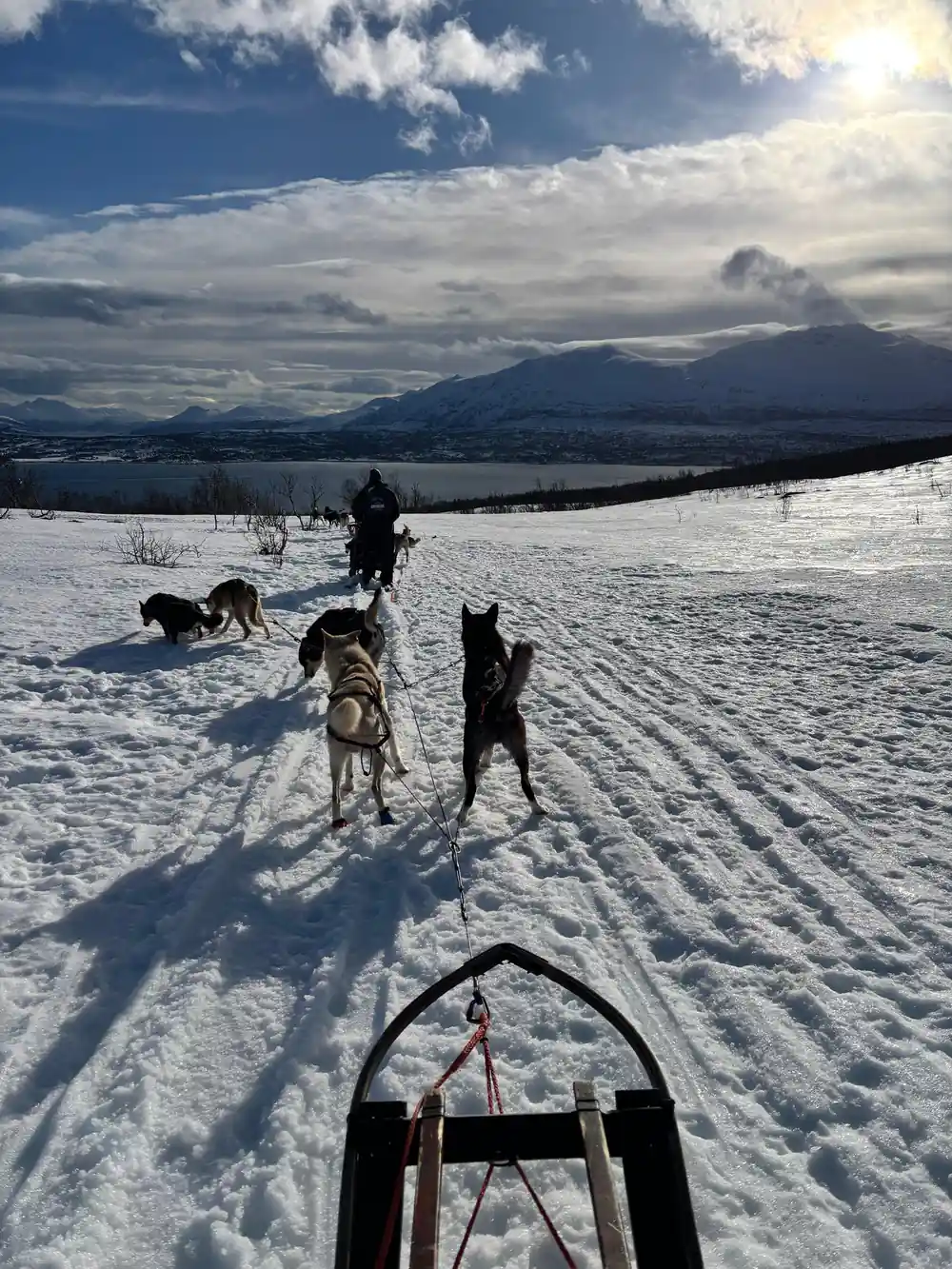
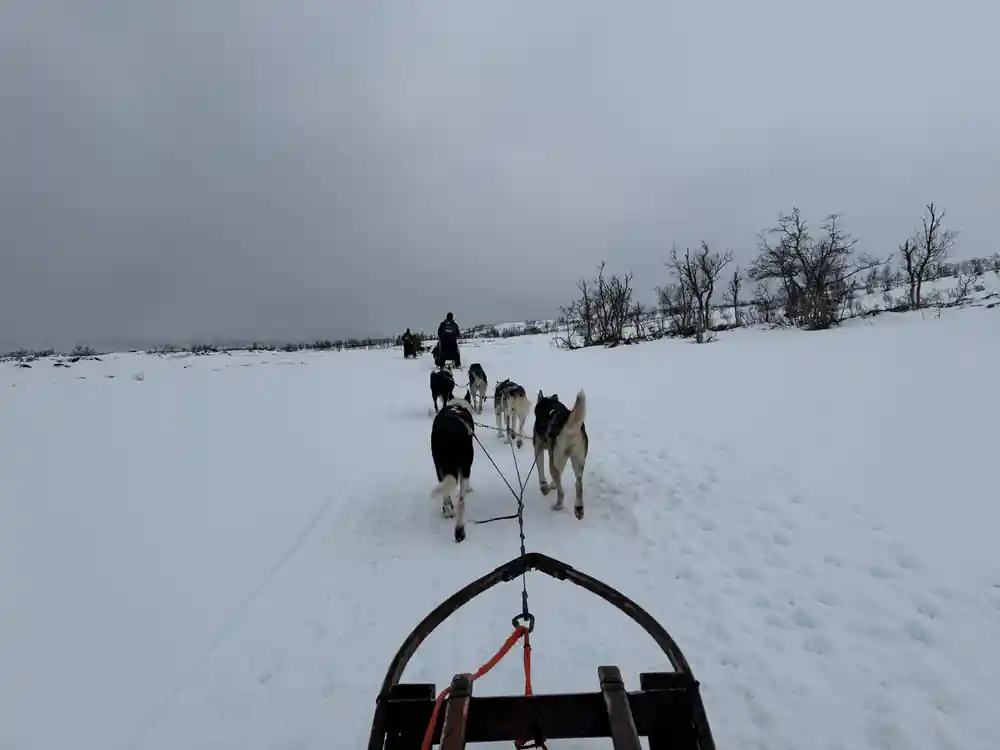
Huskies in harness on a snowy trail outside Tromso
Greenland dogs in Tromso and the lines that stayed
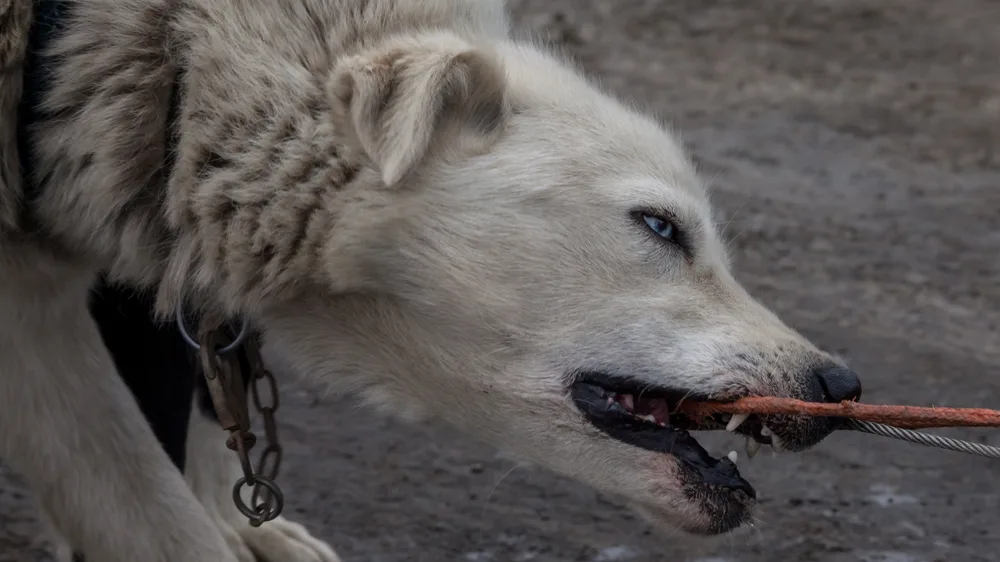
When people ask about Greenland dogs in Tromso, they usually mean the heavy, deep-chested dogs bred for hauling loads across sea ice. They are stocky and patient, built for power rather than pace, with coats that shrug off a freezing wind. The lighter, faster dogs you see in modern touring kennels come from different lines, selected for speed and stamina over long distances. Both kinds belong to the same working idea: an animal that pulls, in company, on command.
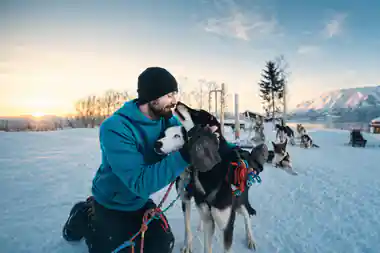
That difference shows up in the kind of ride you book and in the way a team moves. One family at Holmen Husky Lodge has raised and raced Alaskan Huskies bred for endurance, resilience, and heart for over three decades and two generations.[18] What you meet in a working kennel is the result of long selection: dogs chosen for temperament, appetite and the willingness to run together in harness. Handlers will tell you a team is not a collection of pets, and they mean it as a compliment.
Light, cold and snow in the Tromso winter
Winter here is not the deep freeze that people imagine. The average winter temperature in Tromso is around -4°C.[24] Mild air off the sea keeps the coast workable through the coldest months. The dark is a different matter. The Polar Night season in Tromso begins on November 27th and lasts until January 15th each year.[19] Through those weeks the sun stays below the horizon and the day is one long blue twilight, with lamps on in the streets and head torches out on the trails.
The dog sledding season in Northern Norway typically runs from December to March, depending on snow conditions.[16] The Northern Lights season in Tromso runs from late August to early April.[20] The two calendars overlap in the darkest stretch of winter. Cold, dry snow gives a team good footing, and low light is easy on animals that are working hard. In summer the picture flips: the midnight sun in Tromso usually lasts from around 20 May to 22 July.[25]
from US$351
The self-drive husky dog sledding adventure booked from this site: 4 hours from Tromso, rated 4.91 from 4,408 reviews.[17]
The race that keeps the old skills alive
Long-distance racing is where sled dog culture stays sharp. Finnmarkslopet is the longest dog-sled race in Europe.[26] It crosses the kind of country that expedition parties once travelled, and plenty of people who handle dogs for a living came into the work through racing. For a visitor, a race day or a musher's story is the closest thing to seeing the trade as it really is: animals, weather and a schedule that does not move for anyone.
The old skills are not only about speed. Feeding a team, reading snow, noticing when a dog is tiring, hitching a gangline with numb fingers: these are daily tasks rather than stunts. On a tour, the briefing you get before you step onto the runners belongs to that inheritance. It is practical knowledge handed from one season to the next, and it is how a good handler can put a nervous first-timer behind a steady, confident team.
Where you still meet working dogs around Tromso
The simplest way to meet sled dogs here is to book a kennel visit or a ride. The Tromso self-drive husky dog sledding adventure takes 4 hours, starts from US$351 and is rated 4.91 from 4,408 reviews.[17] You drive the team yourself with an instructor on hand, and the day includes a bus or coach run out to Kvaloya and back.[17]
Other formats exist if you would rather not drive. Some tours are guided, with a musher running the team while you ride and watch, and others head further out of the city for a longer day in the snow. Alongside the huskies sit the reindeer experiences, run by Sami hosts. Near Tromso, Sami reindeer herding culture is represented by a Sami reindeer-herding family that has lived and worked with reindeer for many generations.[27]
For a wider view of the landscape the dogs work in, the Fjellheisen cable car rises to Storsteinen, 421 meters above sea level.[28] Further out, the Tromso Ice Domes are 95 km from Tromso, in the Tamok Valley.[29]
How to plan your own sled dog day
Start with the season, then pick the tour. In the snow months the choice usually comes down to a self-drive adventure, where you stand on the runners and steer, or a guided ride, where someone else handles the team while you ride and watch. Both come in several versions, from short trips close to the city to longer runs that finish with a hot meal. Read the listing for what actually happens on the day, and check whether pickup from central Tromso is part of the plan.
For families, sort out the age rules before you book. Children can join the Fun & Easy Dog Sledding tour if they are at least 7 years old and accompanied by adults.[30] Anyone weighing up a snowmobile instead should know that in Norway a Category S driving licence entitles you to drive an open snowmobile, and in some cases you can drive without one.[31] Then it is down to clothing: dress for standing still rather than walking, bring a spare pair of gloves, and let the handler match you with a team.
From-prices for sled dog tours near Tromso
From-prices in US dollars as listed for each tour:[17][21][22][32][33]
What a sled dog day costs, from-prices
US dollar from-prices for these listings, each of which shows a single from-price rather than a separate child rate:[17][21][22][32][34]
When to come for the dogs
How to plan a sled dog day
Choose your season
Snow decides everything. Outside the main running months the trails may be thin or closed, so check dates before you book flights.
Pick self-drive or guided
Self-drive puts you on the runners with an instructor nearby. Guided means a musher runs the team while you ride and look around.
Check what is included
Look at the listing for transfers, clothing and meals, and note the meeting point in central Tromso if there is one.
Book with room to change
Free cancellation before departure is standard on these listings, which helps if the weather turns or your plans shift.
Dress for standing still
You will be on a sled, not hiking. Warm layers, mittens and boots with room for thick socks matter more than style.
Ride behind dogs bred for the Arctic
from US$351Reserve now & pay later