Les points principaux
- Tromso était un port d'approvisionnement pour les expéditions prises dans les glaces, et les chiens de traîneau étaient achetés, entraînés et envoyés au nord depuis ici, souvent sans jamais redescendre la passerelle.
- La saison de conduite de traîneau à chiens dans le nord de la Norvège se déroule généralement de décembre à mars, selon les conditions de neige.[16]
- L'aventure de conduite de traîneau à chiens en autonomie depuis Tromso dure 4 heures, commence à partir de 351 USD et est notée 4,91 sur 4 408 avis.[17]
- Les chenils de travail élèvent des huskies de l'Alaska sélectionnés pour leur endurance, leur résistance et leur cœur, une lignée qu'une famille de lodge maintient depuis plus de trois décennies et deux générations.[18]
- La nuit polaire à Tromso se déroule du 27 novembre au 15 janvier, et la saison des aurores boréales se déroule de fin août à début avril.[19][20]
- Meilleur choix Aventure en husky en libre-service à partir de 351 USD Durée4 heures[17]Note4,91 sur 4 408 avis[17]GuideMoniteur : anglais[17]AnnulationAnnulation gratuite, 24 heures à l'avance[17] Vérifier la disponibilité
- Conduite de husky en autonomie avec déjeuner à partir de 355 $ Durée4 heures[21]Note4,86 sur 2 050 avis[21]GuideGuide en direct : anglais[21]AnnulationAnnulation gratuite, 24 heures à l'avance[21] Voir cette excursion
- Conduite de traîneau à chiens facile et amusante à partir de 305 $ Durée4,5 heures[22]Note4,88 sur 2 077 avis[22]GuideGuide en direct : anglais[22]AnnulationAnnulation gratuite, 24 heures à l'avance[22] Voir cette excursion
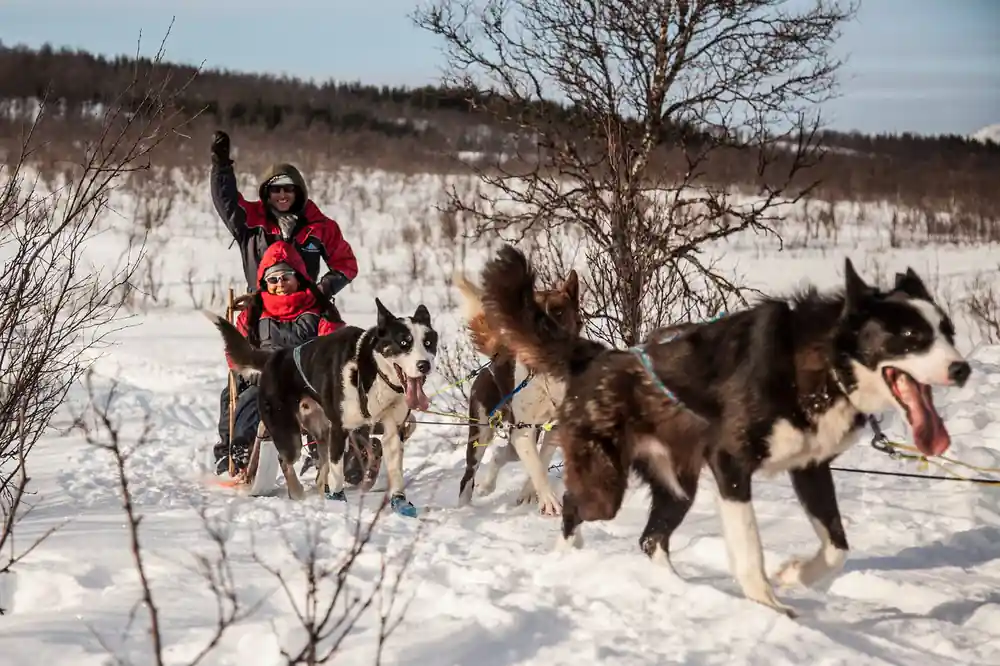
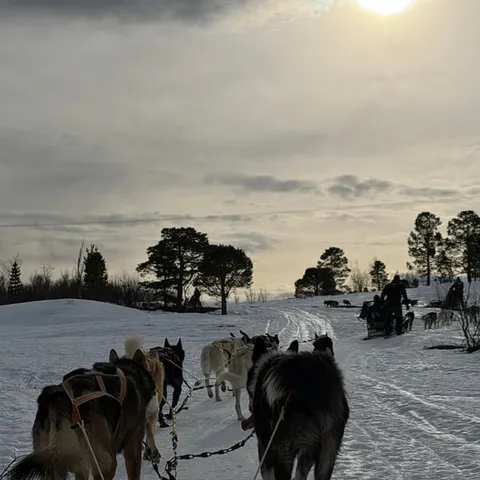
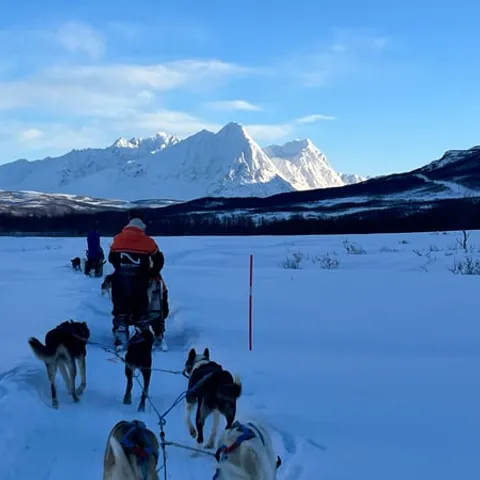
À seulement 95 km de Tromsø, cachée au cœur de la vallée de Tamok, se trouve une terre d'hiver enneigée prête à être explorée.
Vaut le coup pour les chiens de travail
À porter et à emporter
- Couches de base thermiques, chaussettes en laine et veste coupe-vent par-dessus
- Lunettes de soleil pour l'éblouissement de la neige et lampe frontale pour les après-midi sombres
- Gants chauds dans lesquels vous pouvez agripper le volant de traîneau, plus une paire de rechange
- Un passe-nez ou un buff, car le vent sur la neige nue pique
À vérifier avant de réserver
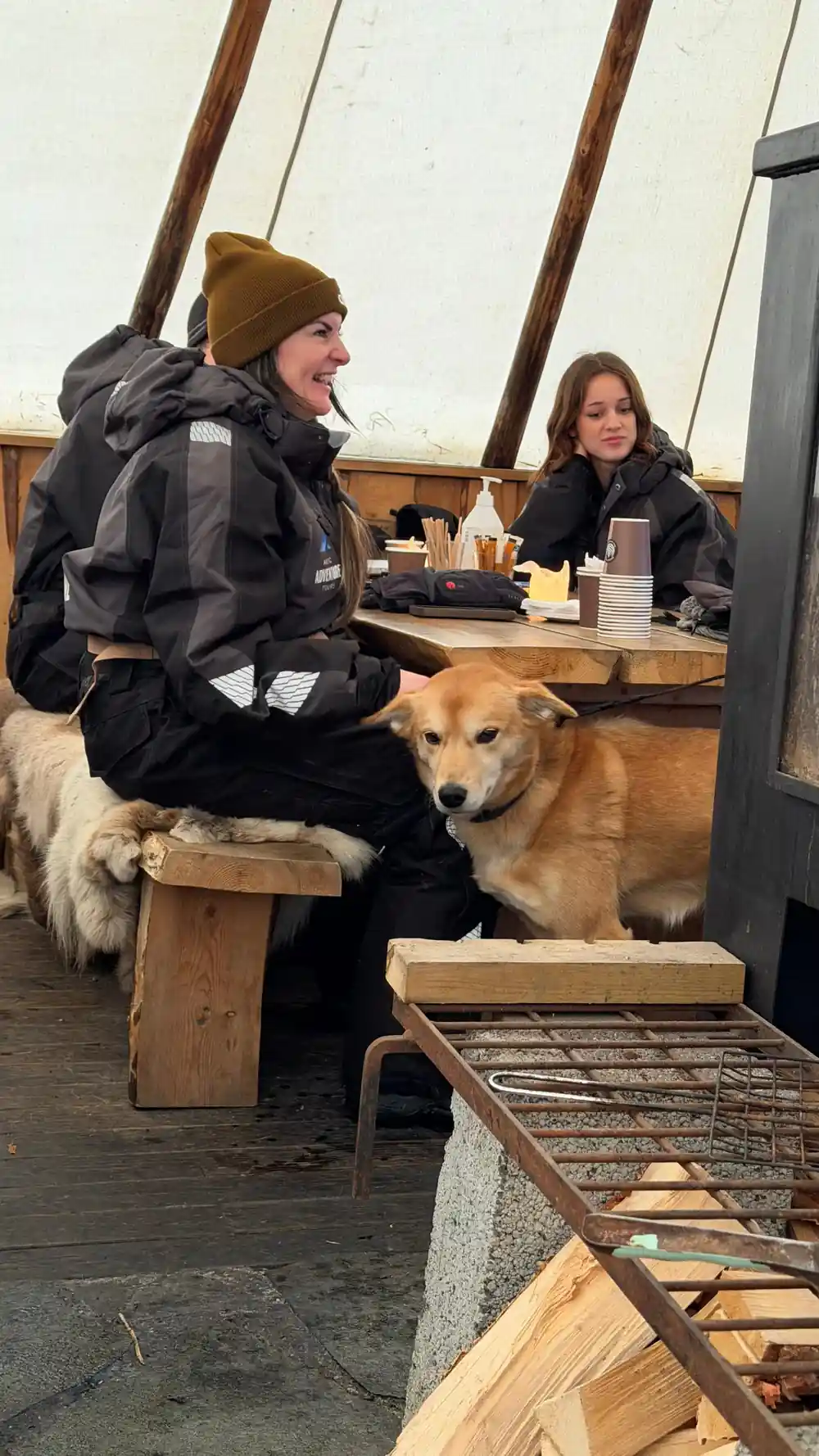
- Les chenils se trouvent généralement en dehors de la ville, et les visites incluent normalement le transfert
- Prévoyez toute la matinée ou l'après-midi plutôt que de l'insérer en squeeze entre d'autres plans
- Les départs en petits groupes se remplissent en premier, alors réservez votre date tôt
- Les prix indiqués sont des prix de départ en dollars américains, pas des totaux fixes
Pourquoi Tromso est-elle devenue une ville de chiens de traîneau
Tromso est située sur une île au milieu d'un système de fjords, avec la mer ouverte à l'ouest et les montagnes derrière elle. Les eaux profondes et le sound abrité offraient aux navires un endroit où s'amarrer. Cette géographie faisait de la ville une halte naturelle avant la glace. Les navires pouvaient y charger, les équipages pouvaient s'y reposer, et les approvisionnements qu'on ne trouvait pas plus au nord pouvaient s'y acheter sur le quai. Les chiens de traîneau faisaient partie de ce commerce. Ils arrivaient par bateau, travaillaient la neige autour de la ville, et repartaient avec les expéditions qui en avaient besoin. Pour une petite ville en bois avec un bon port, c'était un rôle démesuré.
Promenez-vous au port aujourd'hui et vous ne verrez pas de cages de chiens empilées sur le quai, mais la forme de l'endroit n'a pas changé. Kvaloya, l'île située du côté ouest de la ville, commence là où se termine le pont Sandnessund, à moins de 5 km du centre de Tromso.[23] Ce court trajet met le paysage enneigé et ouvert à portée d'un petit-déjeuner à l'hôtel. Un city break à Tromso peut se transformer en une matinée sur les runners sans longue conduite ni vol intérieur. Les chenils qui s'y trouvent gardent visible le côté travailleur de la ville, qu'un navire d'expédition soit au port ou non.
Les chiens partis avec les équipes d'expédition polaires
Les expéditions polaires de l'âge héroïque ne voyageaient pas léger. Elles transportaient des traîneaux, des tentes, de la nourriture pour des mois et des chiens, car une équipe de chiens pouvait continuer à travailler dans le froid intense sans carburant ni pièces de rechange. Tromso était l'un des ports où de telles équipes étaient assemblées, nourries et testées avant qu'un navire ne tourne vers le nord. Les navires qui partaient d'ici étaient des lieux de travail plutôt que des paquebots de croisière, et les chiens faisaient partie de l'équipage. Certains des animaux qui montèrent à la passerelle ici n'en redescendirent jamais. Ils terminèrent leur vie de travail sur la glace de mer, et la glace les garda.
L'expression équipes de chiens d'expédition polaires évoque une image ordonnée : des huskies déployés sur un plain blanc, le souffle vapeur dans le froid. La réalité était la logistique. Il fallait acheter les animaux, les faire voyager, les nourrir pendant un long voyage et les apparier à un traîneau et à un conducteur. Les chiens étaient vendus, prêtés et loués entre les parties, et les commerçants du nord se trouvaient au milieu de cette chaîne. C'est la raison pour laquelle l'histoire des chiens de Tromso est plus grande que son propre réseau de sentiers. Beaucoup des animaux qui couraient ici étaient simplement de passage en route vers un endroit plus difficile.
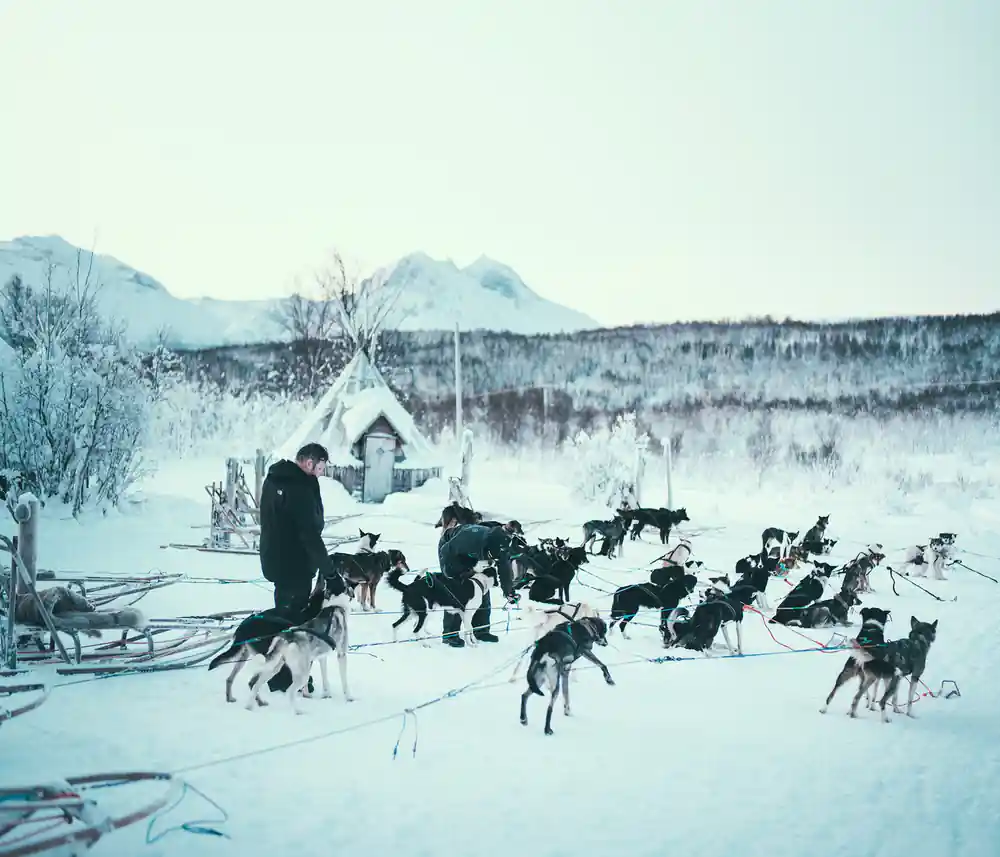
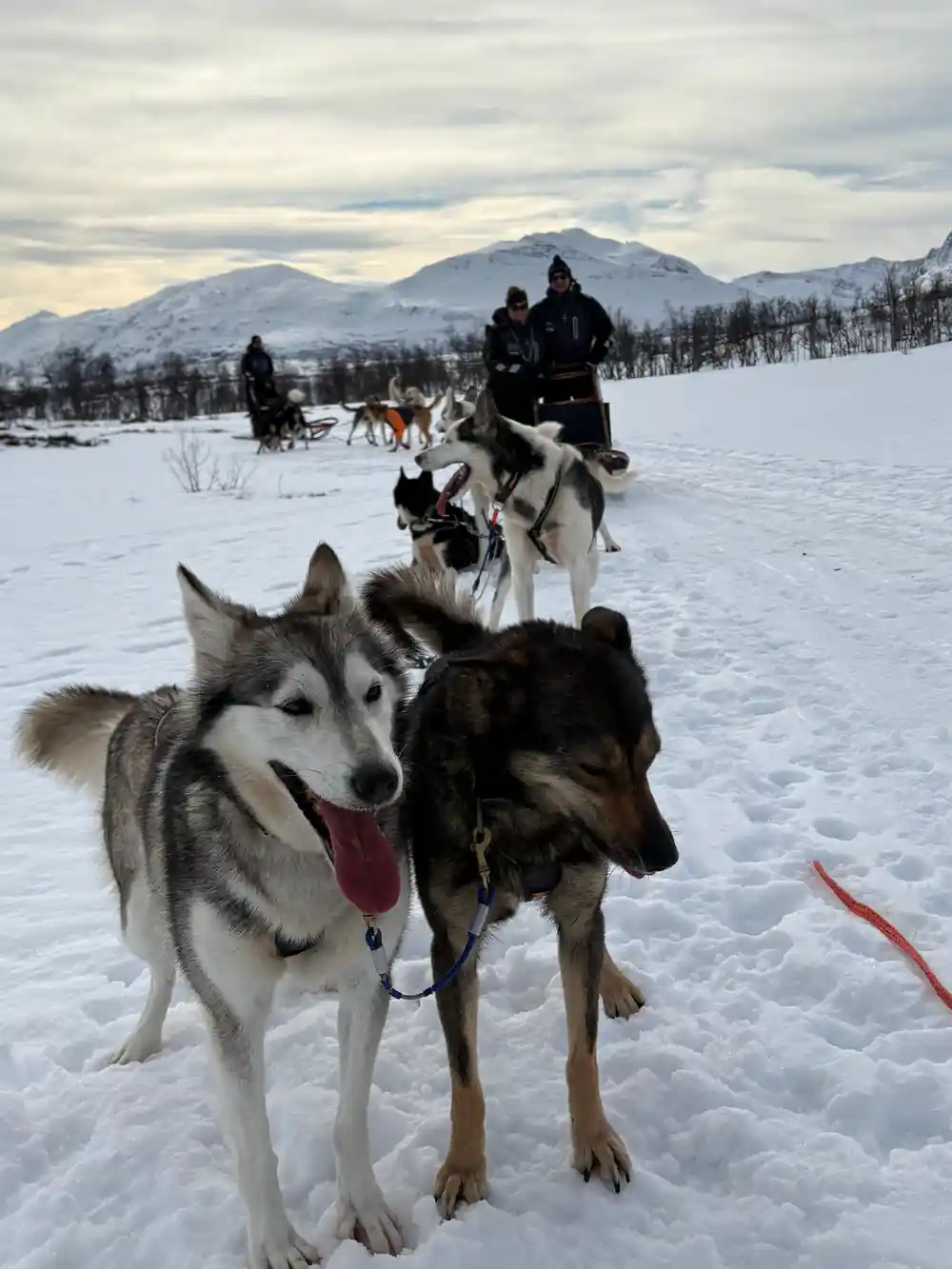
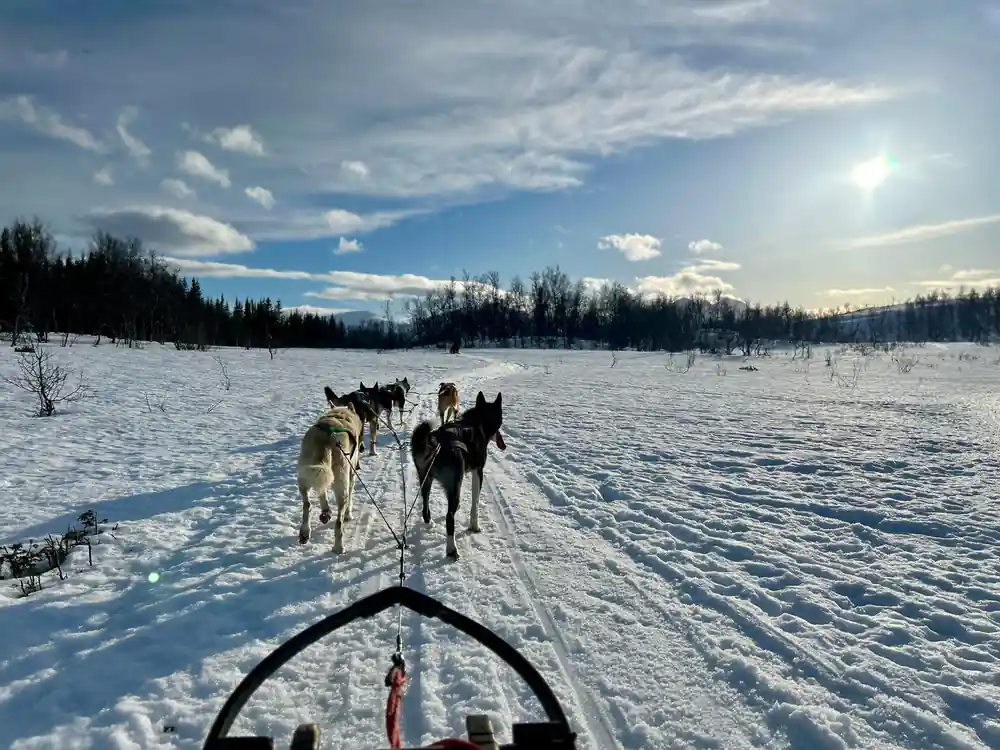
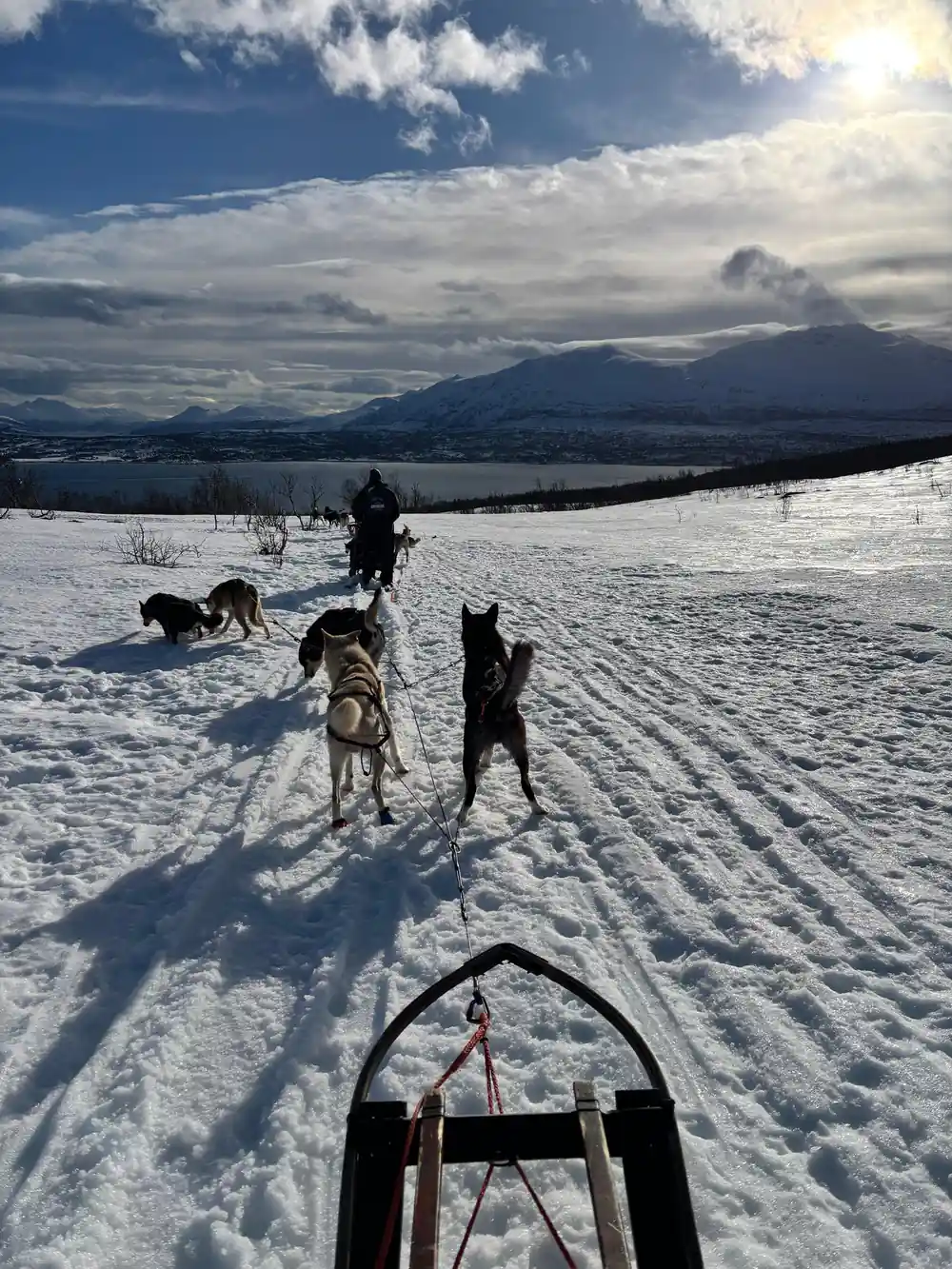
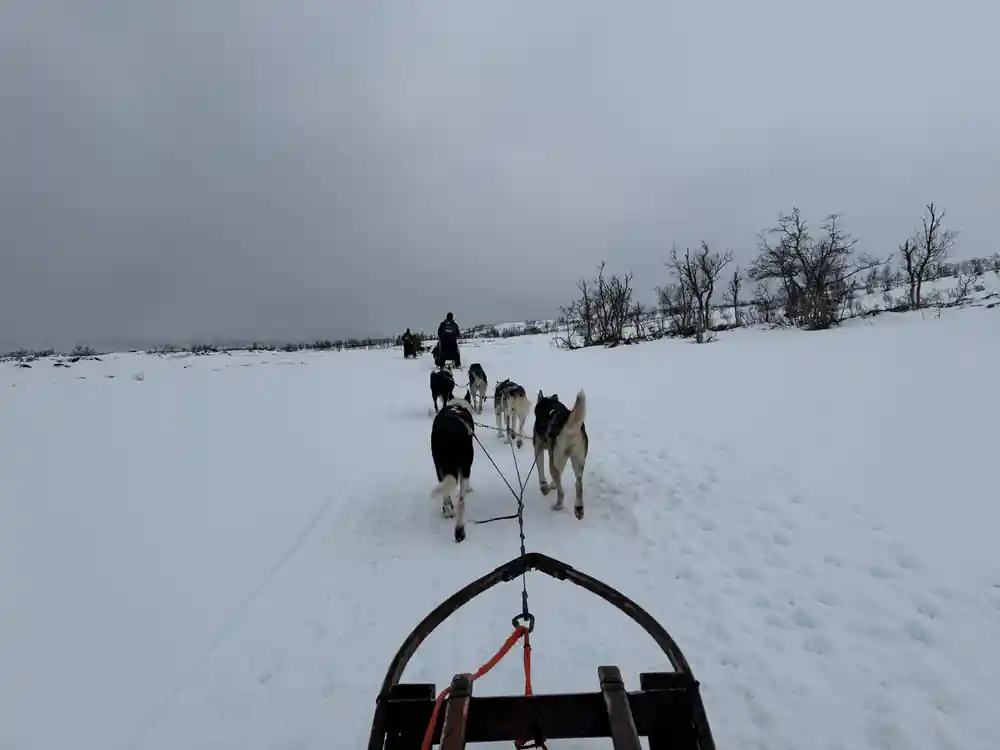
Des huskys en attelage sur un sentier enneigé aux abords de Tromso
Les chiens du Groenland à Tromso et les lignées qui sont restées
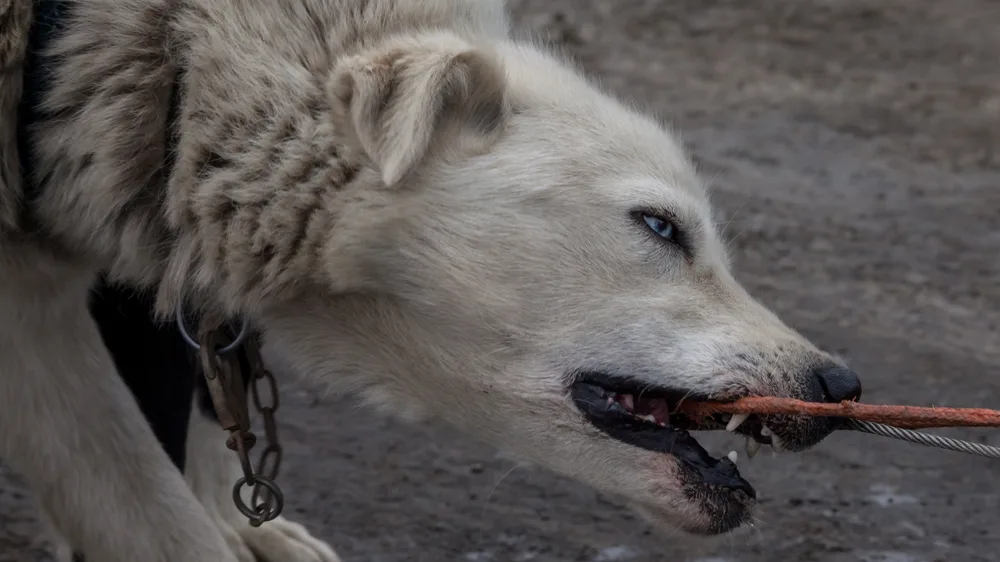
Quand les gens demandent des chiens du Groenland à Tromso, ils veulent généralement dire les chiens lourds et poitrail profond élevés pour tirer des charges sur la glace de mer. Ils sont trapus et patients, construits pour la puissance plutôt que pour la vitesse, avec des pelages qui protègent du vent glacial. Les chiens plus légers et plus rapides que vous voyez dans les chenils touristiques modernes viennent de lignées différentes, sélectionnés pour la vitesse et l'endurance sur de longues distances. Les deux types appartiennent à la même idée de travail : un animal qui tire, en groupe, sur commande.
Cette différence se voit dans le type de visite que vous réservez et dans la façon dont une équipe se déplace. Une famille chez Holmen Husky Lodge élève et fait courir des Alaskan Huskies sélectionnés pour l'endurance, la résilience et le cœur depuis plus de trois décennies et deux générations.[18] Ce que vous rencontrez dans un chenil de travail est le résultat d'une longue sélection : des chiens choisis pour leur tempérament, leur appétit et leur volonté de courir ensemble en attelage. Les mushers vous diront qu'une équipe n'est pas un ensemble d'animaux de compagnie, et ils le disent comme un compliment.
Léger, froid et neige dans l'hiver à Tromso
L'hiver ici n'est pas le gel profond que les gens imaginent. La température moyenne en hiver à Tromso est d'environ -4 °C.[24] L'air doux de la mer garde la côte praticable pendant les mois les plus froids. L'obscurité est une autre affaire. La saison de la Nuit polaire à Tromso commence le 27 novembre et dure jusqu'au 15 janvier chaque année.[19] Pendant ces semaines, le soleil reste sous l'horizon et le jour est une longue lueur bleue, avec des lampes allumées dans les rues et des lampes frontales sur les sentiers.
La saison de conduite de traîneaux à chiens dans le nord de la Norvège s'étend généralement de décembre à mars, selon les conditions d'enneigement.[16] La saison des aurores boréales à Tromso va de la fin août au début avril.[20] Les deux calendriers se chevauchent pendant la période la plus sombre de l'hiver. La neige froide et sèche offre une bonne adhérence aux équipes, et la faible lumière est douce pour les animaux qui fournissent un effort intense. En été, le tableau s'inverse : le soleil de minuit à Tromso dure généralement du 20 mai environ au 22 juillet.[25]
à partir de US$351
L'aventure de conduite de traîneau à chiens en autonomie réservée depuis ce site : 4 heures depuis Tromso, notée 4,91 sur 4 408 avis.[17]
La course qui maintient les anciens savoirs vivants
Les courses de longue distance sont l'endroit où la culture du traîneau à chiens reste affûtée. Finnmarkslopet est la plus longue course de traîneau à chiens d'Europe.[26] Elle traverse le type de paysage que les expéditions traversaient autrefois, et beaucoup de ceux qui travaillent avec des chiens sont entrés dans ce métier par la course. Pour un visiteur, un jour de course ou l'histoire d'un musher est l'approximation la plus proche du métier tel qu'il est vraiment : les animaux, la météo et un programme qui ne s'arrête pour personne.
Les anciens savoirs ne concernent pas seulement la vitesse. Nourrir une équipe, lire la neige, remarquer quand un chien fatigue, atteler un cordon de trait avec les doigts engourdis : ce sont des tâches quotidiennes plutôt que des tours de force. Lors d'une excursion, le briefing que vous recevez avant de monter sur les patins fait partie de cet héritage. C'est un savoir pratique transmis de saison en saison, et c'est ainsi qu'un bon conducteur peut placer un débutant nerveux derrière une équipe stable et confiante.
Où vous rencontrerez encore des chiens de travail autour de Tromso
La manière la plus simple de rencontrer les chiens de traîneau ici est de réserver une visite de chenil ou une balade. L'aventure de conduite de traîneau à chiens en autonomie à Tromso dure 4 heures, commence à partir de 351 USD et est notée 4,91 sur 4 408 avis.[17] Vous conduisez l'équipe vous-même avec un moniteur présent, et la journée inclut un transfert en bus ou en car jusqu'à Kvaloya et retour.[17]
D'autres formats existent si vous préférez ne pas conduire. Certaines excursions sont guidées, avec un musher qui conduit l'équipe pendant que vous êtes assis et observez, et d'autres se rendent plus loin de la ville pour une journée plus longue dans la neige. À côté des huskys se trouvent les expériences avec les rennes, animées par des hôtes samis. Près de Tromso, la culture d'élevage de rennes samie est représentée par une famille samie d'éleveurs de rennes qui vit et travaille avec les rennes depuis de nombreuses générations.[27]
Pour une vue plus large sur le paysage où travaillent les chiens, la tyrolienne Fjellheisen monte jusqu'à Storsteinen, à 421 mètres au-dessus du niveau de la mer.[28] Plus loin, les Dômes de glace de Tromso se trouvent à 95 km de Tromso, dans la vallée de Tamok.[29]
Comment organiser votre journée de traîneau à chiens
Commencez par la saison, puis choisissez l'excursion. Pendant les mois enneigés, le choix se résume généralement à une aventure en autonomie, où vous vous tenez sur les patins et dirigez, ou à une balade guidée, où quelqu'un d'autre conduit l'équipe pendant que vous êtes assis et observez. Les deux existent en plusieurs versions, des sorties courtes près de la ville aux sorties plus longues qui se terminent par un repas chaud. Lisez la fiche pour savoir ce qui se passe réellement pendant la journée, et vérifiez si le transfert depuis le centre de Tromso fait partie du programme.
Pour les familles, renseignez-vous sur les règles d'âge avant de réserver. Les enfants peuvent participer à l'excursion Fun & Easy Dog Sledding s'ils ont au moins 7 ans et sont accompagnés d'adultes.[30] Toute personne qui hésite entre un snowmobile et un traîneau à chiens doit savoir qu'en Norvège, un permis de conduire de catégorie S vous autorise à conduire un snowmobile ouvert, et dans certains cas vous pouvez conduire sans permis.[31] Ensuite, il y a les vêtements : habillez-vous pour rester immobile plutôt que pour marcher, apportez une paire de gants de rechange, et laissez le conducteur vous associer à une équipe.
Tarifs à partir de pour les excursions de traîneau à chiens près de Tromso
Tarifs à partir de en dollars américains tels qu'indiqués pour chaque excursion :[17][21][22][32][33]
Ce que coûte une journée de traîneau à chiens, tarifs à partir de
Tarifs à partir de en dollars américains pour ces fiches, chacune indiquant un tarif à partir de plutôt qu'un tarif enfant séparé :[17][21][22][32][34]
Quand venir pour les chiens
Comment organiser une journée de traîneau à chiens
Choisissez votre saison
La neige décide de tout. En dehors des mois principaux de fonctionnement, les pistes peuvent être fines ou fermées, alors vérifiez les dates avant de réserver vos vols.
Choisissez l'autonomie ou le guidé
L'autonomie vous place sur les patins avec un moniteur à proximité. Le guidé signifie qu'un musher conduit l'équipe pendant que vous êtes assis et regardez autour.
Vérifiez ce qui est inclus
Consultez la fiche pour les transferts, les vêtements et les repas, et notez le point de rencontre dans le centre de Tromso s'il y en a un.
Réserver avec possibilité de modification
L'annulation gratuite avant le départ est la norme sur ces fiches, ce qui est utile si la météo se dégrade ou si vos plans changent.
Habillez-vous pour rester immobile
Vous serez sur un traîneau, pas en randonnée. Des couches chaudes, des moufles et des bottes avec de la place pour des chaussettes épaisses sont plus importants que le style.
Roulez derrière des chiens élevés pour l'Arctique
à partir de 351 US$Réservez maintenant, payez plus tard