Les points principaux
- La saison de traîneau à chiens dans le nord de la Norvège se déroule généralement de décembre à mars, selon les conditions de neige.[15]
- L'obscurité polaire de Tromsø commence le 27 novembre et dure jusqu'au 15 janvier, et la saison des aurores boréales s'étend de fin août à début avril.[16][17]
- La température hivernale moyenne à Tromsø est d'environ −4°C. Attendez-vous à une neige ferme et sèche au cœur de l'hiver et à des surfaces plus douces au printemps.[18]
- L'aventure de conduite en traîneau à chiens en autonomie dure 4 heures, est notée 4,91 sur 4 408 avis et débute à partir de 351 USD.[19]
- Le soleil de minuit à Tromsø dure généralement du 20 mai environ au 22 juillet, lorsque les jours ne se terminent plus du tout.[20]
- Meilleur choix Conduite en autonomie avec des huskys, Kvaløya à partir de 351 USD Durée4 heures[19]Note4,91 sur 4 408 avis[19]GuideGuide : anglais[19]AnnulationAnnulation gratuite jusqu'à 24 heures[19] Vérifier la disponibilité
- Conduite en traîneau à huskys avec déjeuner à partir de 355 $ Durée4 heures[21]Note4,86 sur 2 050 avis[21]GuideGuide en direct : anglais[21]AnnulationAnnulation gratuite jusqu'à 24 heures[21] Voir cette excursion
- Traîneau amusant et facile à partir de 305 $ Durée4,5 heures[22]Note4,88 sur 2 077 avis[22]GuideGuide en direct : anglais[22]AnnulationAnnulation gratuite jusqu'à 24 heures[22] Voir cette excursion
Nous sommes une famille d'éleveurs de rennes sami à Tromsø et vivons et travaillons avec les rennes depuis de nombreuses générations.
L'excursion en autonomie avec des huskys vaut-elle le coup ?
Planifiez et réservez
- Adaptez votre voyage à la saison de conduite en traîneau, de décembre à mars en Norvège du Nord[15]
- Réservez l'excursion en autonomie avec des huskys à partir de 351 USD[19]
- Annulation gratuite jusqu'à 24 heures à l'avance sur l'excursion en autonomie[19]
- Comparez les prix de départ entre les excursions en traîneau à chiens et en renne avant de vous engager
Que se passe-t-il quand la glace fond à Tromsø
Tromsø est située sur des îles et des fjords, l'hiver y connaît donc deux surfaces : la neige sur la terre et la glace sur l'eau. Pendant les semaines les plus froides, les bras intérieurs des fjords et les baies peu profondes autour de Kvaløya peuvent geler, et les pistes à l'intérieur des terres conservent la surface ferme et rapide que les chiens de traîneau adorent. Puis la lumière revient, le vent tourne, et le tableau se défait en morceaux. La pluie arrive de la mer, la couche supérieure de neige ramollit, l'eau de fonte s'accumule sur les pistes, et la glace près du rivage devient grise, puis pourrie, puis disparaît.
Cela n'arrive pas en un matin dramatique. Le changement se fait par étapes, avec des vagues de froid qui remettent une pellicule de glace sur les flaques et des périodes douces qui la font disparaître. La conduite en traîneau se fait sur la surface sous les patins plutôt que sur la date, et les chenils étudient leurs pistes semaine après semaine avant de décider de partir. Pendant ce temps, la saison des aurores boréales à Tromsø s'étend de fin août à début avril.[17] Les soirées aurores et les jours de traîneau partagent souvent les mêmes semaines.
Dates de la saison neigeuse à Tromsø et ce que chaque mois apporte
La saison de conduite en traîneau à chiens en Norvège du Nord s'étend généralement de décembre à mars, selon les conditions de neige.[15] Ces mois ne sont pas un bloc uniforme. La saison s'ouvre sur la période sombre et silencieuse : quelques heures bleues autour de midi, une neige sèche qui craque sous les pas, et l'obscurité polaire au-dessus de Tromsø. L'obscurité polaire commence le 27 novembre et dure jusqu'au 15 janvier chaque année.[16] La température hivernale moyenne à Tromsø est d'environ −4°C.[18]
Plus tard dans la saison, le soleil est de retour au-dessus des toits, et la neige est souvent à son plus profond et à son plus stable. Les journées lumineuses apportent des matins fermes et des après-midis plus doux. C'est alors que les premiers signes réels de fonte apparaissent sur les pentes exposées au sud et en ville : les avant-toits qui gouttent, les zones dénudées sur les trottoirs, et la boue là où un chemin était encore de la glace compactée plus tôt dans l'hiver. La neige sur la côte peut disparaître rapidement dès l'arrivée d'air doux, tandis que les vallées intérieures et les plateaux montagneux conservent leur couverture plus longtemps. Si vous choisissez une semaine, laissez la neige décider et gardez une certaine souplesse au milieu de votre voyage.
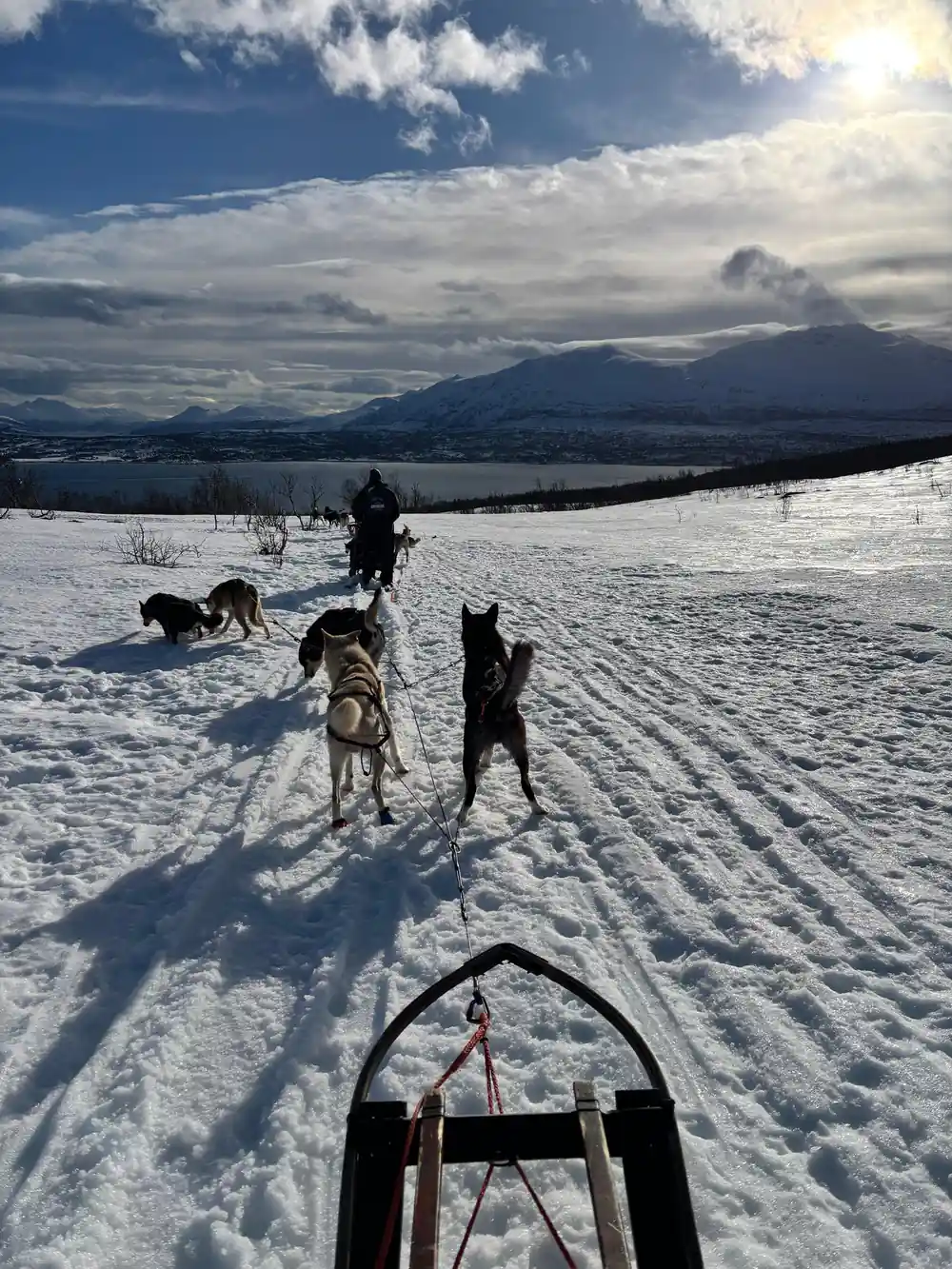
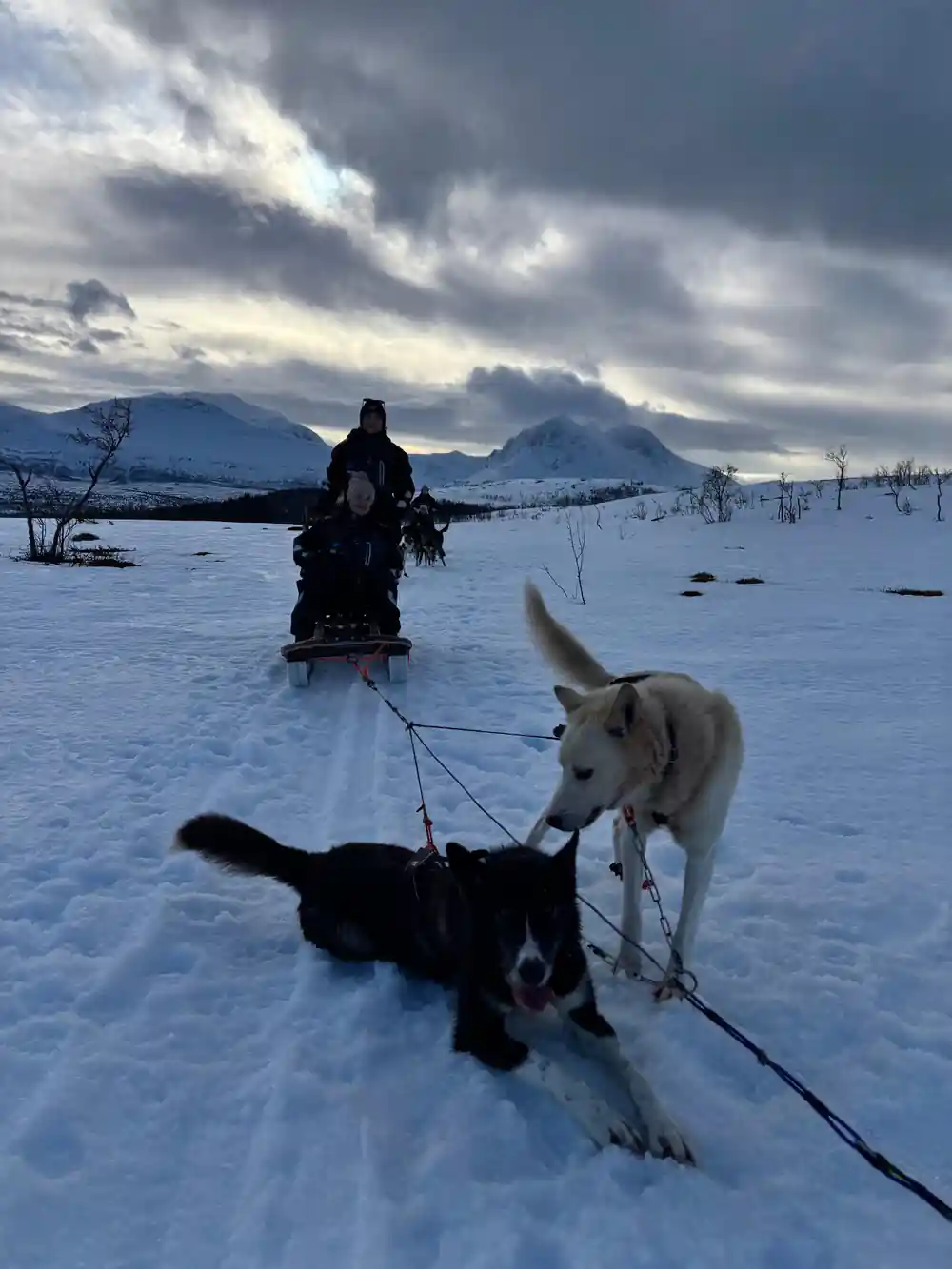
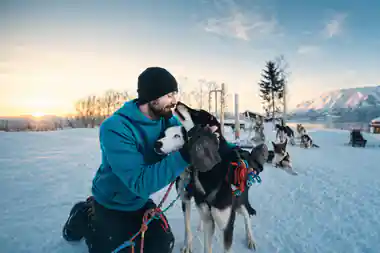
Les chiens de traîneau se reposent dans la neige pendant qu'un conducteur vérifie l'équipe avant le prochain run.
Nuit polaire, soleil de minuit et la lumière entre les deux
La saison sombre n'est pas une obscurité totale. Pendant la nuit polaire à Tromsø, qui commence le 27 novembre et dure jusqu'au 15 janvier chaque année, le soleil reste sous l'horizon, mais le ciel prend tout de même des teintes cobalt, rose et lilas autour de midi.[16] Cette lumière est douce et elle persiste, ce qui convient à la photographie lente et aux promenades longues et paisibles. Les habitants font du milieu de la journée le moment principal, et vous pouvez en faire autant : c'est le meilleur moment pour être dehors et la lumière la plus douce pour photographier les chiens.
À l'autre extrémité de l'année, le soleil de minuit à Tromsø dure généralement du 20 mai environ au 22 juillet.[20] Entre les deux extrêmes viennent les saisons intermédiaires, où la lumière est ordinaire et le temps tout sauf prévisible. Pour la conduite en traîneau, la partie utile de l'année est la période sombre et froide, quand les pistes sont enneigées et que les chiens travaillent. Pour la randonnée, le kayak et le soleil de minuit, vous attendez que la limite des neiges s'élève.
La glace du Ramfjorden et les fjords qui gèlent
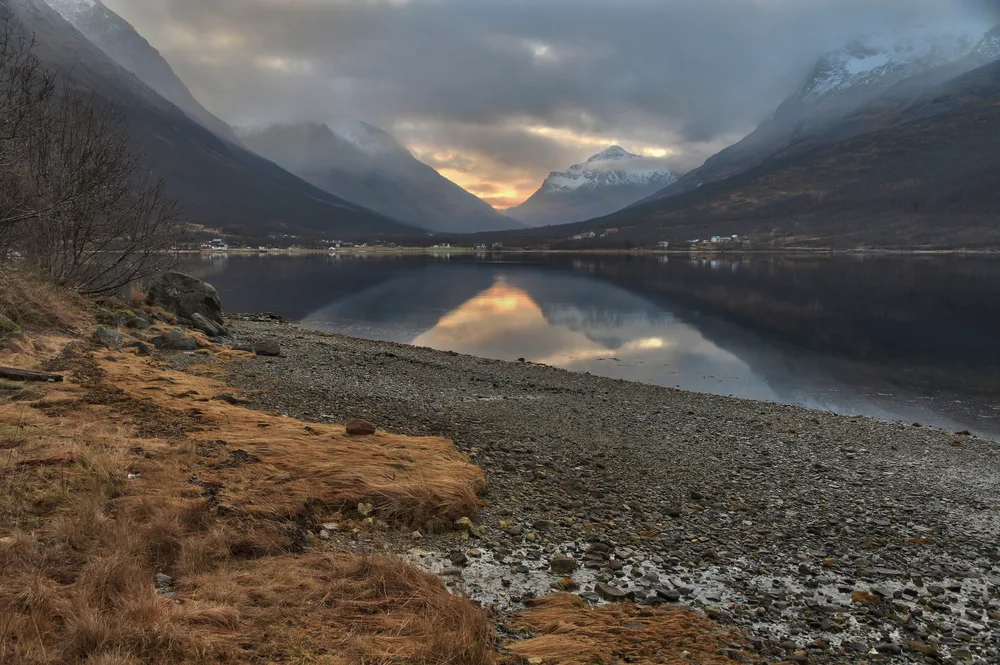
Ce ne sont pas tous les fjords autour de Tromsø qui gèlent, ni tous les hivers. La glace du Ramfjorden est l'exception locale que l'on surveille : l'extrémité intérieure du fjord est peu profonde et abritée, et elle accumule l'eau douce qui ruisselle des terres, de sorte qu'une longue période de froid peut recouvrir la surface d'une couche de glace tandis que les eaux extérieures restent ouvertes. Lorsque la nappe tient, patineurs et pêcheurs sur glace apparaissent rapidement, la testant avec des bâtons et des foreuses avant de s'y engager. Ailleurs dans la région, la glace marine est inégale et de courte durée.
La fonte agit des deux côtés. Le soleil adoucit la surface, les courants et la marée travaillent en dessous, et le vent brise la nappe en fragments qui dérivent, s'empilent et regèlent au cours de la nuit. La température hivernale moyenne à Tromsø est d'environ −4 °C.[18] Rien n'est garanti en matière de glace marine, alors considérez toute nappe près d'une ville, d'un port ou d'une voie navigable avec méfiance, et renseignez-vous localement avant d'y marcher. La glace de fjord ici est un cadeau d'une période de froid intense, pas un élément fixe de chaque hiver.
à partir de US$351
L'excursion en conduite autonome réservée sur ce site dure 4 heures et commence à partir de 351 USD, avec annulation gratuite jusqu'à 24 heures à l'avance.[19]
Mushing en chiens pendant qu'il neige encore
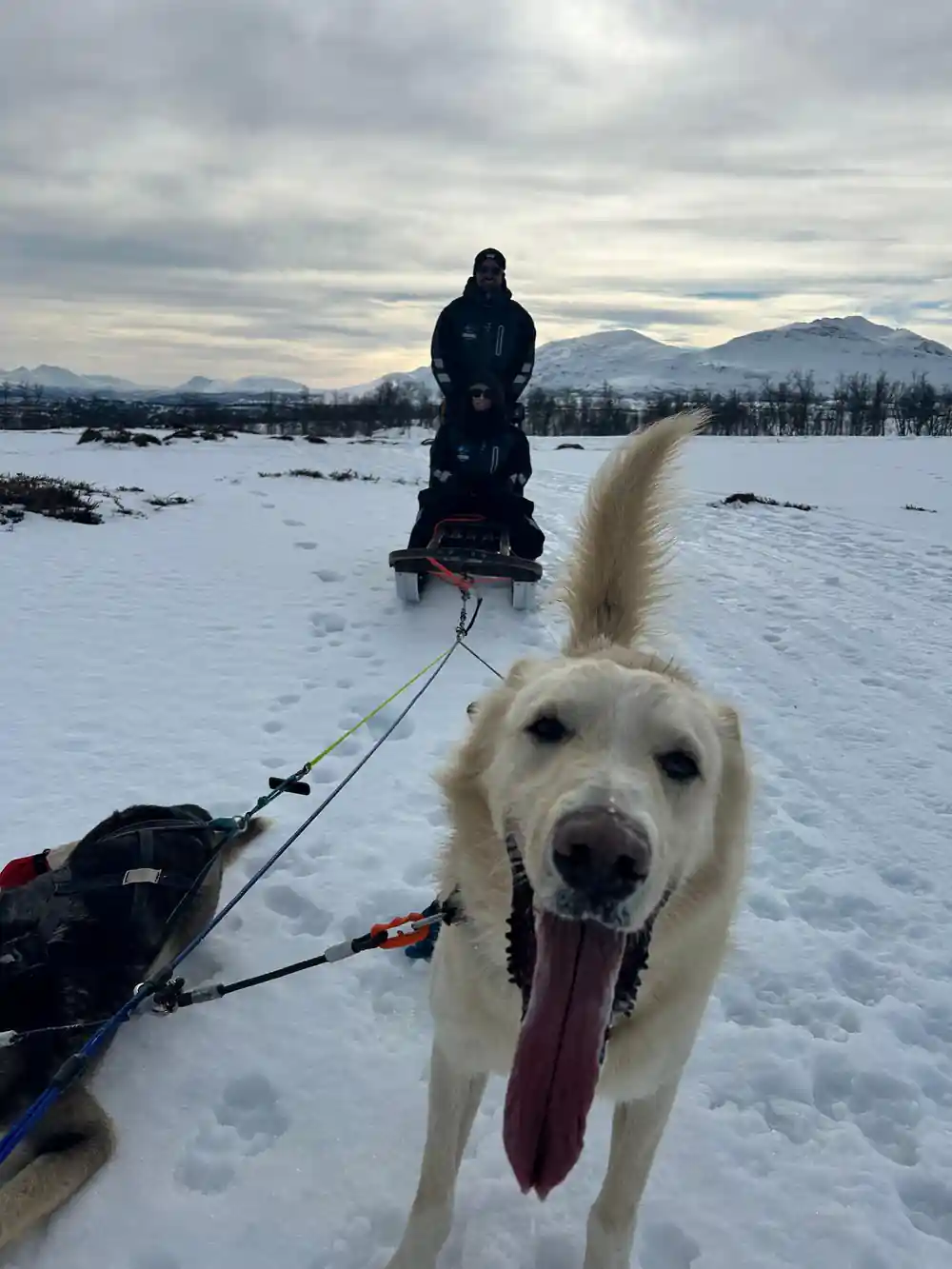
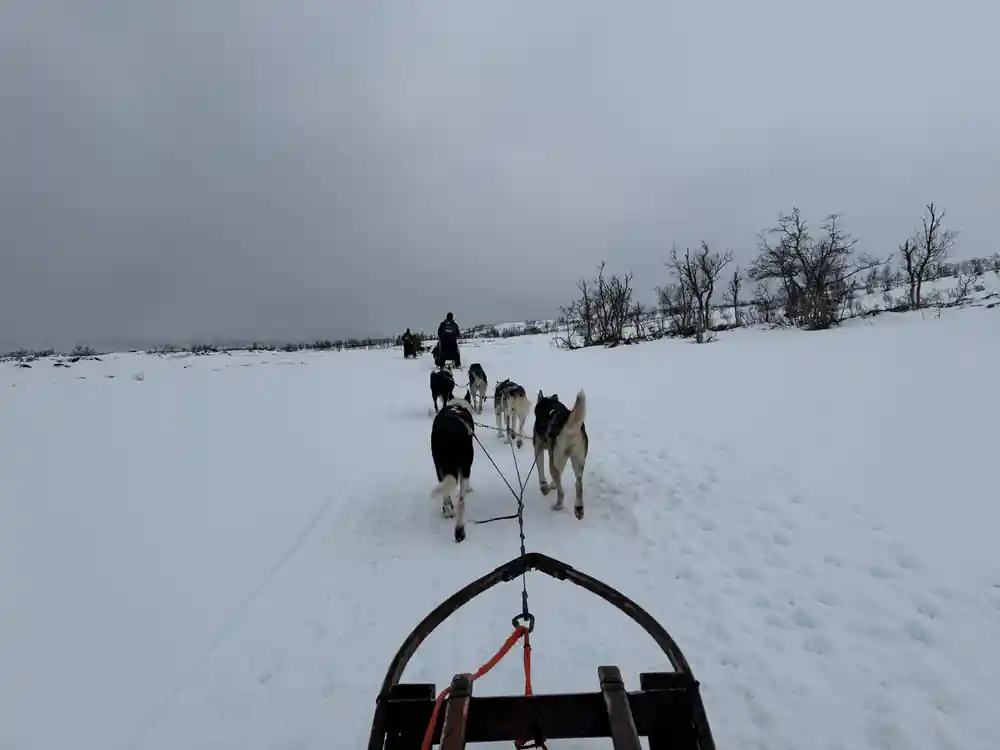
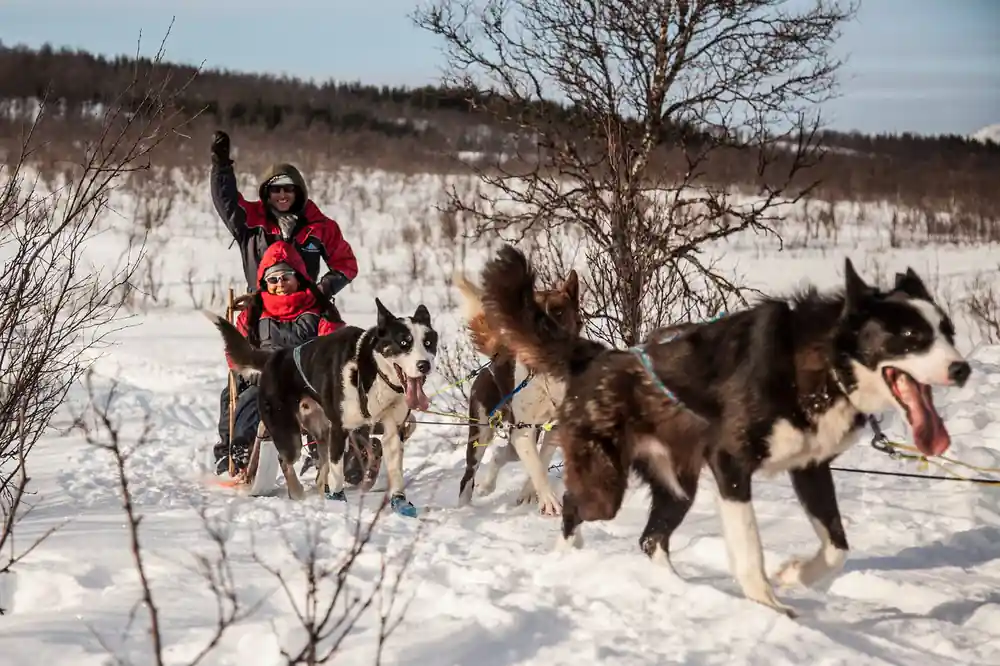
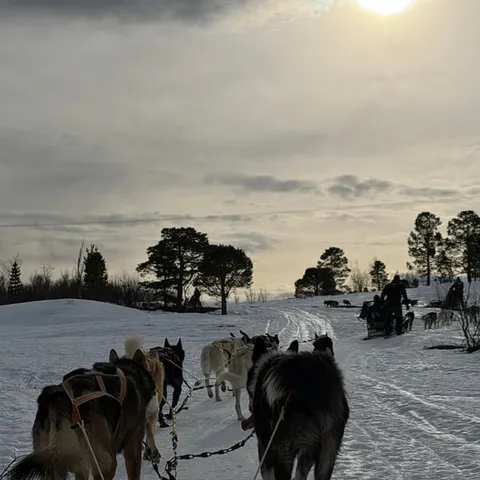
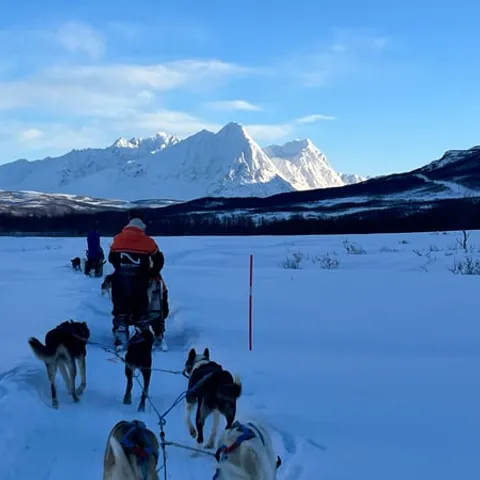
La réservation effectuée sur ce site est Tromsø : Aventure de traîneau à chiens en liberté avec conduite autonome. Elle dure 4 heures avec un moniteur anglophone, commence à partir de 351 USD et est notée 4,91 sur 4 408 avis.[19] En conduite autonome, vous gérez vous-même votre petite équipe, le traîneau du guide étant devant vous et les chiens faisant le travail. Les arrêts indiqués sont Bus/coach, Kvaløya et Bus/coach, l'activité se déroule donc sur l'île.[19] Vous pouvez réserver maintenant et payer plus tard, et l'annulation gratuite est possible jusqu'à 24 heures à l'avance pour un remboursement intégral.[19]
D'autres excursions en chiens couvrent le même terrain de manière différente. Une excursion en liberté avec déjeuner traditionnel dure 4 heures à partir de 355 USD, notée 4,86 sur 2 050 avis.[21] Une excursion guidée en traîneau avec déjeuner dure 4 heures à partir de 358 USD.[23] Si vous préférez ne pas conduire vous-même l'équipe, l'Aventure de traîneau à chiens ludique et facile dure 4,5 heures à partir de 305 USD, notée 4,88 sur 2 077 avis, avec un arrêt à Breivikeidet.[22] Des journées plus longues sont également proposées : une aventure en traîneau à Tamokdalen dure 7 heures à partir de 356 USD.[24]
Que porter lorsque la neige devient humide
Les vêtements d'hiver à Tromsø travaillent dur. Ils doivent vous garder au chaud par une matinée calme et froide, et vous garder au sec quand la même journée se transforme en neige mouillée. Commencez par une couche de base thermique, ajoutez du polaire ou de la laine, et terminez par une veste coupe-vent et imperméable. Des bottes isolées avec de la place pour des chaussettes épaisses comptent plus qu'un manteau lourd lorsque vous restez debout longtemps sur les patins. Les moufles l'emportent sur les gants par grand froid, et une paire de rechange dans votre sac vaut le poids qu'elle ajoute.
Des lunettes de protection ou des lunettes de soleil aident lorsque le soleil bas se reflète sur la neige, et un passe-montagne fin empêche un capuchon de vous frotter le visage jusqu'à le rougir. Demandez à l'opérateur quel équipement extérieur il prête avant de faire vos bagages, et signalez toute limitation de mobilité lors de la réservation : vous devez garder l'équilibre, changer de poids et descendre d'un traîneau en mouvement au cours de la journée. Kvaløya commence à moins de 5 km du centre de Tromsø au pont de Sandnessund.[25]
Un point pratique sur le choix du moment. La lumière du jour augmente rapidement au printemps, et une excursion d'une demi-journée peut commencer en plein soleil et finir dans une lumière bleue douce, tandis que le même trajet pendant les semaines les plus sombres se déroule presque entièrement en crépuscule. Choisissez votre mois pour la lumière que vous souhaitez autant que pour la neige.
Où aller quand les sentiers ramollissent
Lorsque les traîneaux cessent de circuler, le même paysage reste ouvert pour la marche et pour le temps passé avec les animaux. Une excursion en raquettes avec rencontre de rennes dure 4 heures à partir de 189 USD.[26] Une randonnée en raquettes guidée avec visite de chenil dure 5 heures à partir de 189 USD.[27] Les visites de chenils se poursuivent pendant les semaines intermédiaires également : une séance d'entraînement de chiots dans un chenil de huskys dure 4,5 heures à partir de 172 USD, notée 4,94 sur 402 avis.[28] Pour une introduction plus douce aux chiens de traîneau, une rencontre avec des huskys et gâteau au chocolat fait maison dure 2 heures à partir de 105 USD.[29]
La communauté canine autour de Tromsø n'est pas un spectacle. Depuis plus de trois décennies et à travers deux générations, la famille de Holmen Husky Lodge élève et fait courir des huskys de l'Alaska sélectionnés pour l'endurance, la résistance et le cœur.[30] L'élevage de rennes a des racines encore plus profondes : près de Tromsø, la culture d'élevage de rennes des Sámi est représentée par une famille d'éleveurs de rennes des Sámi qui vit et travaille avec les rennes depuis de nombreuses générations.[31] Si vous souhaitez voir l'autre grande attraction hivernale, les Dômes de glace de Tromsø se trouvent à 95 km de Tromsø, au cœur de la vallée de Tamok.[32]
Autre chose qu'il vaut la peine de savoir : la Finnmarksløpet est la plus longue course de chiens de traîneau d'Europe.[33] Et si une journée en motoneige vous tente, notez qu'en Norvège, un permis de conduire de catégorie S vous autorise à conduire une motoneige ouverte, et dans certains cas vous pouvez conduire sans permis.[34] Par les journées printanières dégagées, le téléphérique Fjellheisen monte à Storsteinen, à 421 mètres d'altitude, pour une vue sur la ville et l'eau.[35]
Durée de chaque excursion en traîneau
Durées indiquées sur chaque page GetYourGuide :[19],[21],[22],[24],[29].
Excursions en chiens, prix à partir de en dollars américains
Prix à partir de en dollars américains pour ces offres GetYourGuide :[19],[21],[23],[22]. Les tarifs enfants ne sont pas indiqués pour ces offres, ils sont donc omis ici.
Quand chaque partie de la saison ouvre
Planifier en fonction du dégel
Vérifiez la neige, pas la date
La saison de traîneau dans le nord de la Norvège s'étend généralement de décembre à mars, selon les conditions de neige.[15]
Réservez d'abord la journée en chiens
L'excursion en conduite autonome dure 4 heures à partir de 351 USD et offre l'annulation gratuite jusqu'à 24 heures à l'avance.[19]
Gardez un jour de libre
Le temps évolue vite au printemps. Un jour de réserve vous permet de changer la date de votre excursion en traîneau sans perdre le reste de vos projets.
Habillez-vous pour deux saisons
Des couches chaudes et sèches conviennent aux matinées froides et aux après-midi humides. Demandez au chenil quel équipement extérieur il prête avant de faire vos bagages.
Posez des questions sur l'âge et les capacités
Sur l'excursion Fun and Easy Dog Sledding, les enfants peuvent participer s'ils ont au moins 7 ans et sont accompagnés d'adultes.[36]
Conduisez votre propre équipe avant que la neige ne parte
à partir de 351 US$Réservez maintenant, payez plus tard