The main points
- A kennel year has five rough phases: rest and conditioning in summer, puppy raising, cart training in autumn, working teams in winter and retirement.
- Dog sledding in Northern Norway typically runs from December to March, depending on snow conditions.[1]
- Handling, harness manners and short walks come long before a puppy ever lines up in a full team.
- Before snow arrives, teams train on wheeled carts, building fitness, line manners and commands ahead of winter.
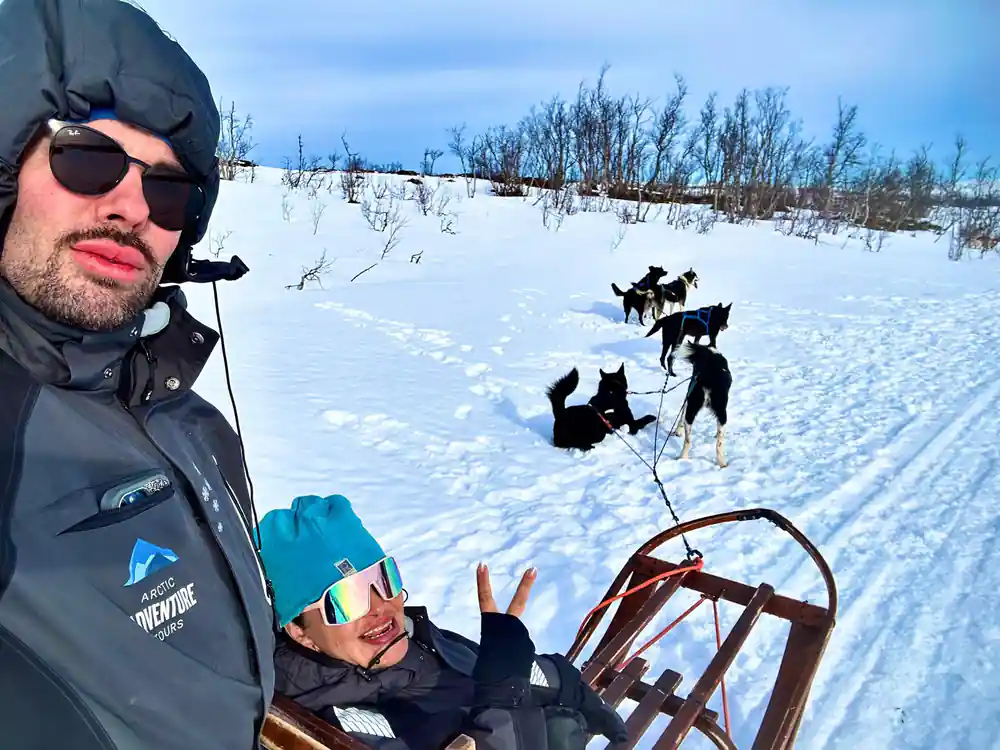
- On the self-drive tour from Tromsø you handle your own dog team, and the instructor speaks English.[2]
- Top choice Self-drive on Kvaløya from US$351 Duration4 hours[2]Rating4.91 from 4,408 reviews[2]GuideInstructor: English[2]CancellationCancel up to 24 hours in advance[2] Check availability
- Self-drive with lunch from US$355 Duration4 hours[3]Rating4.86 from 2,050 reviews[3]GuideLive tour guide: English[3]CancellationCancel up to 24 hours in advance[3] See this tour
- Fun and easy dog sledding from US$305 Duration4.5 hours[4]Rating4.88 from 2,077 reviews[4]GuideLive tour guide: English[4]CancellationCancel up to 24 hours in advance[4] See this tour
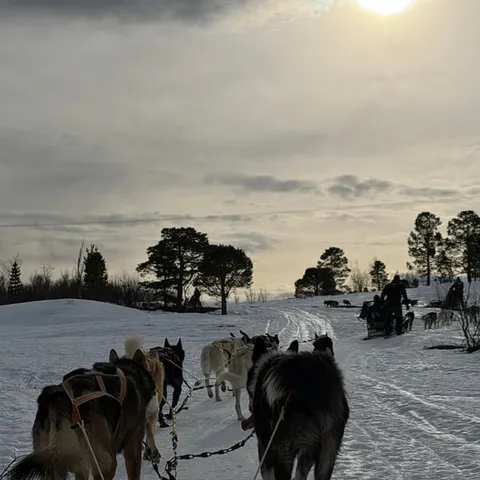
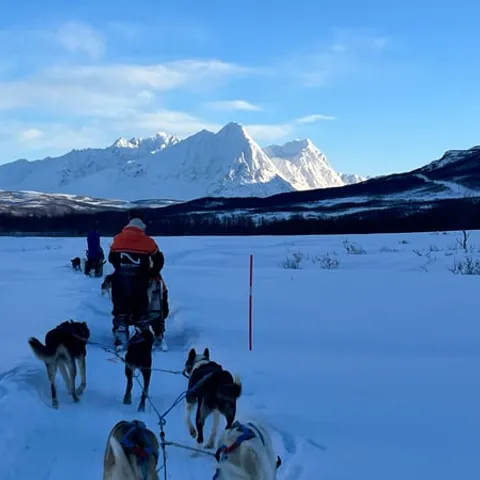
Finnmarksløpet - the longest dog-sled race in Europe challenge mushers to explore the limits of their capabilities and perform.
Is the kennel year worth planning around?
What to pack for the kennel
- Thermal layers plus a windproof outer layer for standing on the sled
- Goggles or sunglasses for snow glare and low winter light
- Warm gloves and a spare pair, because hands work hardest in the cold
- A small rucksack for a camera, water and spare socks
Getting there and booking
- Book a tour with transfers if you would rather not drive yourself
- Check snow conditions and season dates before you fix your travel
- Reserve early for popular sledding dates around the winter holidays
- Ask how many guests share the kennel on your chosen day
Summer Conditioning and Rest
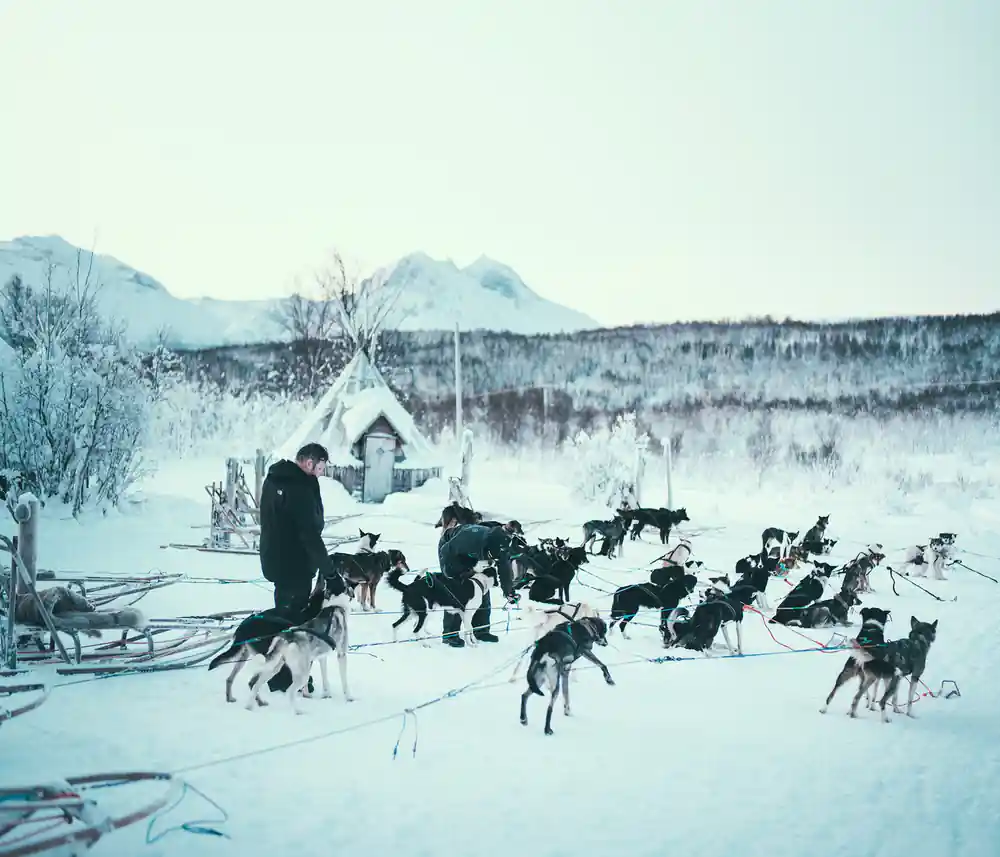
Summer at a Tromsø kennel looks lazy and is anything but. The snow has gone, the trails are mud, and the dogs trade pulling for rebuilding. Handlers take them on free runs through the birch woods, let them swim in lakes and fjord shallows, and keep them moving enough to hold the muscle they built over winter. Older dogs set the pace and youngsters learn by copying them.
The same weeks are used for maintenance. Harnesses are checked stitch by stitch, sleds are sanded, bags are patched, and the yard gets whatever repairs a long winter postponed. Dogs with thick double coats are worked in the coolest hours of the day, early morning and late evening, and shaded runs and water tubs matter more than any training plan.
Even the daylight takes some managing. Midnight sun in Tromsø usually lasts from around 20 May to 22 July, and the nights never go properly dark.[5] Kennels often shift training to the small hours and use shaded rest areas on the warmest afternoons. By the end of summer the yard is full of fit, restless dogs waiting for the first cold snap.
Raising and Socialising Puppies
Most litters in the north arrive in late winter or early spring, when the kennel is quiet and handlers have time. Puppies spend their first weeks in a whelping box indoors, then graduate to a pen where they meet the noise of a working yard: sleds being dragged, strangers in bulky jackets, other dogs barking at feeding time. Everything is a lesson, and the calmest adults are the best teachers.
Socialising is deliberate work. Puppies are handled daily, their feet and ears touched, their claws trimmed and their coats brushed, so that vet visits and boot fitting later on are no drama. They wear a soft harness for short periods before they ever pull. They learn their names, come when called, and wait while a bowl is filled. A kennel that gets this right has dogs that stand quietly while a visitor says hello.
At Holmen Husky Lodge the family has raised and raced Alaskan Huskies bred for endurance, resilience and heart for over three decades and through two generations.[6] For travellers who want puppy time without a full sledding day, there is a puppy training session at a husky kennel with lunch, from US$172, and a husky hike with a puppy visit, also from US$172.[7][8] Both are built around the yard rather than the trail.
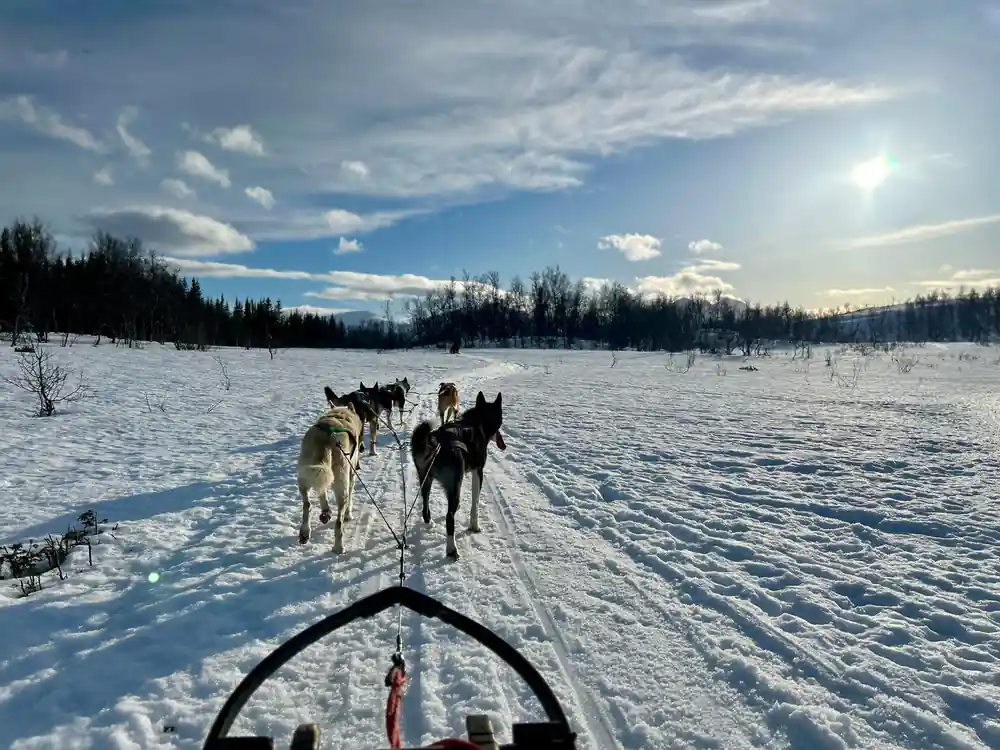
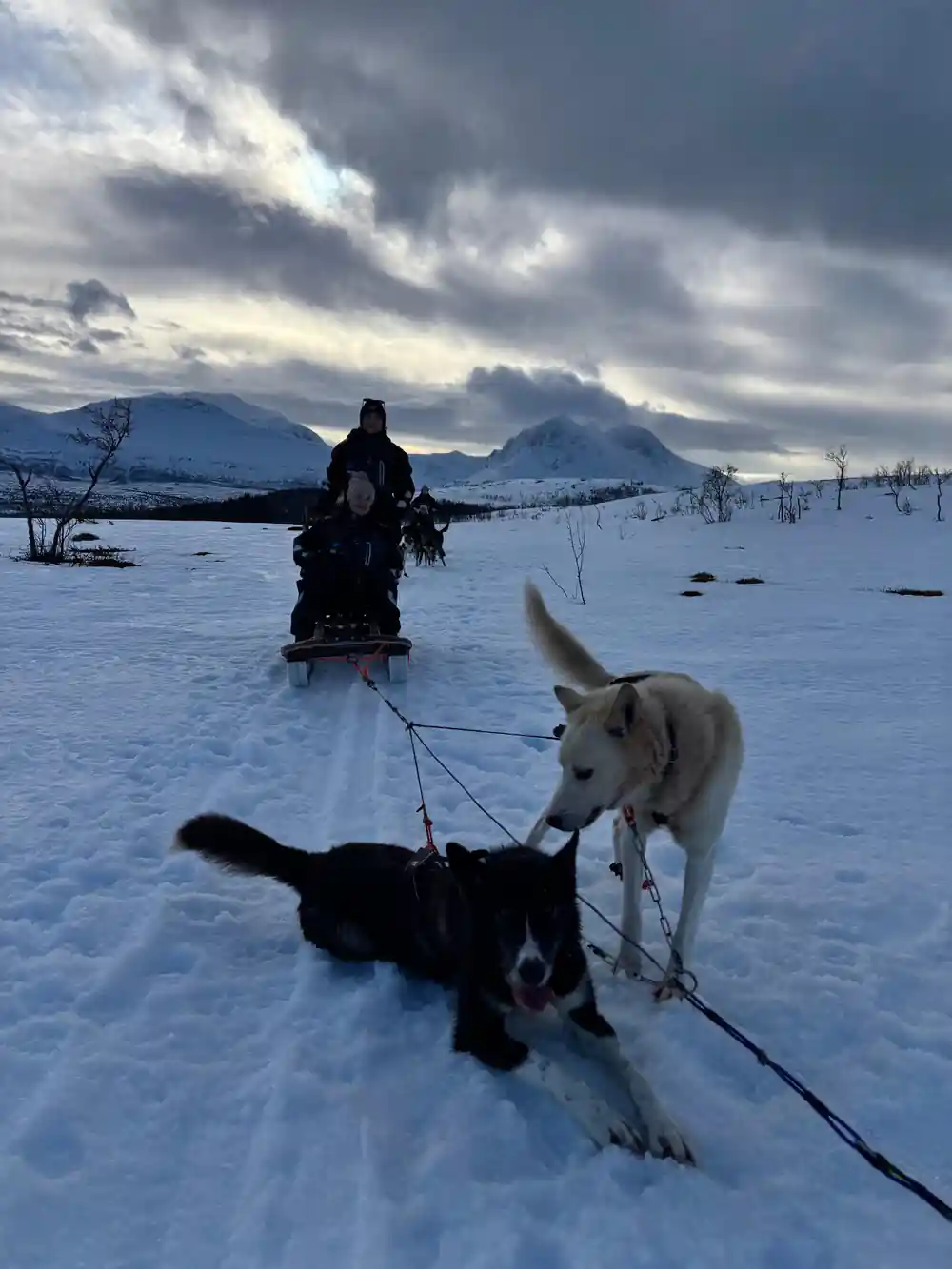
A young dog learning to hold the line beside an older, steadier one.
Wheeled-Cart Training in Autumn
When the first frosts come and the ground hardens, sled dogs go back to work on wheels. Kennels use carts, rigs and quad bikes to give teams a load to pull before there is any snow. At first a young dog runs beside an experienced one, learning to hold a line and ignore distractions. Then the team grows: three dogs, four, six, until a full string is moving together.
This is where commands stick. Gee and haw, easy, hike, whoa. Handlers teach braking and snow hook drills on grass, so that on snow the reflexes are already there. Autumn sessions are short and frequent rather than long, because young dogs need confidence more than distance. A dog pushed into hard running too early will spend the winter sulking at the back of the team.
Autumn also brings the dark back. The Northern Lights season in Tromsø runs from late August to early April, and drivers often finish a cart session under green light, with head torches on and the dogs' breath visible.[9] Kvaløya, the island where much of the local sledding happens, begins less than 5 km from central Tromsø, so teams can train on quiet forest tracks within a short drive of town.[10]
First Winter Teams and Working Life
The first proper snowfall changes everything. Sleds come off the racks, runners get waxed, and a young dog lines up with the team for a real run on snow for the first time. Handlers watch for the same things they watched for on wheels: does the dog hold the line, does it pace itself, does it answer the brake? Dogs that pass find themselves in a working team and stay there for the season.
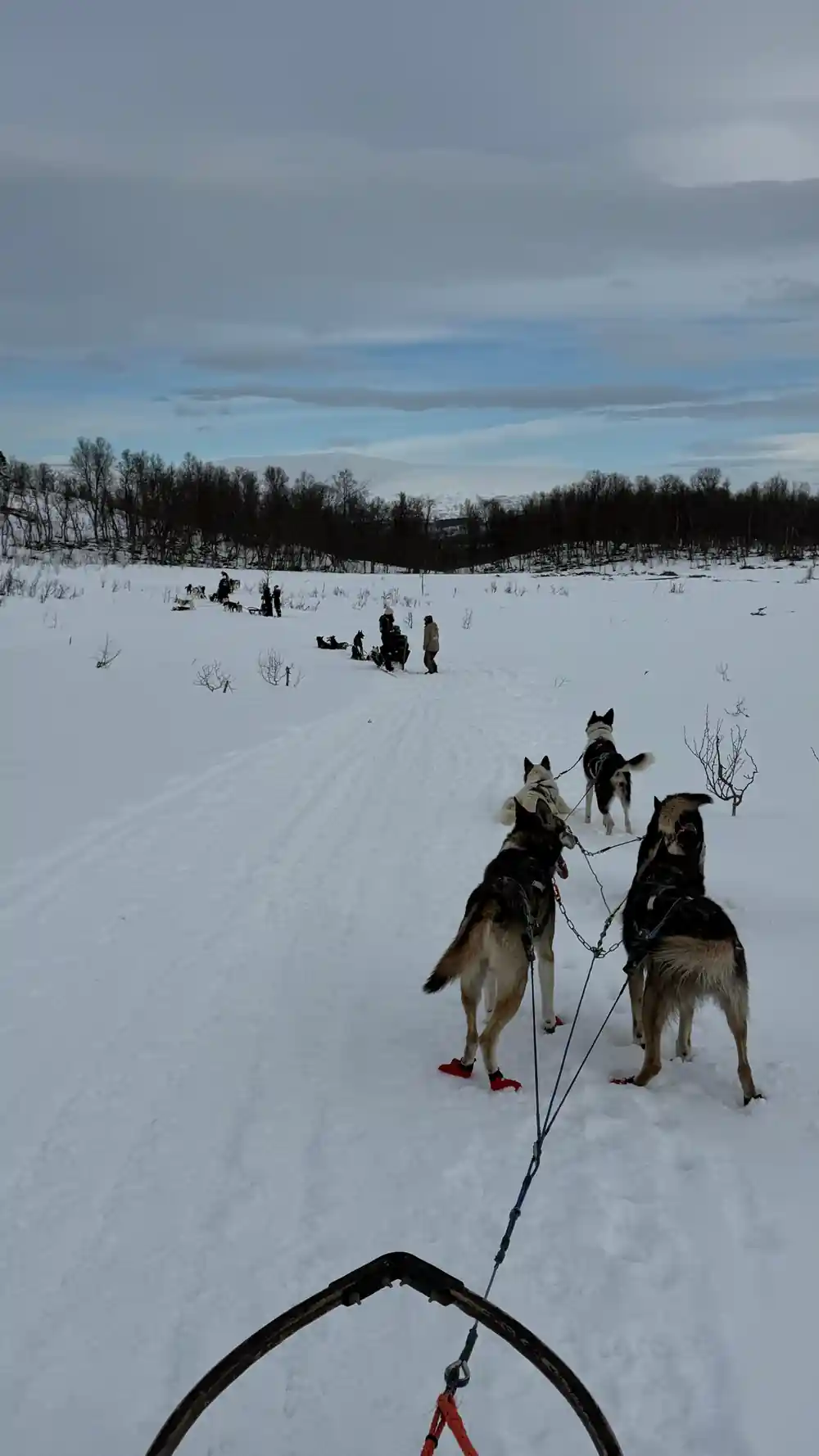
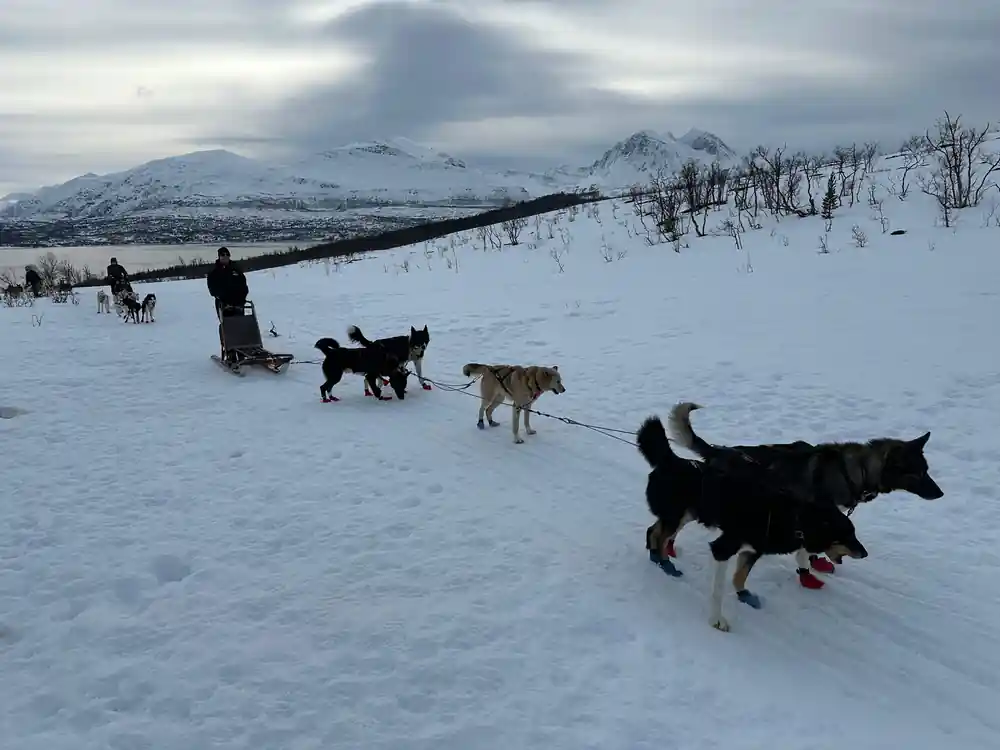
Working life is a rhythm of runs and rest. A kennel might run a team in the morning, then feed, water, check paws and let everyone sleep. The average winter temperature in Tromsø is around −4°C, and wind on an open sled makes it feel far colder.[11] Booties go on for the dogs that need them, and older or heavier dogs get shorter routes.
The dog sledding season in Northern Norway typically runs from December to March, depending on snow conditions, and the Polar Night in Tromsø begins on 27 November and lasts until 15 January, so plenty of running happens in blue twilight.[1][12] Some kennels also follow racing closely, and Finnmarksløpet is the longest dog-sled race in Europe.[13]
from US$351
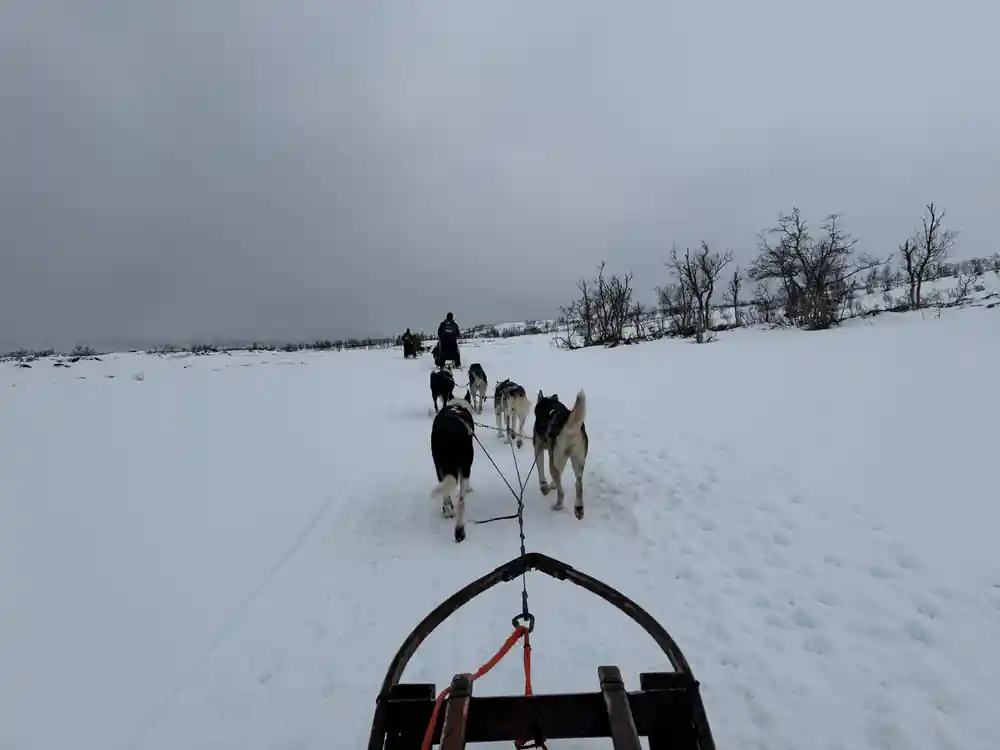
The self-drive husky dog sledding adventure from Tromsø starts from US$351, lasts 4 hours and holds a 4.91 rating from 4,408 reviews.[2]
Retirement and Life After Pulling
Sled dogs do not retire on a fixed date. Most kennels judge by the dog: when it starts losing condition, when it hangs back on hills, when it would rather stay in the yard than line up at the gangline. A dog may drop from the front of the team to the middle, then to short guest runs, then to escort duty with a young team that needs a steady influence.
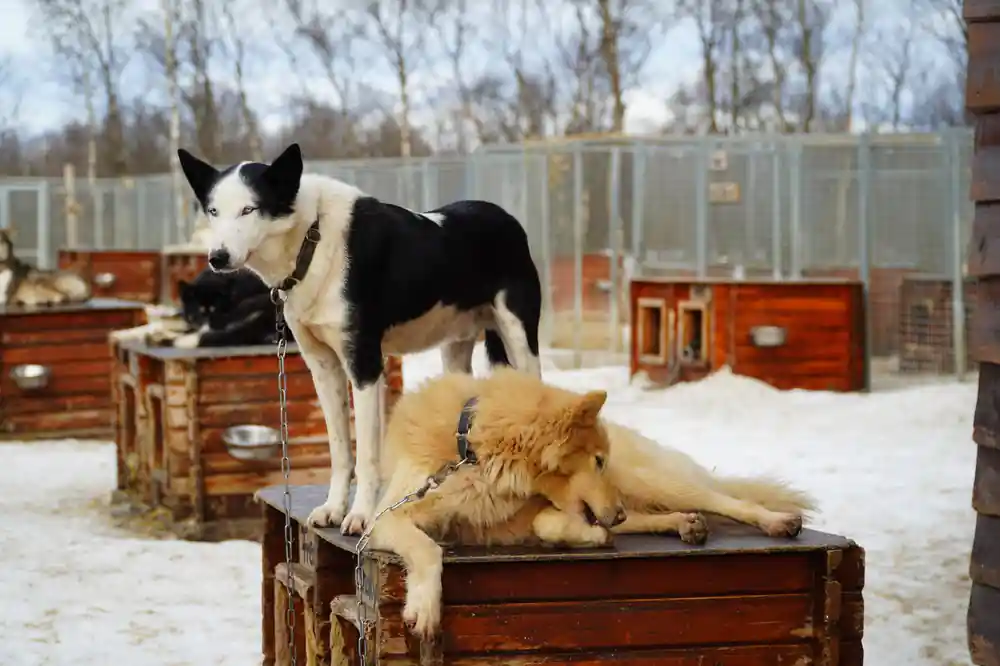
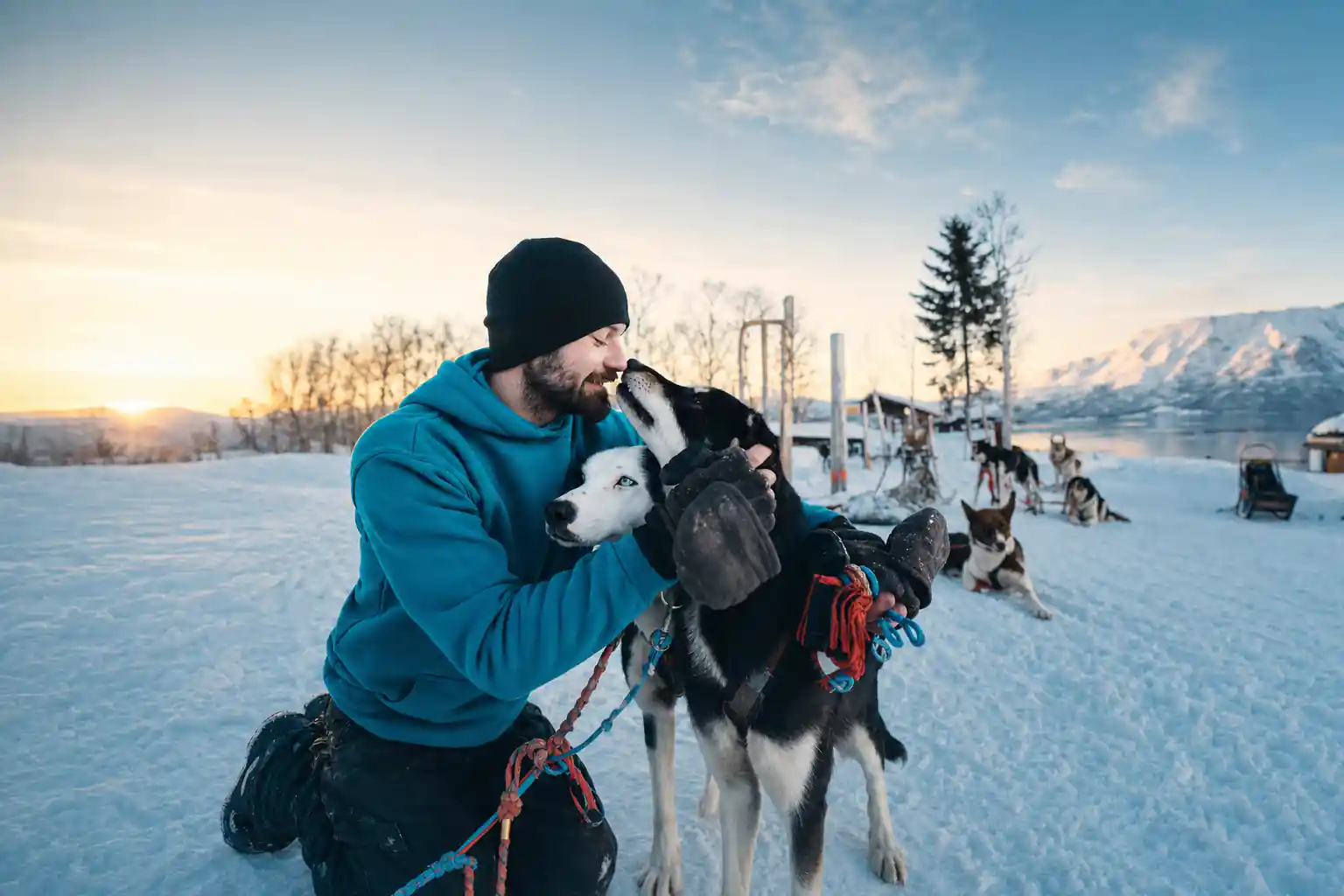
Retirement in a good kennel is rarely a one-way door out. Many older dogs stay as yard dogs, greeting visitors, walking with guests and teaching puppies manners. Others move into homes as pets, often with the handlers who looked after them. Some keep working in a different way: an easy hiking companion, a dog for photographs, a calm presence for nervous first-time visitors.
Travellers can meet dogs that are nowhere near a sled. A husky meet and greet with homemade chocolate cake lasts 2 hours and starts from US$105, and a husky hike with a puppy visit, from US$172, is rated 4.97 from 194 reviews.[8][14] Both are built around the animals rather than the ride, which suits anyone who would rather walk than drive.
The Kennel Year at a Glance
Put simply, the kennel year turns on snow. Spring is for litters and light work. Summer is rest, conditioning and repairs, in long light and sometimes uncomfortable heat. Autumn brings carts, cool mornings and the return of the aurora. Winter is the working season, when teams run guests across snow and the days are short. Then the snow goes and the cycle starts again, with the oldest dogs watching the youngest learn.
That cycle shapes what a visitor can actually do. In the dark months you can drive a team, ride as a passenger or visit a kennel in the evening. In the light months you can hike with dogs, meet puppies and see the yard running at a gentler pace. Winter light matters too: the sun stays low and the days shorten, then the light builds again as the season turns, so long views come easier later in the year.
It is worth deciding which part of the year you are really coming for. The Northern Lights season in Tromsø runs from late August to early April, and the dog sledding season in Northern Norway typically runs from December to March, depending on snow conditions.[1][9] Check snow reports and season dates before you commit to a date.
Planning a Winter Visit Around the Kennel Calendar
Tromsø for New Year falls inside the dog sledding season in Northern Norway, which typically runs from December to March depending on snow conditions, and inside the Polar Night, which begins on 27 November and lasts until 15 January.[1][12] That combination gives you dark skies above and working teams below.
If you want to handle a team yourself, the self-drive husky dog sledding adventure from Tromsø is the obvious starting point here. It lasts 4 hours, has an instructor who speaks English, and runs from US$351, with a route that goes from a bus or coach to Kvaløya and back.[2] It is rated 4.91 from 4,408 reviews, you can reserve now and pay later, and you can cancel up to 24 hours in advance for a full refund.[2]
If you want a longer day out with food built in, the husky sled self drive with traditional lunch lasts 4 hours and starts from US$355, and the fun and easy dog sledding adventure lasts 4.5 hours from US$305.[3][4] Families should check ages first: on the Fun and Easy Dog Sledding tour in Breivikeidet, children can join if they are at least 7 years old and accompanied by adults.[15]
How long husky sledding tours from Tromsø run
From-prices for husky sledding tours
Amounts are US dollar from-prices for these tour listings:[2][3][4]
When to come for which part of the kennel year
How the kennel year runs
Spring: rest and litters
The working season winds down and litters arrive, so handlers have time for puppy handling and for repairs.
Summer: conditioning
Free running, swimming and early morning exercise keep the team fit, and midday is for shade and water.
Autumn: cart training
Wheeled rigs teach line manners, commands and braking before the first snow settles on the trails.
Winter: working teams
Fit dogs join full teams on snow and run guests through the short, cold days of the sledding season.
Later years: slower work
Older dogs move to shorter runs, escort duty, walks with visitors and teaching the puppies manners.
Drive your own husky team on Kvaløya this winter
from US$351Reserve now & pay later