The main points
- Yes, you can dog sled in Tromsø with no experience. Instructors run beginners through the sled, the dogs and the commands before anyone sets off.
- The self-drive tour booked here runs 4 hours with an English-speaking instructor, and free cancellation up to 24 hours in advance.[14]
- The average winter temperature in Tromsø is around −4°C. Dress for it with layers rather than one heavy coat.[15]
- The self-drive route runs out to Kvaløya, and Kvaløya begins less than 5 km from central Tromsø.[14][16]
- Tipping over, tangles and a team that runs on without its driver are normal parts of the day. Guides step in, and you are never expected to fix a tangle alone.
- Top choice Self-Drive Husky Adventure from US$351 Duration4 hours[14]Rating4.91 from 4,408 reviews[14]GuideEnglish instructor[14]CancellationFree cancellation up to 24 hours[14] Check availability
- Husky Sled Self-Drive from US$355 Duration4 hours[17]Rating4.86 from 2,050 reviews[17]GuideEnglish live guide[17]CancellationFree cancellation up to 24 hours[17] See this tour
- Fun and Easy Dog Sledding from US$305 Duration4.5 hours[18]Rating4.88 from 2,077 reviews[18]GuideEnglish live guide[18]CancellationFree cancellation up to 24 hours[18] See this tour
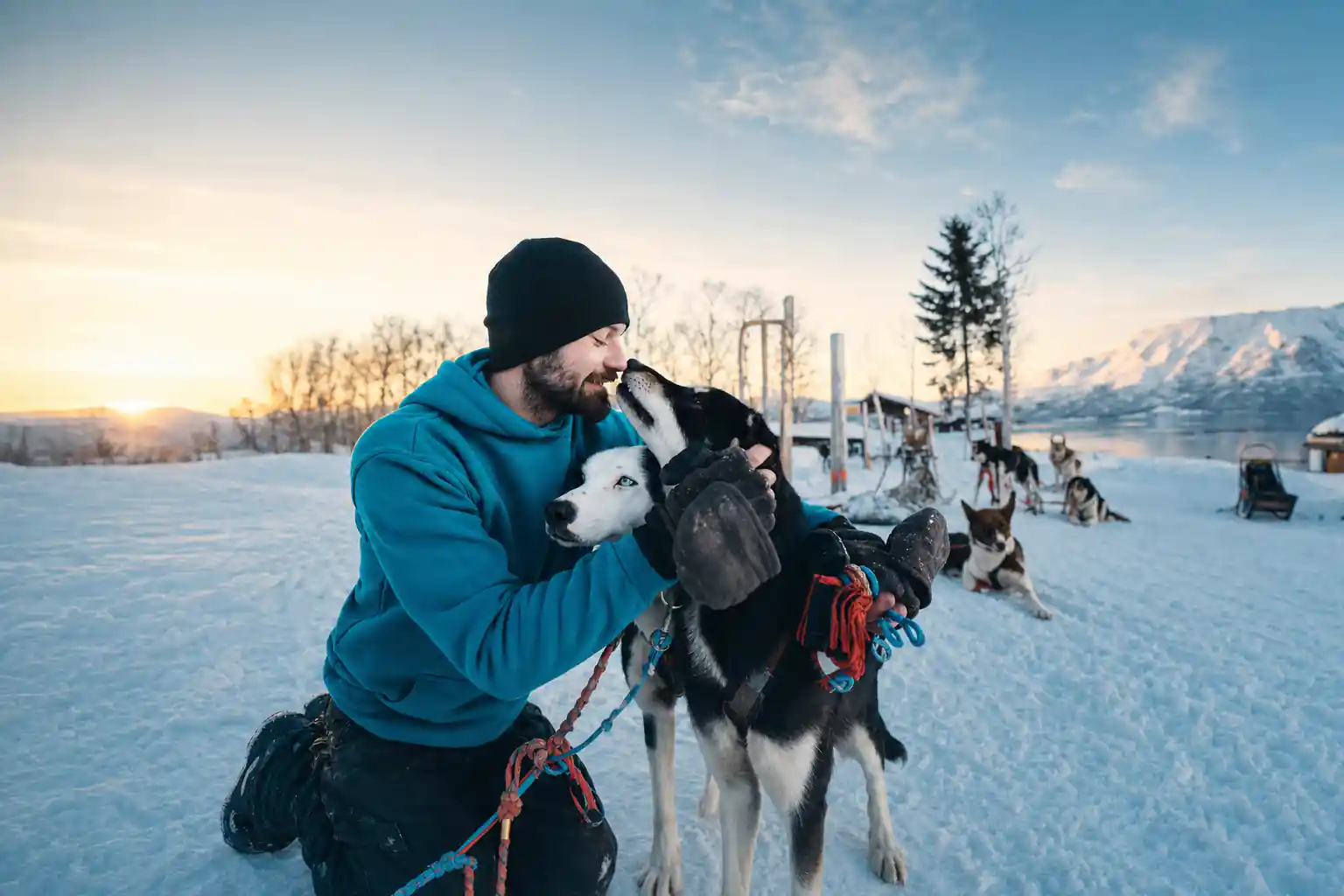
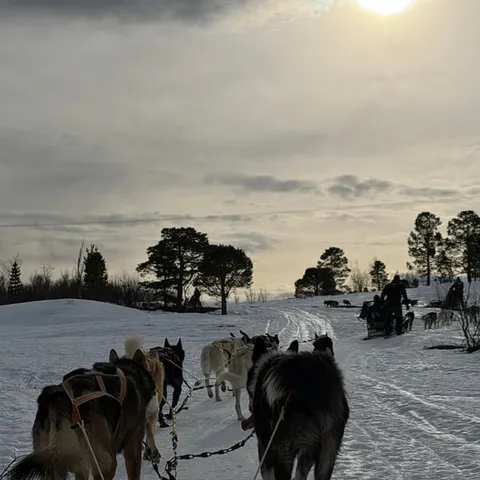
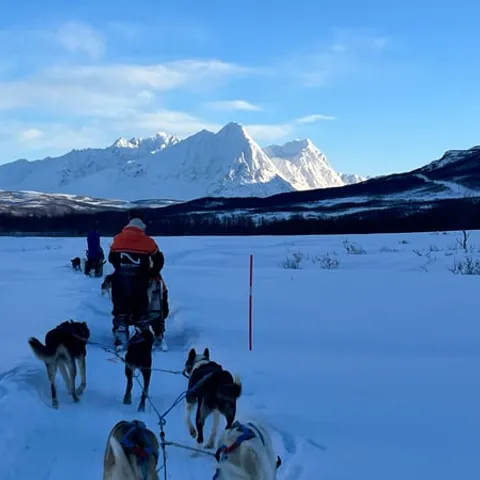
Polar Night Season happens every year in Tromsø . It begins on November 27th and lasts until January 15th.
Is the self-drive husky tour safe for beginners?
Pack for a cold, active day
- Warm layers you can move and bend in
- A thin balaclava or buff under your hat
- Sunglasses for glare off snow and low winter light
- Spare gloves tucked in an inside pocket
Keep the day running smoothly
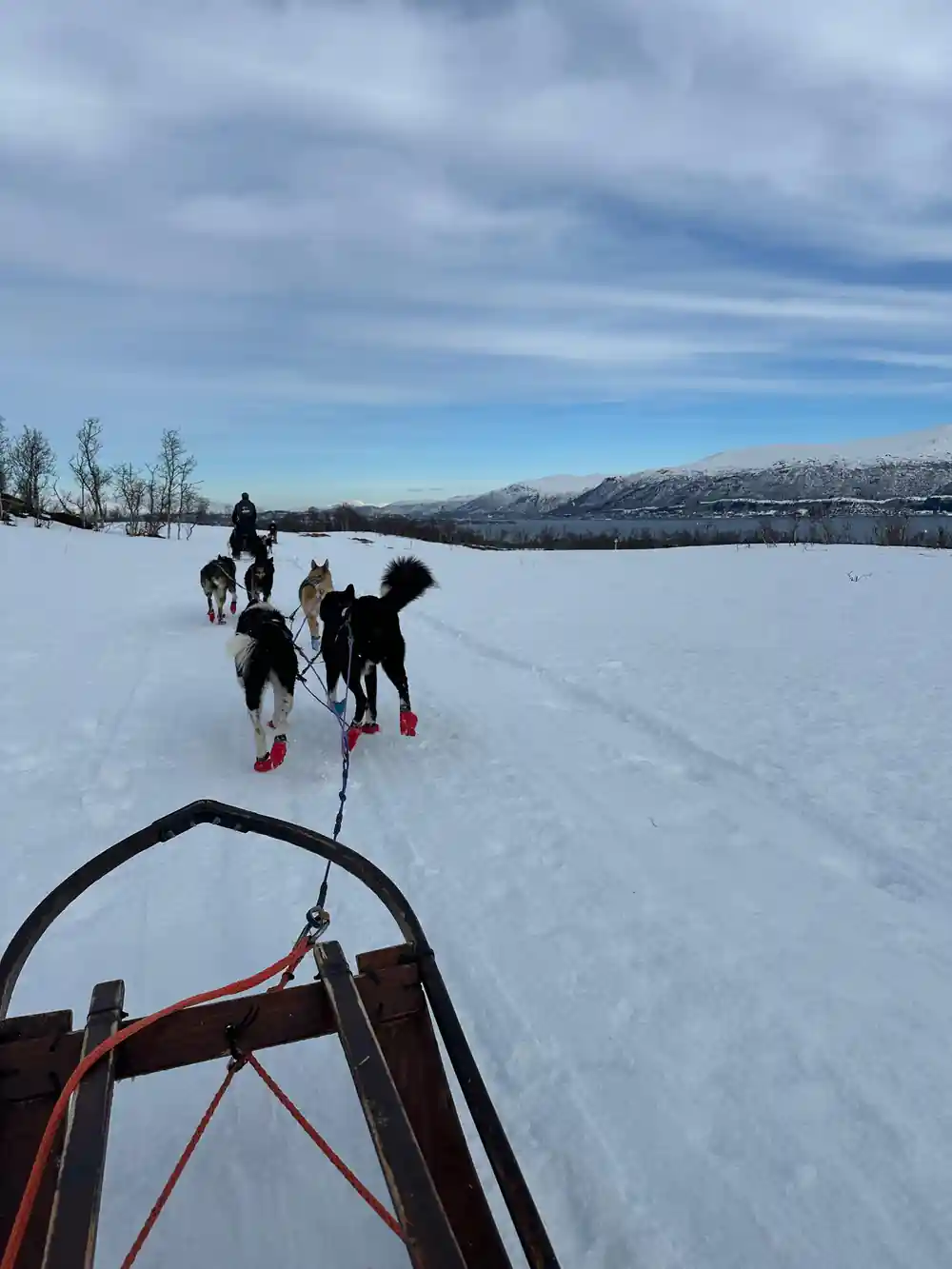
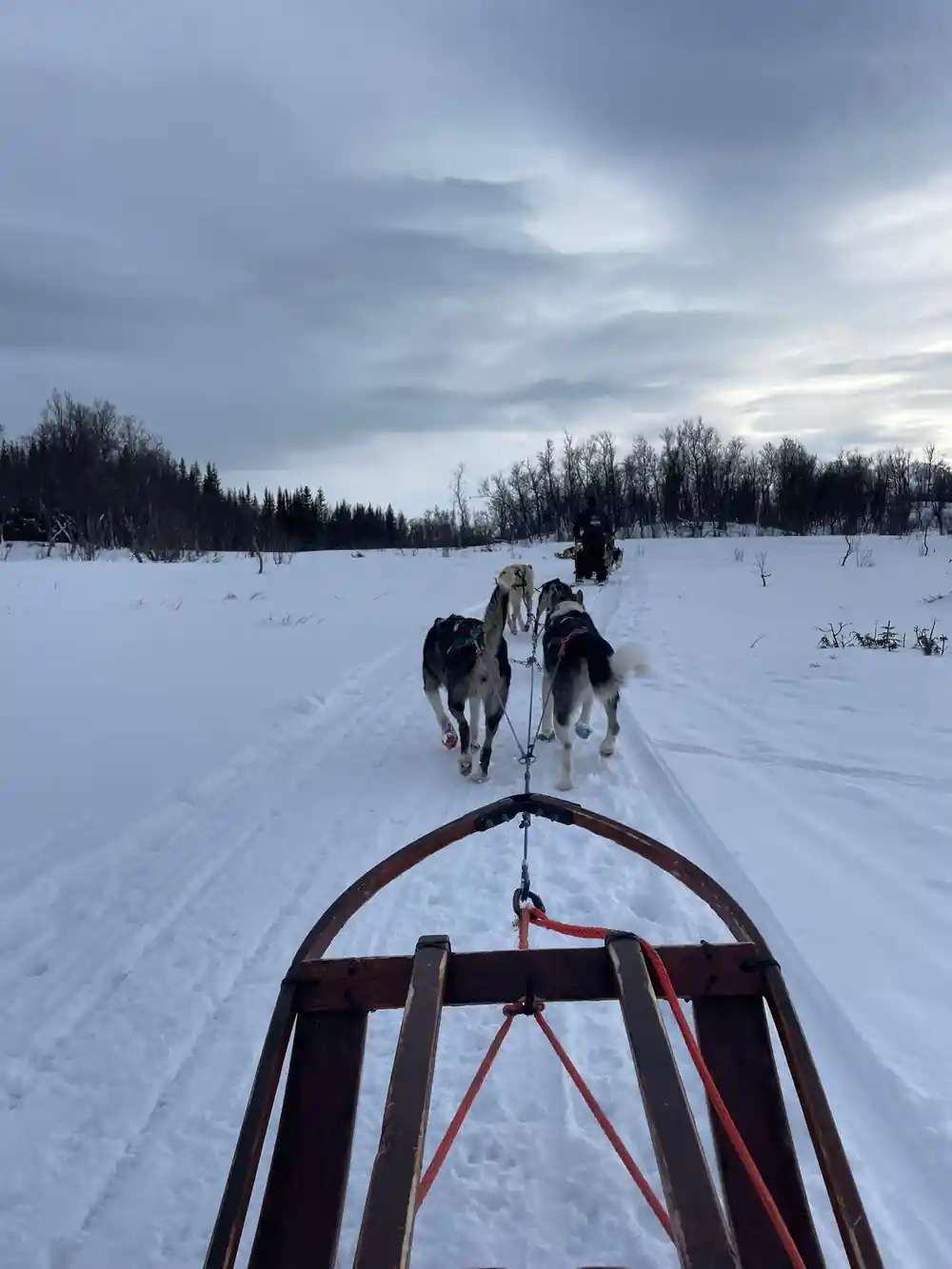
- Hold a steady gap from the sled in front of you
- Both hands on the handlebar through turns and dips
- Let the guide finish sorting the lines before you set off
- Say early if you are hurt, unwell or nervous about driving
What Happens When a Sled Tips Over
On a self-drive tour you are the one steering, so if the sled goes over it is usually the driver who has tipped it rather than the dogs. The runners are narrow, the trail is rarely flat, and a team that swings left will lean the whole sled with it. At the speeds beginners travel, a tip is a slow roll into soft snow instead of a crash, and the dogs usually stop as soon as the sled stops moving. Nothing about it is unusual, and the guide has watched it happen many times before.
Your instructor talks the group through this before you set off, which is why the briefing at the start is worth listening to properly rather than nodding through. The self-drive tour booked here runs for 4 hours[14], so there is time to find your feet on the runners. Ask your questions while the team is still standing in the yard, before the dogs are hooked up and pulling.
If the sled does go over, let it. Keep your legs inside rather than stretching a foot out to catch yourself, tuck your arms in and wait for the movement to stop. Then check yourself over, look for your guide and get clear of the team. Righting a sled and sorting the lines around it is routine work for the people running the trip, and it is much easier with two people than one.
Should You Let Go If You Fall Off?
The short answer is yes. If you come off the sled, let go of the handlebar and the rigging rather than letting the team tow you along the snow. A dog team is strong and eager, and being dragged face down behind a sled is how people get hurt. Let go, roll away from the line of travel and stay low until the guide has the team under control. The dogs will keep running for a while without a driver, but they are unlikely to go far.
The handlebar is the part beginners grip hardest, and that grip is exactly what you need to release in a fall. Practise the move in your head before you set off: hands off, roll to one side, stay still. Fighting the pull while a team runs is far worse than letting the snow slow you down. Guides watch the whole line of sleds, and a person lying quietly beside the trail is easy to spot from behind.
Being left alone on the trail sounds more alarming than it is. You are on a marked route with a group, other drivers are ahead and behind you, and the guide knows roughly where everyone is. Stay where you stopped rather than walking off after the team, and wait for someone to come back for you.
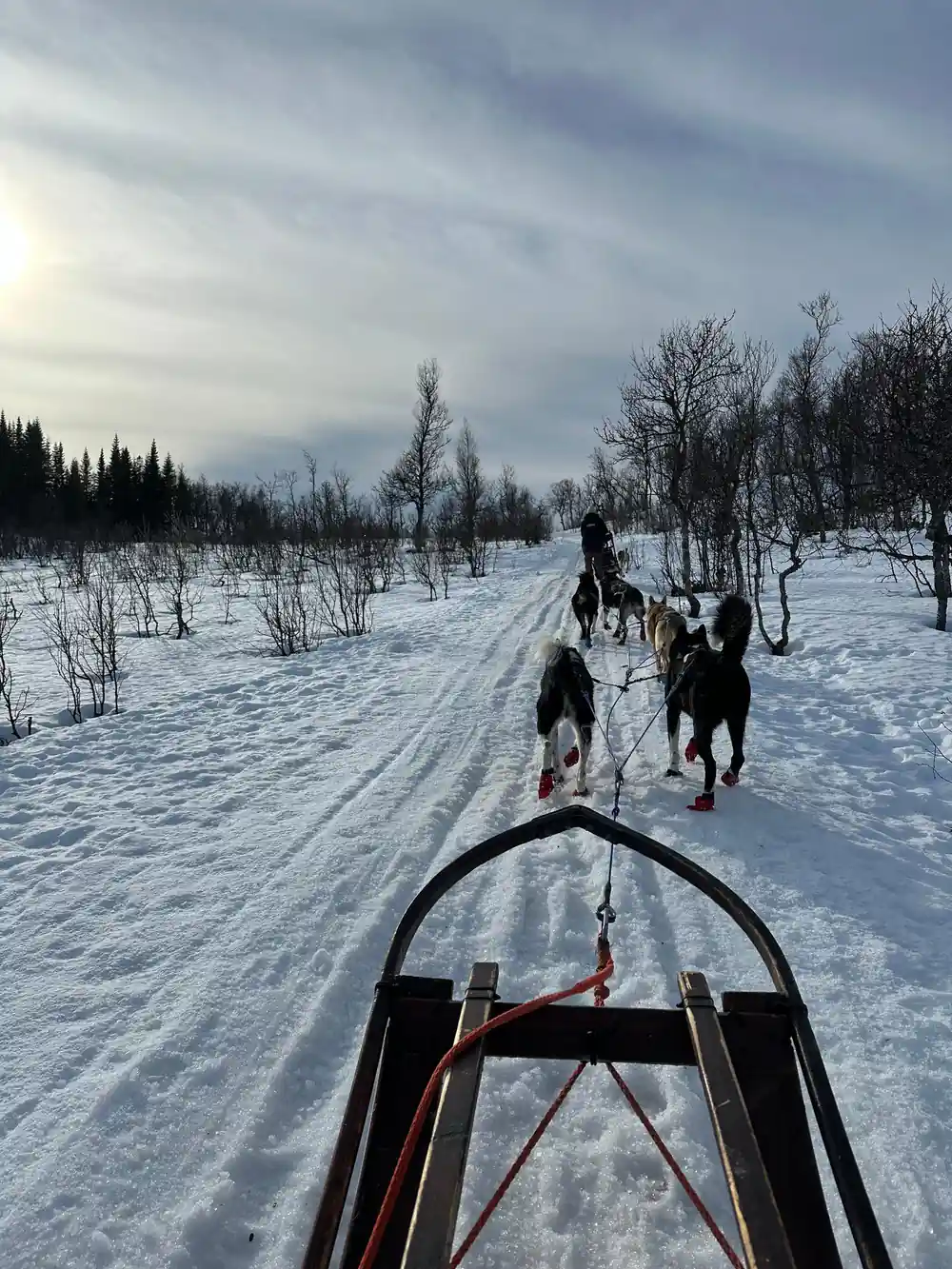
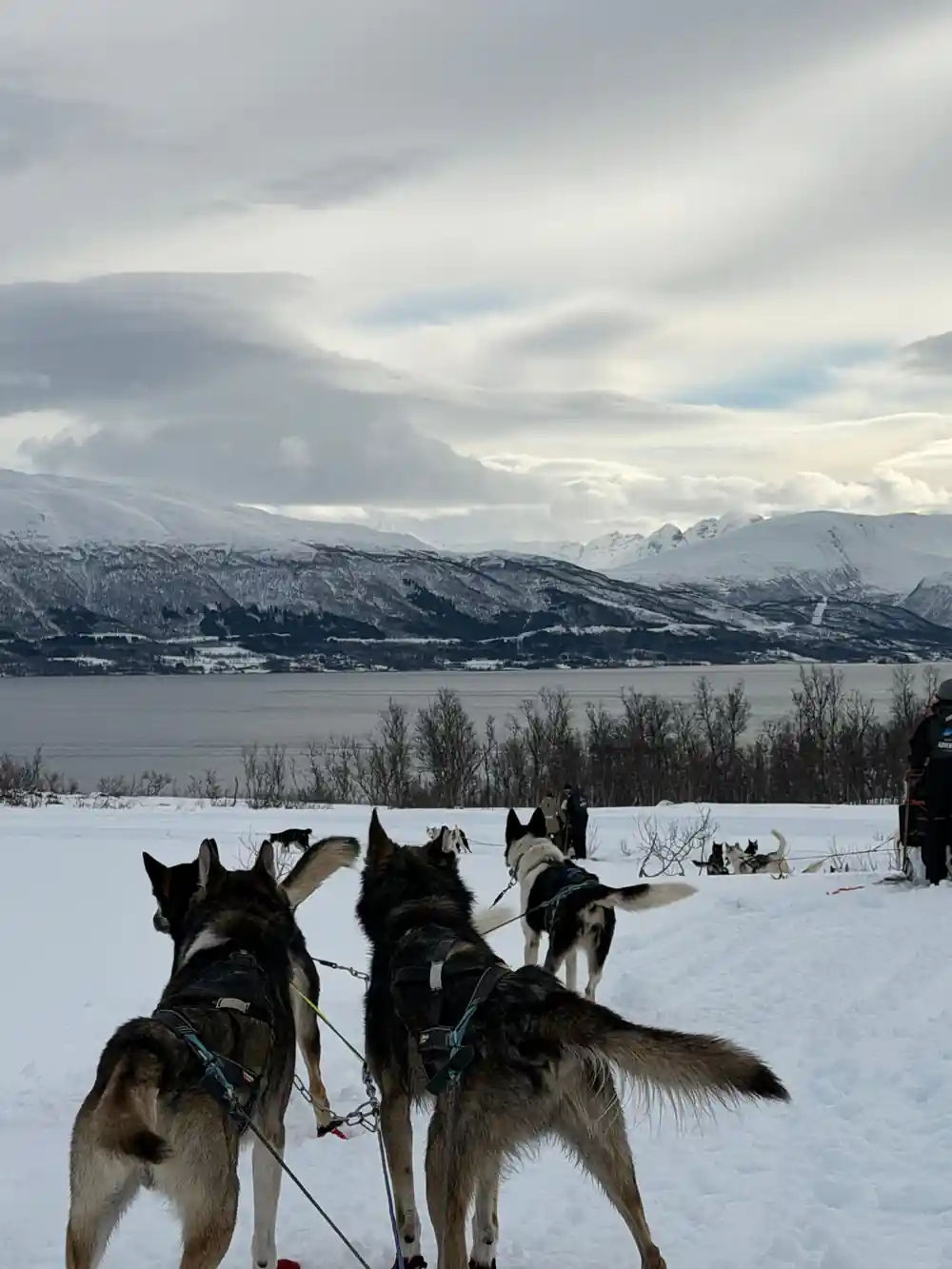
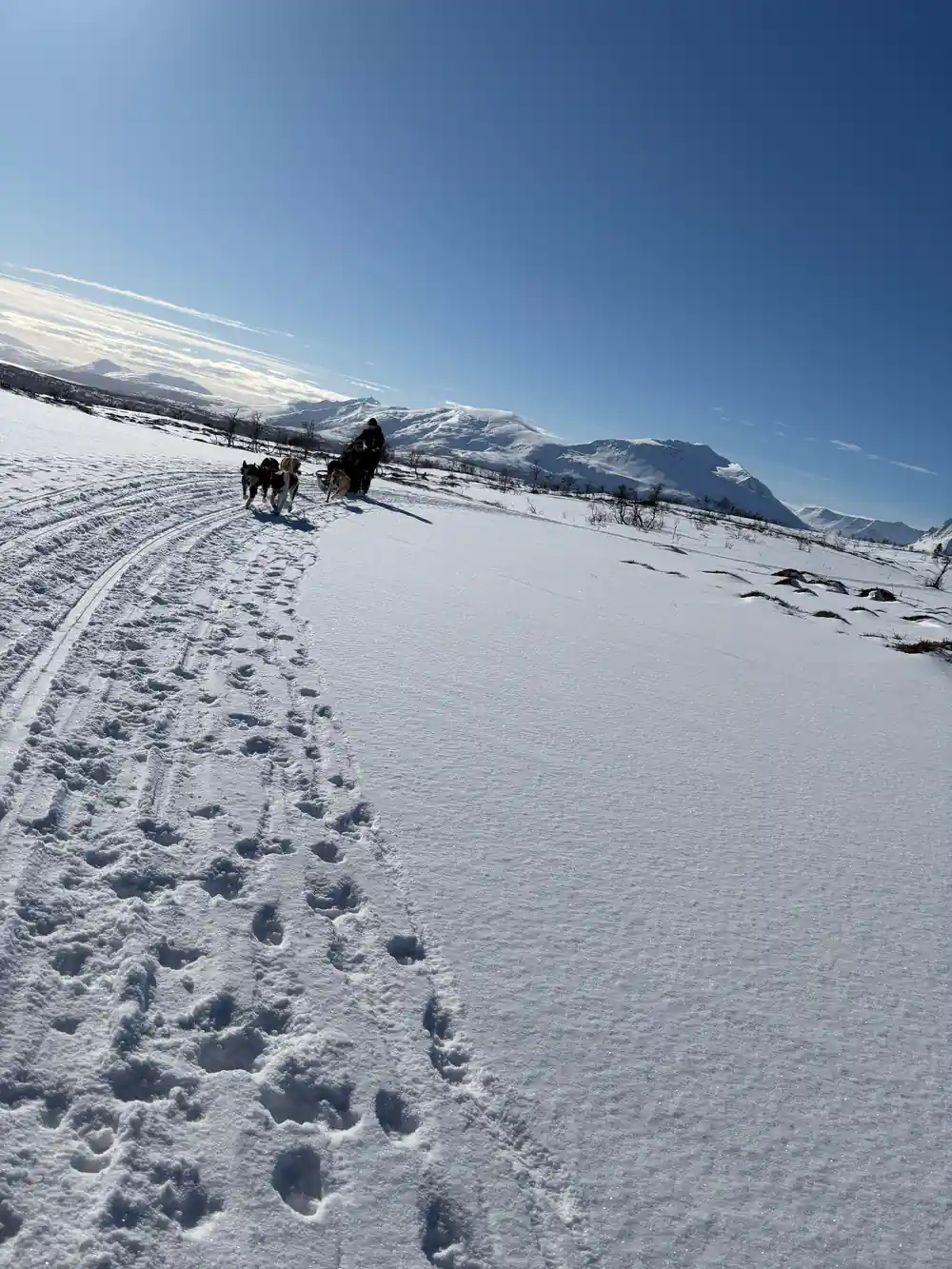
A husky team leaning into the harness on a snowy trail outside Tromsø.
How Guides Untangle Lines and Harnesses
A line of sleds, a lot of keen dogs and a rest stop are all it takes for lines to cross. A dog steps over a neighbour, a neckline slips under a leg, and two teams end up knotted together. Guides work from the dogs outwards when this happens: they steady the nearest animals first, lift a leg rather than pulling a line tight, and unclip only what has to come off. Tugging on a tangled line is how a calm dog turns into a worried one.
Your job during a tangle is to stand still, keep your weight off the sled and hold the handlebar so your team cannot surge forward. Do not lift a dog or unhook a harness unless the guide asks you to, because a nervous dog in a knot of straps is no place for unfamiliar hands. It usually takes a couple of minutes, and then the team is straight and running again.
If you want to understand what the guide is doing, ask to watch a harness being clipped before you leave the kennel. It is a simple clip and a strap, but seeing it once makes the whole business less mysterious. Many drivers find they can help at the next stop simply by holding a line clear of the sled.
Keeping in Touch on the Trail
Phone reception away from the centre of Tromsø is patchy and depends on where the trail runs, so treat your phone as a camera and an emergency backup rather than a live map. Cold drains batteries quickly, so a phone in an inside pocket stays useful far longer than one in an outer pocket. The self-drive route here goes out to Kvaløya[14], and Kvaløya begins less than 5 km from central Tromsø at the Sandnessund Bridge[16].
Real communication on the trail runs from guide to driver: hand signals, a shouted instruction, a raised arm to stop. If you need to stop for any reason, lift an arm and wait to be seen rather than climbing off and walking back along the line of sleds. Tell your guide before departure about anything you want them to know, whether that is asthma, a bad back or simply nerves.
A short check with the guide at the kennel is easier than a conversation in the middle of a run with wind in your face. If the group spreads out, the driver in front of you is often the quickest way to pass a message along.
from US$351
The Self-Drive Husky Dog Sledding Adventure takes 4 hours, with an instructor and free cancellation up to 24 hours in advance.[14]
Getting Medical Help If You Need It
Most husky days pass with nothing worse than cold fingers and a damp backside. Still, plan for the small things. Tell the guide before departure about asthma, a heart condition, a recent injury, pregnancy or anything else that might change how you handle a sled. If you start to feel unwell out on the trail, say so at the next stop instead of pushing on to the end of the run. Guides would far rather hear it early.
The self-drive route here heads out to Kvaløya[14], and Kvaløya starts less than 5 km from central Tromsø at the Sandnessund Bridge[16], so you spend the day on an island beside the city rather than deep in the interior. Tromsø is a compact city with a hospital, and the trips return to town at the end of the day. Travel insurance that covers winter activities is worth sorting out before you fly, and a photo of your policy on your phone costs nothing.
Guides carry what they need for the day and decide whether a knock, a twisted knee or a numb hand needs more than a sit down. If you are asked to stop and be checked, let them get on with it. And say something if you feel worse later, even after you are back in the minibus.
Can the Dogs Bite or Jump Up on You?
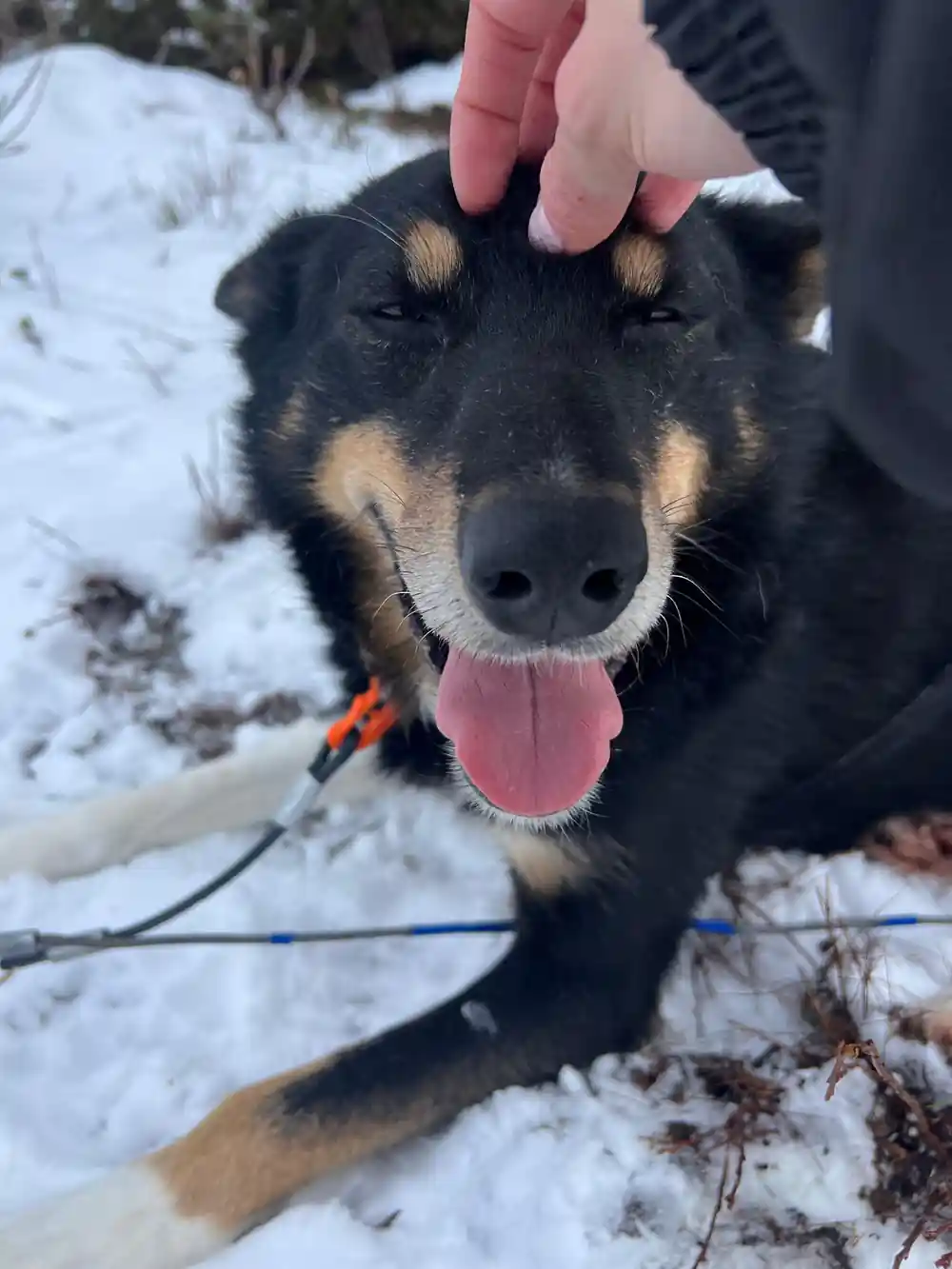
Sled dogs are working animals rather than pets. They are loud, strong and, when a team is being harnessed, far more interested in running than in being stroked. Dogs jump up, bark and tangle, and an excited paw or a mouth can catch your hand or your face, usually with no bad intent behind it. Keep your head back from the dogs while they are clipped in, and let the guide decide when things are calm enough for a fuss.
The dogs used for tourism here are bred for the job. At Holmen Husky Lodge the family has raised and raced Alaskan Huskies bred for endurance, resilience and heart for over three decades and two generations.[19] A well handled team pulls steadily, holds its line and settles when it is asked to. Follow the kennel's own rules about which dogs you may approach, and keep your gloves on while you do it.
Children are welcome on some of the gentler dog sledding trips, but not on all of them. The Fun and Easy Dog Sledding tour in Breivikeidet asks for a minimum age of 7, with an adult along,[20] so check the age rules on the specific trip you are booking before you pay.
If the Team Runs Off Without Its Driver
It happens, most often when someone lets go of the sled on a slope and the sled keeps travelling. Huskies run forward by instinct, and an empty sled does not slow a keen team down much. The dogs will usually stay on the trail they know until something stops or slows them, which is what the guide expects and plans for. Everyone in the group is told what to do, and the person on foot stays put where they can be found.
Never chase the dogs. Walk back a little along the trail to the last place you were seen, or stay exactly where you are if the guide signalled you to stop. Other drivers in the line may be asked to hold their teams while the guide deals with yours, which is a good reason to keep a steady gap from the sled in front. In most cases the dogs are gathered up quickly and the run continues.
If you are worried about holding a team, say so before the start. There is no shame in taking the passenger seat for a stretch and letting someone else drive, and guides would far rather arrange that than watch a tense driver hang on too tightly.
How travellers rate Tromsø husky tours
Ratings as listed on GetYourGuide for these husky tour listings:[14],[17],[18],[21] and[22].
From-prices for husky tours from Tromsø
US dollar from-prices for these GetYourGuide listings:[14],[17],[18] and[21]. Child rates are not listed.
When to Go and When to Book
Your first hour on the sled
Meet the group
Gather in central Tromsø and travel out to the kennels, where the dogs are already howling to go.
Learn the sled
Your instructor shows you the handlebar, the brake and the commands, and takes questions while the team is still quiet.
Meet your team
Watch the dogs being harnessed and clipped in. Ask which ones run at the front and which pull steadily in the middle.
Drive the first stretch
Start on the easiest ground, keep both hands on the handlebar and follow the sled ahead at a comfortable gap.
Handle the hills
Lean into the turns, brake gently on descents and let the dogs pull on the climbs. Swap drivers when you are told to.
Return and warm up
Help unclip the team if you are asked, thank the dogs, and head back to town with the day behind you.
Ready to drive your own husky team out of Tromsø?
from US$351Reserve now & pay later