The main points
- Layers you can move in, a windproof outer shell and warm boots beat one thick coat. Ask the kennel what it lends before you pack.
- The average winter temperature in Tromsø is around −4°C. Add wind on a moving sled and you will want layers you can adjust.[1]
- A merino base layer, a fleece or wool mid layer, a thin hat, liner gloves, a buff and spare socks. Keep cotton away from your skin.
- Thin liner gloves under thick mittens for the ride, a buff over your nose, and a power bank in an inside pocket where the cold cannot reach it.
- Leave the suitcase at your hotel and carry one small bag with spares. Ask the camp where bags can be left while you are on the sled.
- Top choice Self-drive husky sledding from US$351 Duration4 hours[2]Rating4.91 from 4,408 reviews[2]LanguageInstructor: English[2]CancellationFree cancellation 24 hours ahead[2] Check availability
- Husky self-drive with lunch from US$355 Duration4 hours[3]Rating4.86 from 2,050 reviews[3]LanguageLive tour guide: English[3]CancellationFree cancellation 24 hours ahead[3] See this tour
- Fun and easy dog sledding from US$305 Duration4.5 hours[4]Rating4.88 from 2,077 reviews[4]LanguageLive tour guide: English[4]CancellationFree cancellation 24 hours ahead[4] See this tour
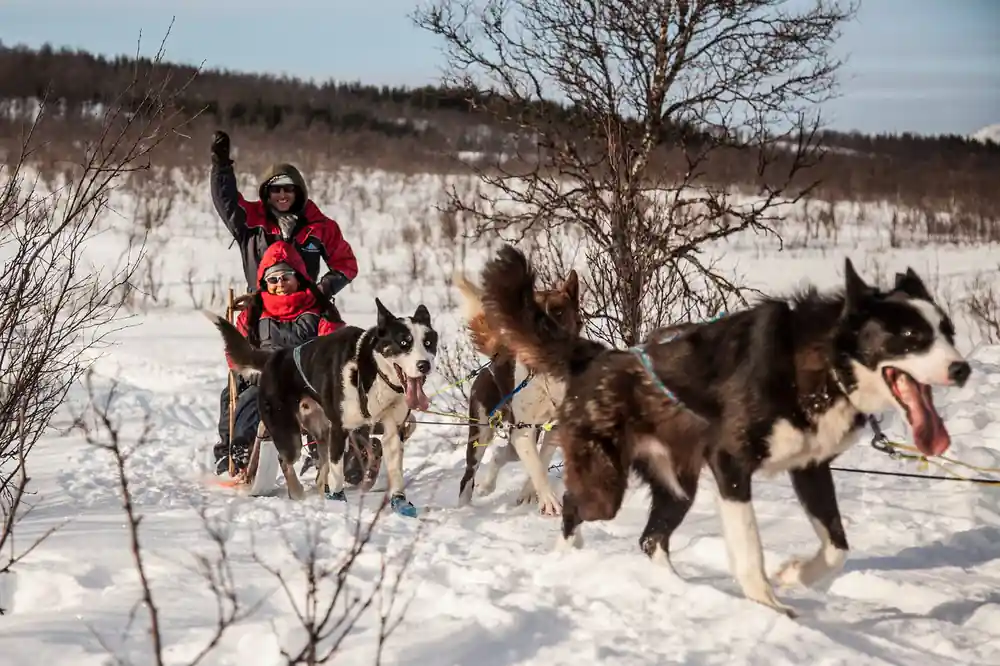
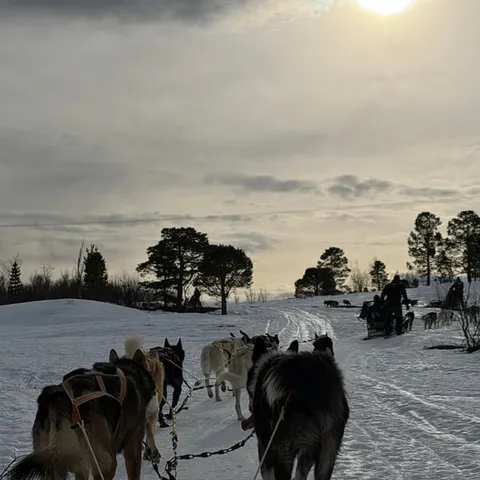
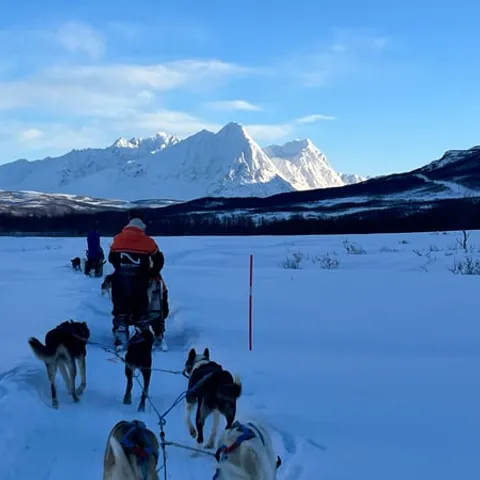
The average winter temperature in Tromsø is around −4°C.
Pack light, dress in layers, enjoy the ride
Pack in your day bag
- Spare wool socks, kept in a dry bag
- Sunglasses or goggles on a strap
- Power bank and cable for your phone
- Lip balm with sun protection for windburn
Before you set off
- Wear your base layers on the transfer so you change less at the camp
- Listen to the briefing before you take the lines
- Tell the kennel about back, shoulder or knee trouble
- Ask what the camp lends before you decide what to pack
What the Kennel Provides on Arrival
The biggest question about what to wear dog sledding is not really about you. It is about what the camp hands over when you arrive. Operators differ on what they lend and in what sizes, so ask when you book: is an outer suit part of the tour, do boots come in your size, and are hats and gloves included? A short message before you fly saves a cold hour at the camp and tells you which gaps your own bag has to fill.
Whatever the answer, one rule holds. Wear your own warm base layer and a mid layer underneath, because a borrowed shell is a wind and snow barrier rather than a source of heat. The suit keeps the weather out, and the wool next to your skin keeps you warm. The layers you pack still matter, even on a tour that lends you the big kit. A thin pair of liner gloves and a buff take almost no space and cover the parts that complain first. Pack them at the top of your bag, where you can reach them without taking anything off.
Think about the standing-around parts of the day. You will wait while dogs are harnessed and while others take their turn on the sled, and standing still in the Arctic feels far colder than moving. Plan for the waiting as carefully as the driving: a thin extra layer you can pull over everything, a hat you can pull down over your ears, and boots that stay warm when you are not walking. If your hands are cold before you start, they will stay cold.
Base and Mid Layers You Bring Yourself
Start at the skin. A merino wool or synthetic base layer top and leggings move sweat away from your body and stay warm when they are slightly damp, which is what you want when you are working with a sled team. Cotton does the opposite: it holds moisture against you and stops insulating. That is the problem with the T-shirt you slept in and the jeans in your suitcase. Choose a base layer that sits close without squeezing.
Over the base, add one or two mid layers. A fleece, a thin wool jumper or a light down jacket all work, and the aim is to add or shed warmth without taking off the outer suit. Keep the middle thin enough to fit underneath, because a mid layer that bunches at the shoulders will make the suit feel tight and leave gaps at the wrists and neck. Two thin layers beat one thick one, since the air trapped between them does the work.
Think about fit as much as fabric. Layers that press tightly on your arms and shoulders slow the blood flow that keeps hands and feet warm, and you will spend most of the ride sitting or standing still rather than walking. Buy or borrow a size up if you are between sizes, and try the whole set on before you travel so nothing surprises you on the morning of the trip. Bring a second base layer in a dry bag for the journey home.
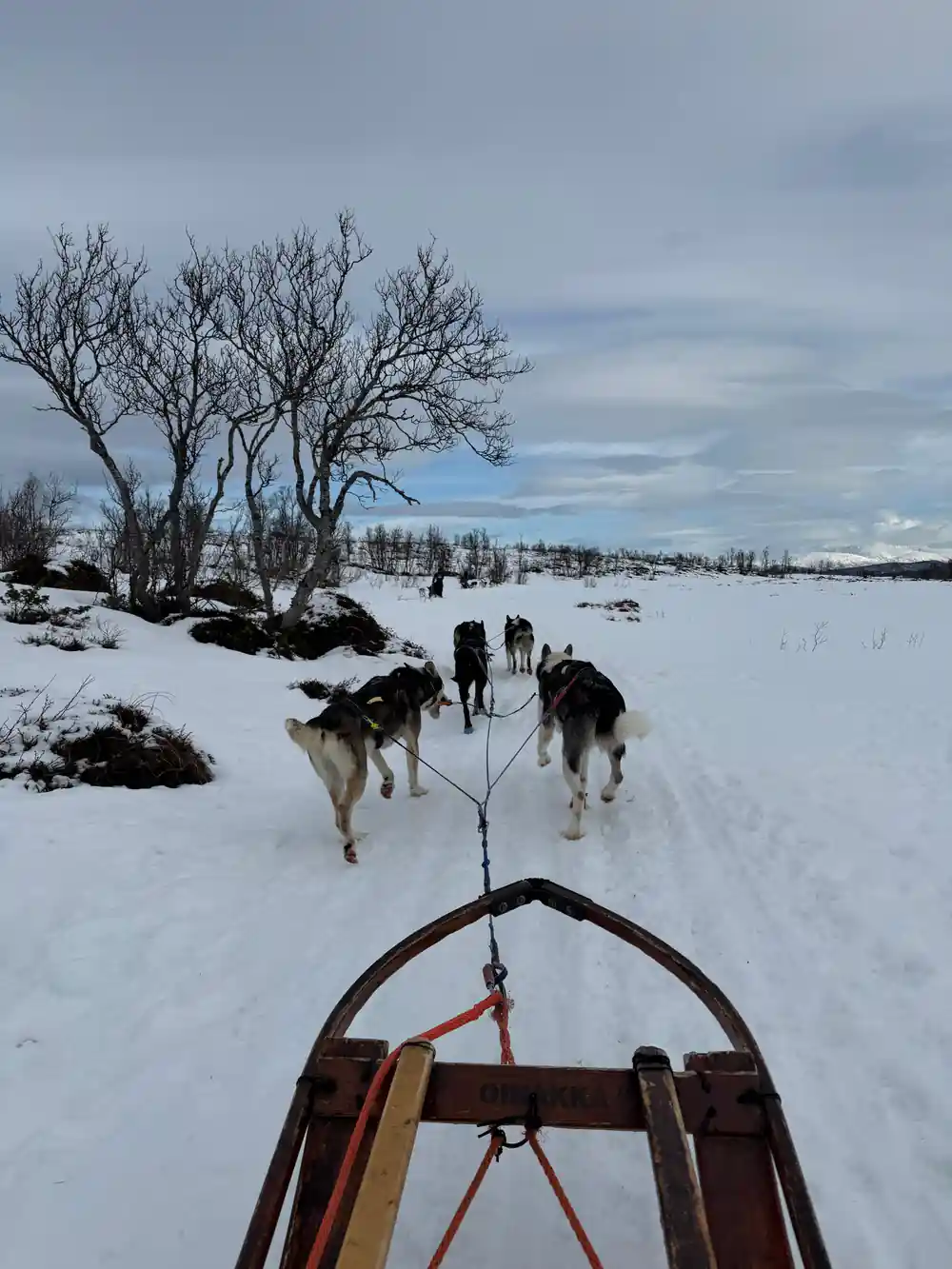
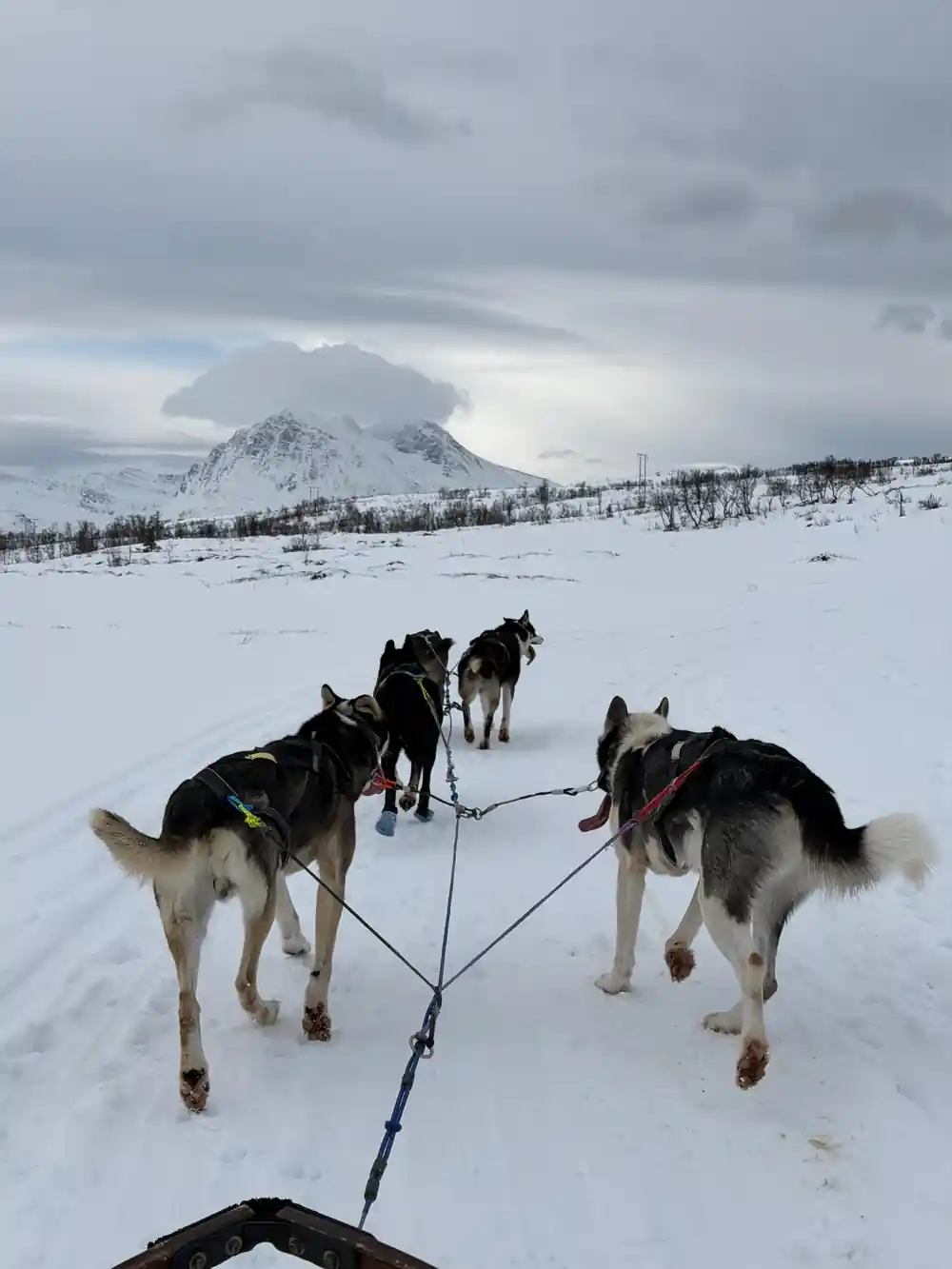
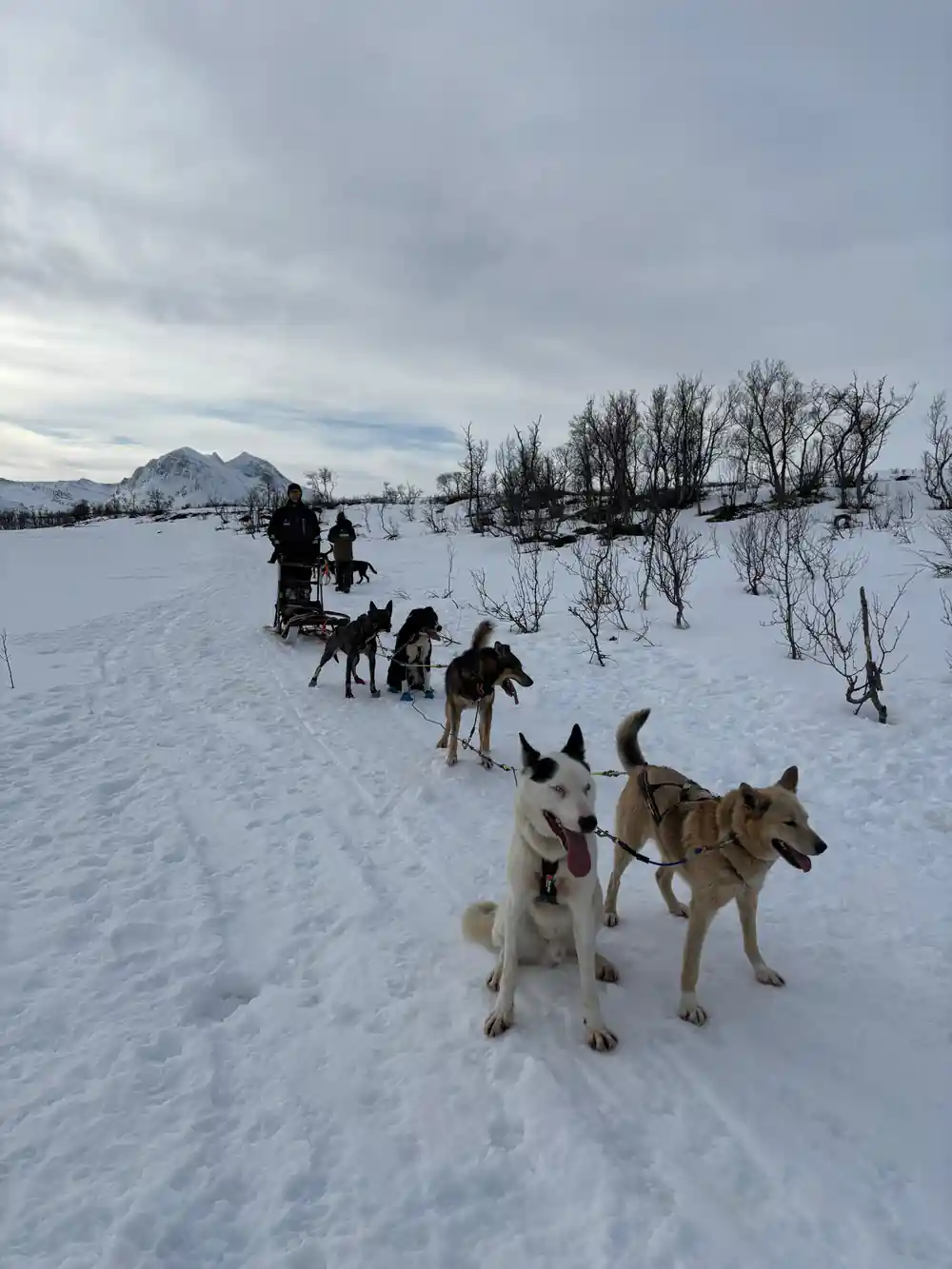
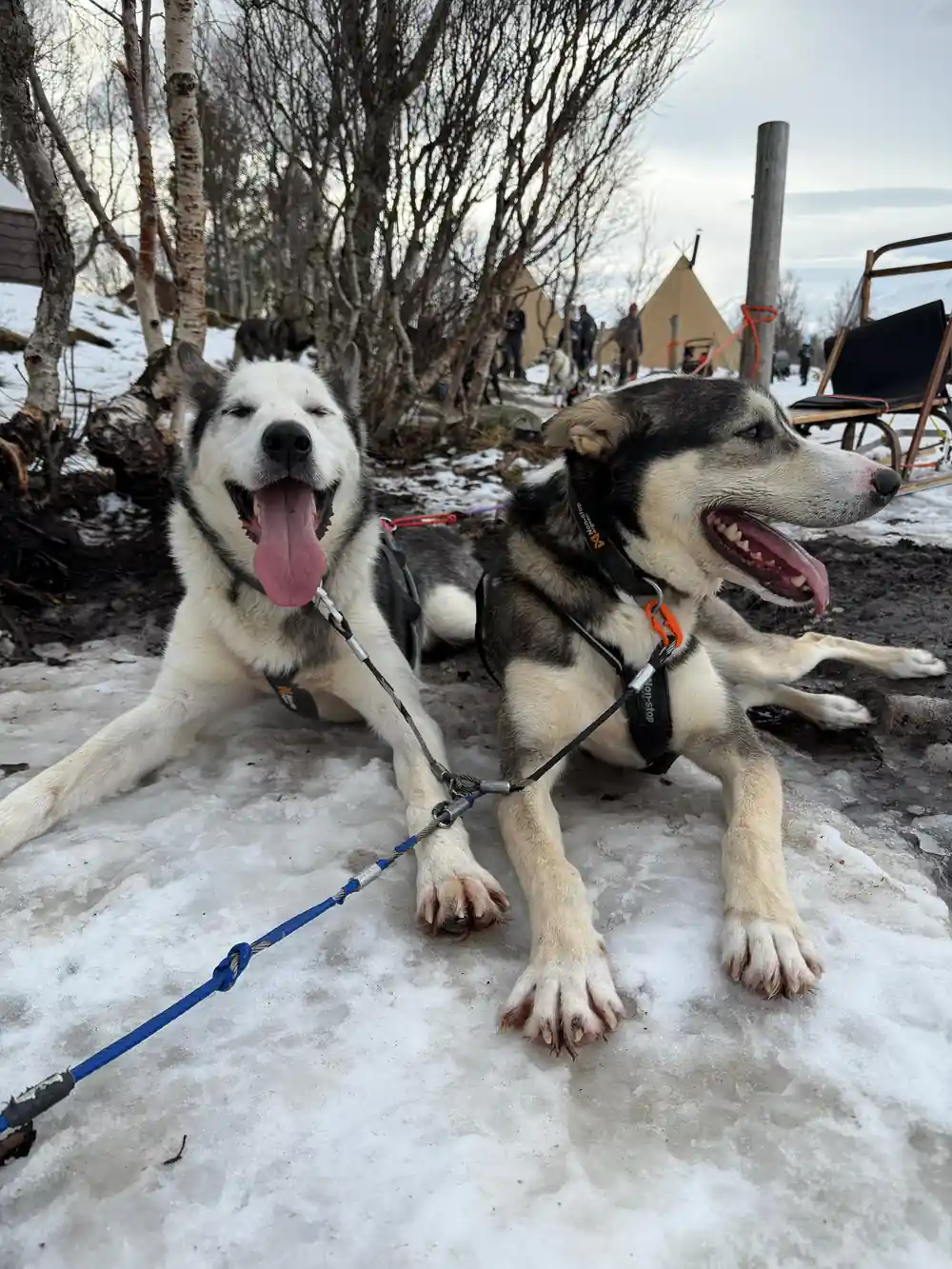
Sled dogs resting on the snow while the team is harnessed up
Why Cotton and Jeans Fail in Arctic Cold
Cotton loves water. Sweat from the walk to the sled, damp snow or a tumble into a drift all soak into the fibre, and once a cotton layer is wet it stops trapping the air that keeps you warm. Denim is heavy cotton, which makes jeans a poor choice for a long sled ride. They go stiff in the cold, dry slowly, and chill your legs the moment you stop moving.
The same applies to cotton socks, a cotton hoodie and the ordinary T-shirt you wore on the flight. Swap them for wool or synthetic versions, and treat wool as the default for anything next to your skin or on your feet. Wool keeps working when it is damp, and it stays warm while you stand around at the camp before the ride starts. If you only change one thing before this trip, change your socks. Pack a spare pair and keep them dry.
Tromsø: How to Dress for a Sled Ride
In Tromsø the average winter temperature is around −4°C.[1] That sounds manageable until you add the wind you create by moving and the wind coming off the fjord. What you feel on the sled is colder than the number on a weather app. Dress for wind first and temperature second. A windproof outer layer over warm, dry inner layers deals with both at once. If your jacket blocks the wind and your base layer is dry, one mid layer is usually enough to tune the rest.
Build a system rather than a costume. Base layer, one or two mid layers, then an insulated over-suit or your own padded jacket and trousers. Add a hood or a hat that will not blow off, and a scarf or buff at the neck. Your hands and face feel the cold first, so if you are buying dog sledding gear for the first time, spend there rather than on a heavier coat. It is also the gear you will use again on any winter trip.
Boots matter as much as the coat. You will stand at the camp before and after the ride, help hold dogs or lines, and walk short distances on packed snow. Insulated boots with a grippy sole and room inside for one pair of wool socks keep your feet working. Boots that are tight, or stuffed with two pairs of socks, squeeze the blood flow and make your toes colder. Ask about boot sizes when you book if you plan to borrow.
from US$351
The self-drive husky adventure transfers by bus and coach to Kvaløya, runs 4 hours and is rated 4.91 from 4,408 reviews.[2]
Buffs, Sunglasses and Face Protection
A buff around the neck does three jobs at once. It seals the gap between your coat and your hood, it can be pulled up over your nose and mouth when the sled picks up speed, and it dries far faster than a woollen scarf. Take two if you have room, one to wear and one to change into when the first gets damp from your breathing. A thin one under a hat also stops the wind reaching your ears.
Sunglasses or clear snow goggles are worth packing for a winter day. Snow reflects light even under grey cloud, and a low sun can sit straight in your eyes as you stand behind the team. Goggles also cut the wind on your eyes at speed. Keep whichever you bring on a strap so they stay with you if the sled lurches or you bend down to a dog. Cheap ones are fine; the point is having something between your eyes and the glare.
Skin care in the cold is simple. A thin layer of moisturiser or a lip balm with sun protection helps against windburn on a day when the air is freezing and dry. Do not overdo it, since heavy cream can make a buff slippery and collect snow. Wash your hands before you touch your face after handling dogs and harnesses, and keep a small tube in an inside pocket where it stays soft.
Keeping Your Phone Battery Alive in the Cold
Cold slows the chemistry inside a phone battery, so a phone that shows half full indoors can shut down in your pocket outside. Keep it in an inside pocket close to your body and treat every photo as a small withdrawal from a smaller account. If the screen goes black, the phone is usually not broken; it has simply gone cold. Warm it up slowly and it will usually come back to life.
A small power bank in a second inside pocket is cheap insurance, and one that stays warm holds its own charge better. A microfibre cloth helps with a fogged lens, and a camera battery behaves the same way as a phone battery. Where you can, shoot, put the phone away, and let your hands go back into mittens. Condensation on a cold lens clears on its own if you give it a minute indoors.
Where to Store Your Bag and Personal Clothes
This trip starts with a bus and coach transfer out of Tromsø to Kvaløya and finishes with the same ride back.[2] Kvaløya begins less than 5 km from central Tromsø, at the Sandnessund Bridge.[5] Your suitcase stays at your hotel, and one small bag travels with you: spare socks, a power bank, a spare hat, a snack and anything you need for the ride home. Keep the bag small enough to sit on your lap in the vehicle.
Ask at the camp where to leave that bag. Somewhere indoors is ideal, and it is worth checking when you book rather than discovering on the day that everyone is changing outdoors. What you want to avoid is a bag left on a vehicle floor where it slowly chills, so your spare gloves and socks arrive as stiff as the snow. Take your phone, a buff and your liner gloves onto the sled itself and leave the rest behind.
Hours on the snow: how long Tromsø sledding tours last
Durations as listed on GetYourGuide for each tour:[2][3][4][6][7]
From-prices for a day with the dogs
Adult from-prices in US dollars, as listed on GetYourGuide:[2][3][4][8]
When to book, and what the season looks like
Layering, step by step
Base layer first
Merino or synthetic next to the skin moves sweat away and keeps a dry layer against you.
Mid layer for warmth
A fleece or thin wool jumper goes over the base and traps warm air. You can shed it when you stop.
Windproof outer layer
A shell or borrowed over-suit over everything, with room to move your arms and legs on the sled.
Feet and boots
One pair of wool socks inside boots with space to wiggle your toes. Tight boots mean cold feet.
Hands and face
Liner gloves for the lines, mittens over the top for the ride, and a buff pulled up over your nose.
Book the self-drive husky sledding adventure from Tromsø
from US$351Reserve now & pay later