The main points
- Dog sledding in Northern Norway usually runs from December to March, and snow conditions decide the exact dates each year.[8]
- Tromsø's Polar Night season begins on 27 November and lasts until 15 January, giving the middle of the day a soft blue light.[9]
- The average winter temperature in Tromsø is around −4°C. Warm base layers and thick mittens are the kit that matters most.[10]
- The Northern Lights season in Tromsø runs from late August to early April. A winter sledding trip sits inside that window.[11]
- The self-drive husky adventure from Tromsø lasts 4 hours, starts from US$351 and is rated 4.91 from 4,408 reviews.[12]
- Top choice Self-drive on Kvaløya from US$351 Duration4 hours[12]Rating4.91 from 4,408 reviews[12]Free cancellationCancel up to 24 hours in advance[12]BookingReserve now, pay later[12] Check availability
- Husky sled with lunch from US$355 Duration4 hours[13]Rating4.86 from 2,050 reviews[13]Free cancellationCancel up to 24 hours in advance[13]BookingReserve now, pay later[13] See this tour
- Fun and easy dog sledding from US$305 Duration4.5 hours[14]Rating4.88 from 2,077 reviews[14]Free cancellationCancel up to 24 hours in advance[14]BookingReserve now, pay later[14] See this tour
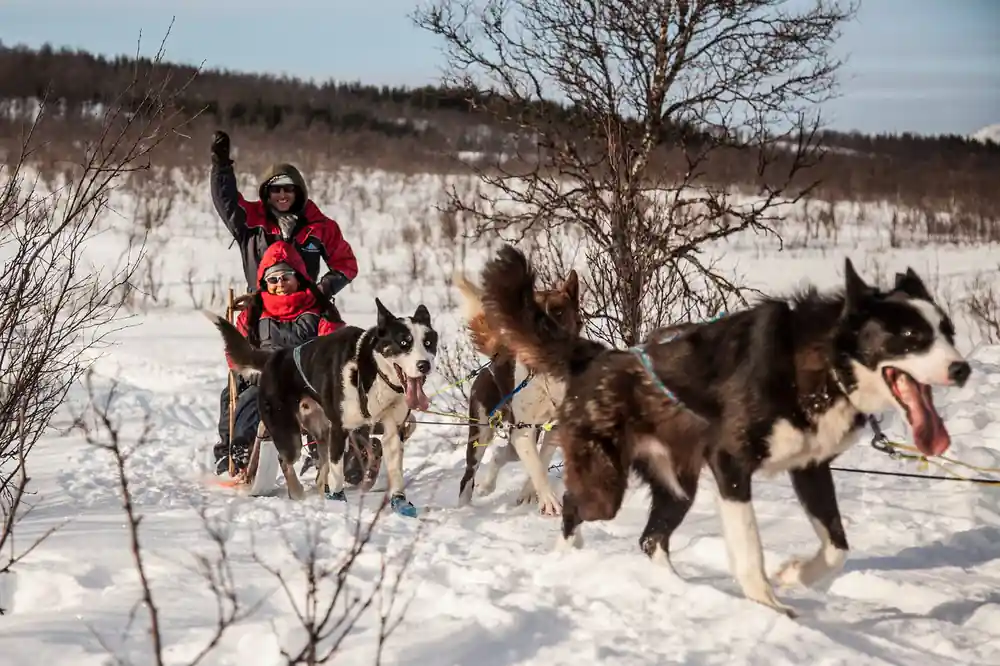
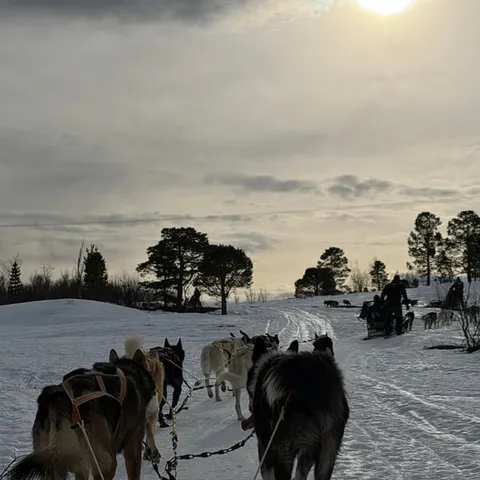
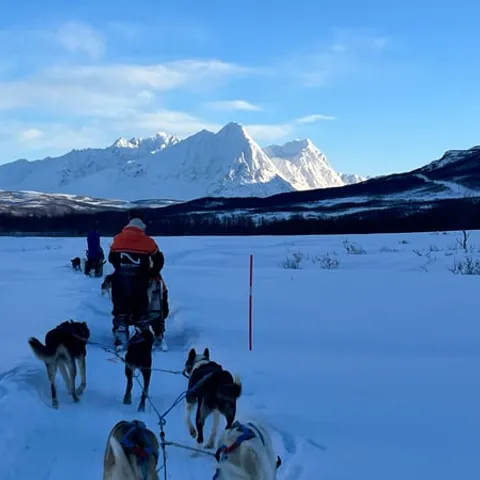
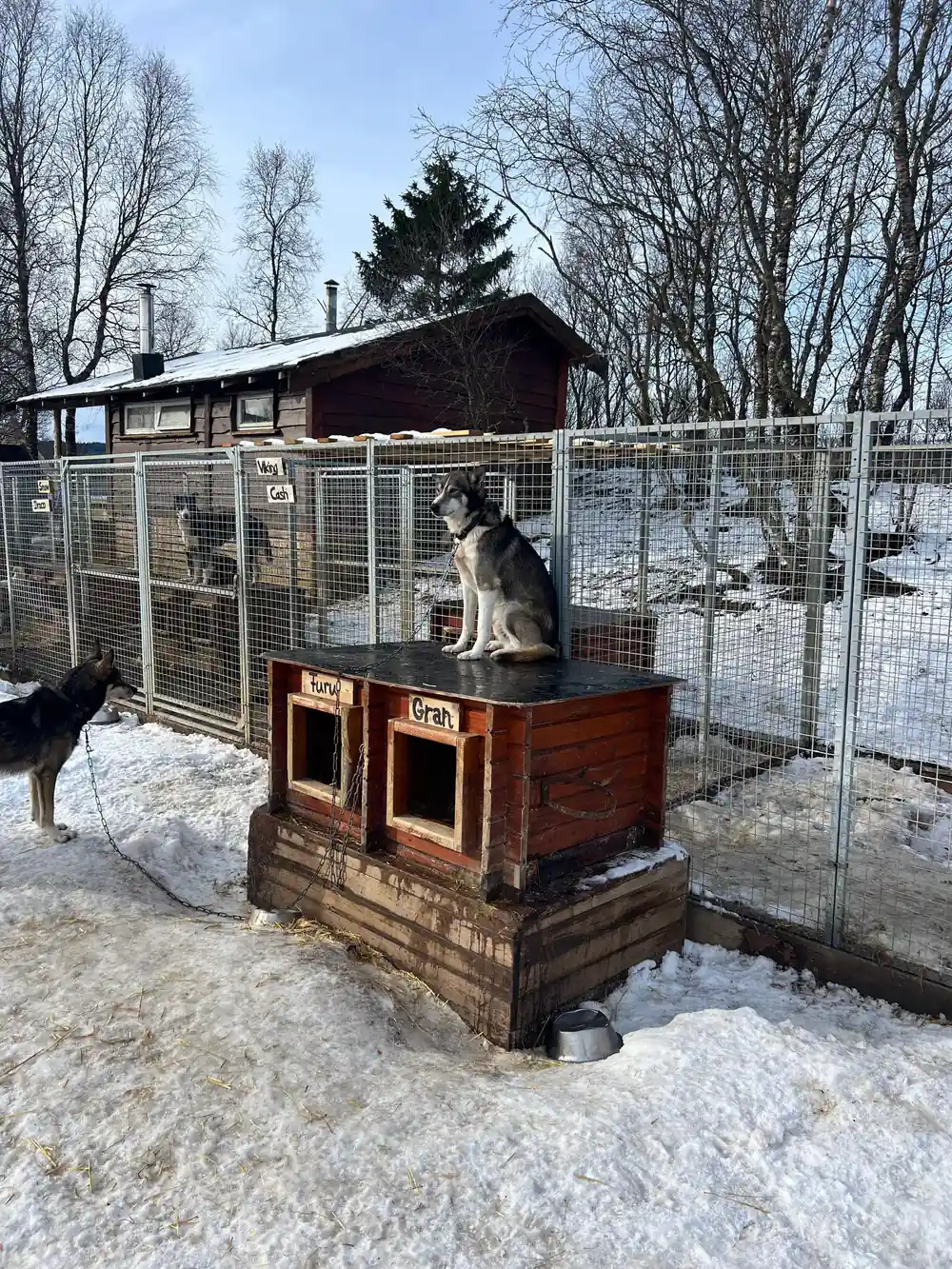
For over three decades and through two generations, our family has raised and raced Alaskan Huskies bred for endurance, resilience, and heart.
Our verdict: aim for deep winter, then watch the light
Booking and planning
Early season: dark skies and the first snow
Autumn arrives early this far north, and the light drains out of the afternoons long before any snow settles. The higher ground around the fjord often turns white first, while the city streets stay wet and grey for a while longer. The mountains behind town often wear a fresh white cap after a cold night. Kennels use these weeks to bring their dogs back into harness after the quiet part of the year. The dog sledding season in Northern Norway typically runs from December to March, depending on snow conditions.[8] If you travel before that window, treat sledding as a hopeful extra rather than the centre of your trip, and keep a kennel visit as the safe plan.
What you do get is dark sky. The Northern Lights season in Tromsø runs from late August to early April.[11] Winter temperatures of around −4°C on average arrive later in the year.[10] An autumn trip feels gentler on the hands and easier for wandering the harbour, the city centre and the viewpoints above town. You can also meet sled dogs without snow, since many kennels welcome visitors in autumn, and a kennel tour or a husky hike shows you how a team is put together and lets you learn the dogs' names before you ever stand on a sled.
November to December: the Polar Night begins
Late November changes the mood of the whole region. In Tromsø the Polar Night season begins on 27 November and lasts until 15 January each year.[9] The sun stays below the horizon, and the middle of the day turns into a long blue twilight that photographers love. Street lights, snow and dark water make the city look entirely different from its summer self, and trips out to the sledding terrain still run. The low light gives the landscape a soft, almost painted quality that is hard to find at any other time of year. Snow often settles properly during this stretch, and the birch woods on the edge of town hold it well.
December usually brings the dog sledding season into full swing across Northern Norway, running from December to March where snow conditions allow.[8] This is the month the self-drive husky dog sledding adventure from Tromsø runs, a trip of 4 hours listed from US$351[12], and it doubles as prime aurora weather, with the Northern Lights season stretching from late August to early April.[11] Snow is usually settled by then and the trails have a firm base. Book early for the weeks around the holidays, and expect some of the darkest days of the year.
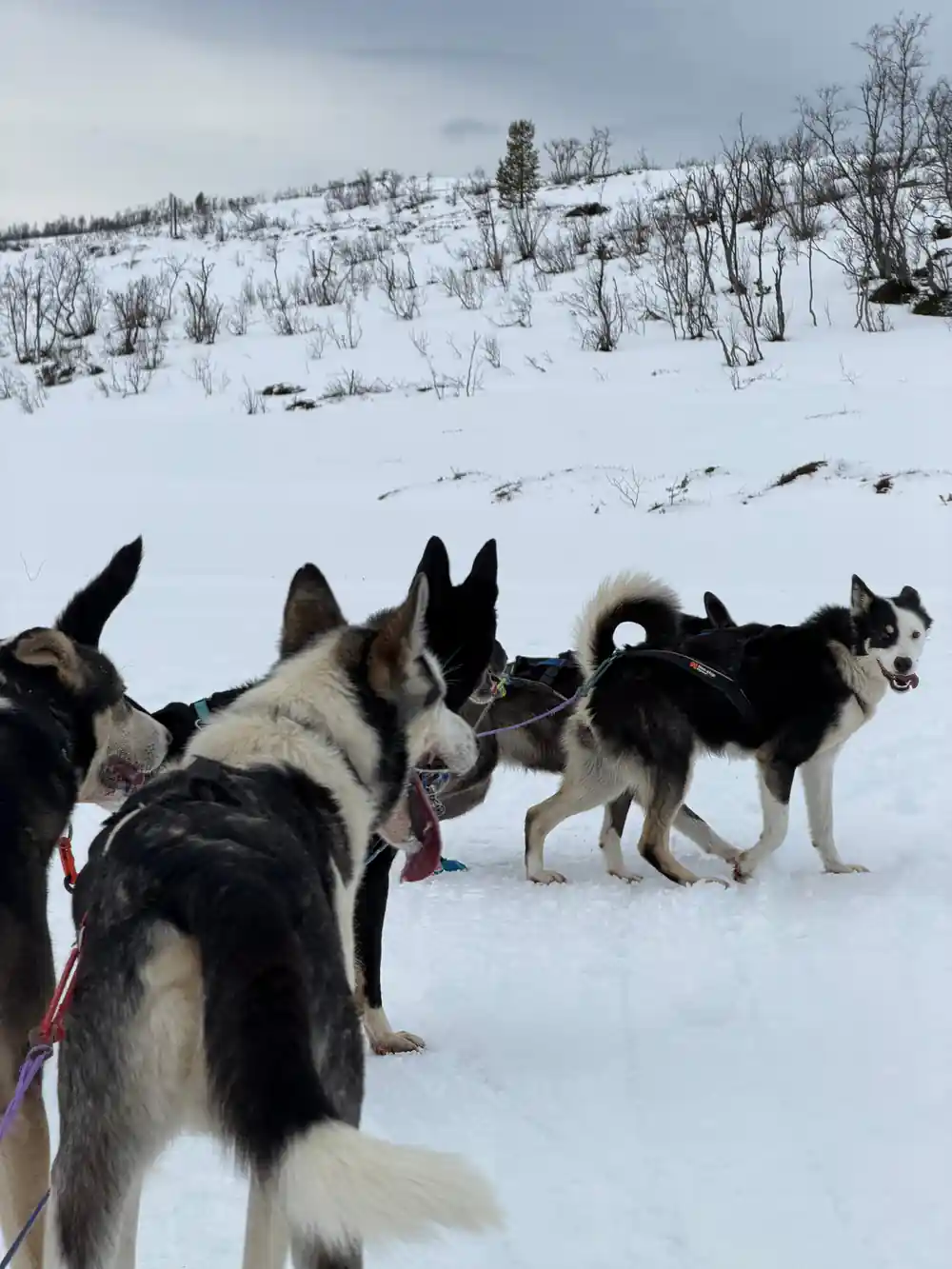
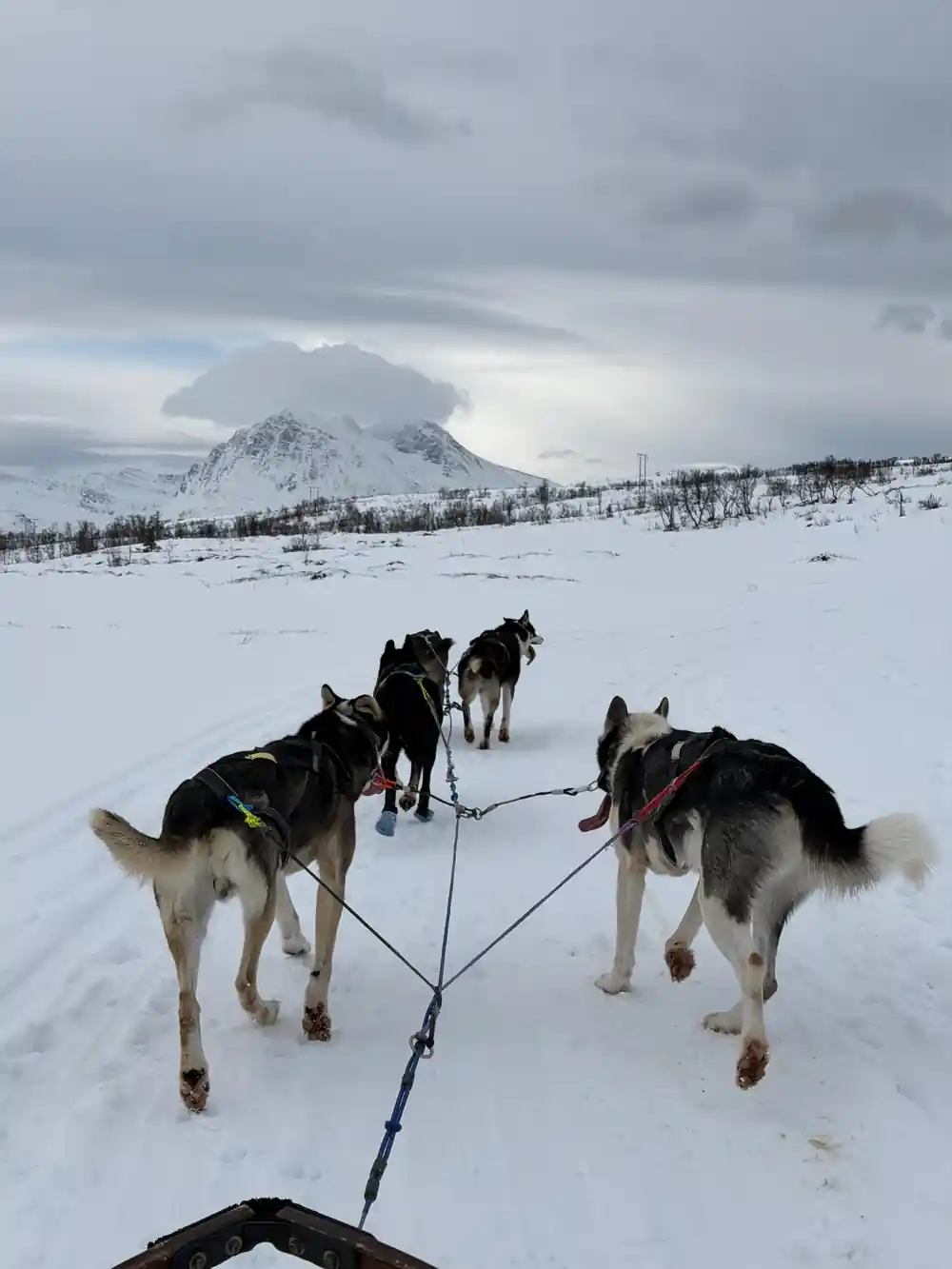
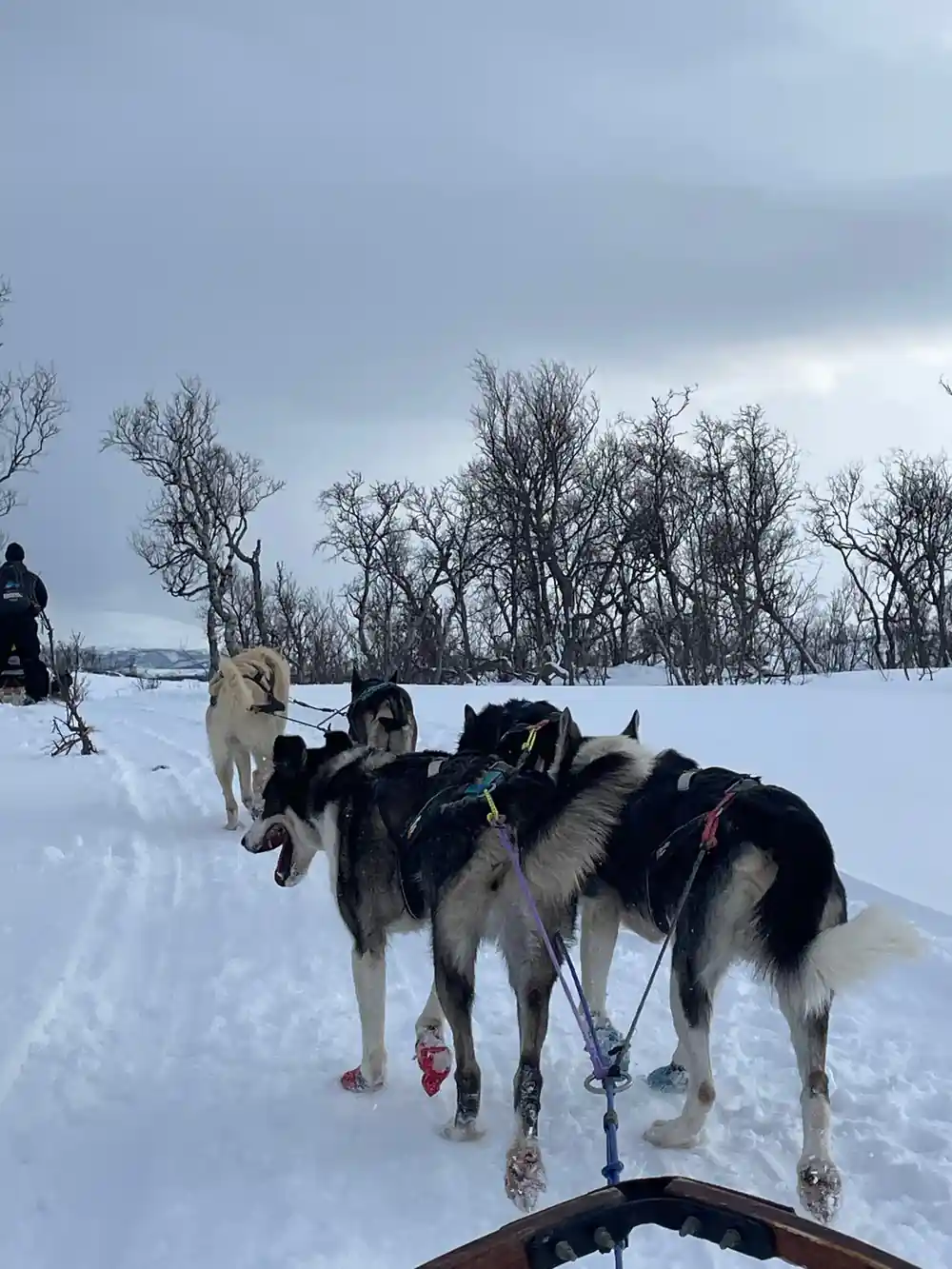
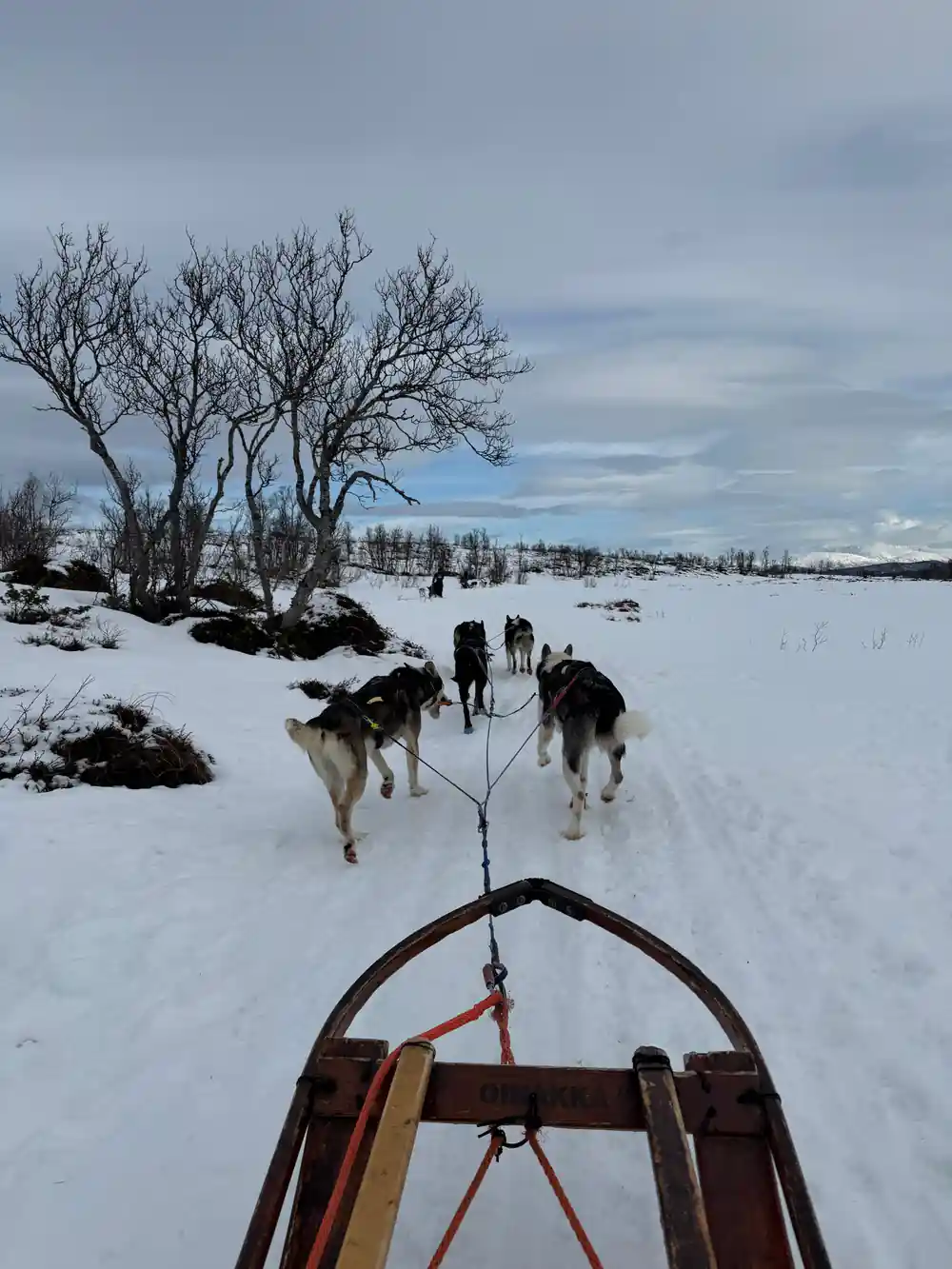
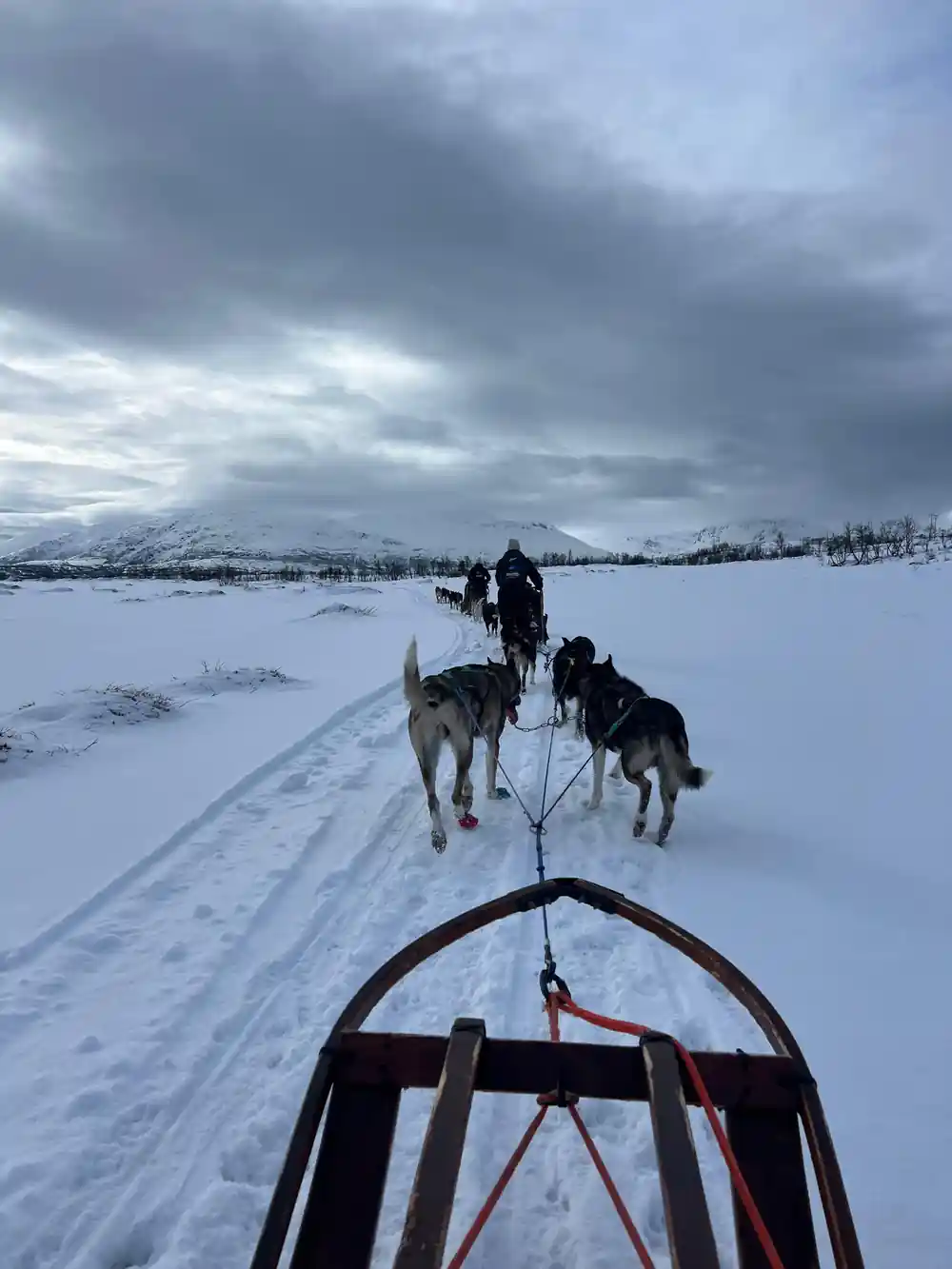
A husky team pulling hard across fresh snow under a low Arctic sun.
Deep winter: the darkest, coldest weeks
The deep winter weeks are the coldest and the most reliable for sledding, with a firm base that holds through the darkest stretch of the year. The average winter temperature in Tromsø is around −4°C.[10] The Polar Night in Tromsø lasts until 15 January, and after that daylight grows a little more each week, though the sun still sits low and shadows stay long across the snow.[9] This is the time to book if you want the classic deep-winter experience: frosted birch trees, steaming dogs, a hard and fast trail, and a horizon that glows pink around midday.
The terrain is close at hand. Kvaløya begins less than 5 km from central Tromsø.[16] You can leave the city and be among sled dogs and birch trees within a short drive. Kennels here have long memories of the work: the family at Holmen Husky Lodge has raised and raced Alaskan Huskies bred for endurance, resilience and heart for over three decades and two generations.[17] The self-drive tour follows a bus or coach route out to Kvaløya and back[12], and Finnmarksløpet, the longest dog-sled race in Europe, shows how deep the sport runs in the north.[18]
March and April: spring light returns
Spring light comes back toward the end of the sledding season. Days are noticeably longer, the snow is still deep on the trails, and the air feels less fierce than in midwinter. The dog sledding season in Northern Norway typically runs from December to March, depending on snow conditions.[8] The closing weeks of that window often bring sunshine on the trail rather than twilight, which many winter visitors never see. Light bounces off the snow and off the water, the birch woods look almost golden in the low sun, and the cold feels easier when you can see the fjord for miles.
April is a different story. It sits at the tail of the Northern Lights season, which runs from late August to early April.[11] Sledding depends on snow that is starting to soften, and many operators have packed their sleds away. The midnight sun in Tromsø usually lasts from around 20 May to 22 July.[19] If you are travelling later in the spring, plan for bright nights, fjord walks and boat trips instead of a dog team, and save the sledding for a return visit in winter.
December to March
Dog sledding in Northern Norway usually runs from December to March, and snow conditions decide the exact window each year.[8]
Aurora odds on a daytime sledding run
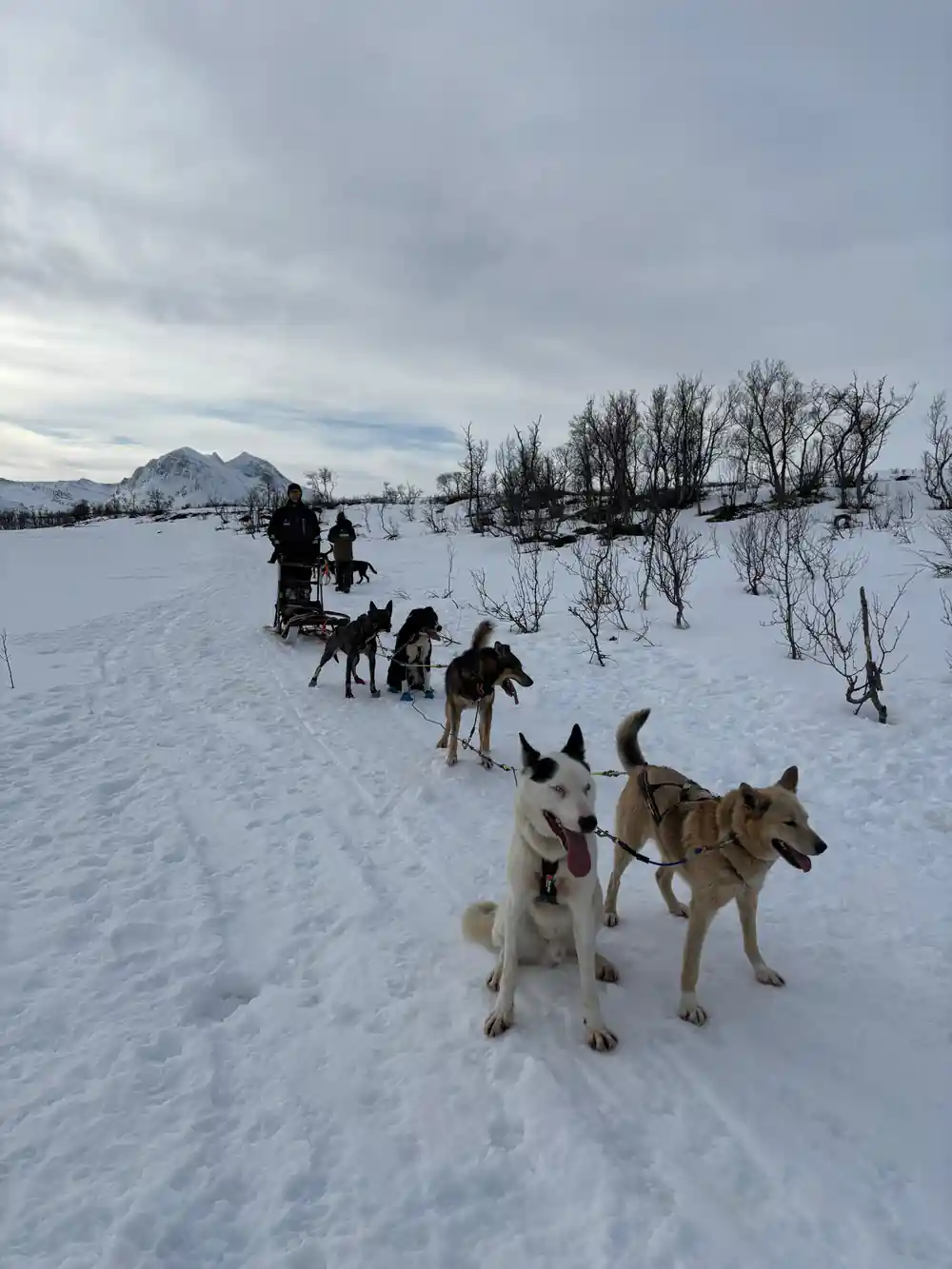
Most husky sledding runs happen in daylight, which surprises people who picture a night-time dash. The self-drive tour from Tromsø lasts 4 hours[12], and the Fun and Easy sledding adventure out of Breivikeidet lasts 4.5 hours[14]. In the middle of winter that window may still be soft blue twilight rather than bright sun, but it is not a night trip, and no operator can promise an aurora during daylight hours. What you get instead is the sight of the team working, the sound of paws on snow and the chance to steer your own sled.
If the lights are the main reason you are coming, treat sledding and aurora hunting as separate bookings. The Northern Lights season in Tromsø runs from late August to early April.[11] There are evening husky options too, such as the Northern Lights husky visit with a traditional dinner, listed from US$188[20]. Pairing a daytime run with a night chase is a common way to plan a Tromsø winter, and the Polar Night, which runs from 27 November to 15 January, keeps the sky dark through the middle of the day.[9]
Weather cancellations and snow conditions
Snow decides everything, and that is worth building into your plans. The dog sledding season in Northern Norway runs from December to March depending on snow conditions[8], and a warm spell, heavy wind or rain can change a day's plan at short notice. That is normal in the Arctic rather than a sign of poor organisation. Operators watch forecasts closely, move departures when they can, and cancel when the trail or the weather turns unsafe. Guides keep an eye on wind, drift and visibility all day, and the call comes down to how the trail is holding rather than how the sky looks.
Booking terms help here. The self-drive adventure from Tromsø offers free cancellation up to 24 hours in advance[12] and reserve now and pay later[12], which lets you hold a place while you watch the weather. Pack for real cold: the average winter temperature in Tromsø is around −4°C[10], and wind on an open sled feels much colder than that number suggests. Thermals, a windproof outer layer, thick mittens and proper snow boots cover most of it.
Planning your trip: best months and what to expect
For most travellers the sweet spot is the middle of the winter, when snow is deep and the season is fully running. December to March is the usual sledding window in Northern Norway[8], the Polar Night covers 27 November to 15 January[9], and winter temperatures average around −4°C[10]. Late winter trades some of that darkness for much better light, which suits photographers and anyone travelling with children. If the aurora matters to you, remember that the lights season runs from late August to early April.[11]
Wherever you land in the calendar, book early for the busy weeks and keep a spare day free. The self-drive husky dog sledding adventure from Tromsø lasts 4 hours, starts from US$351 and is rated 4.91 from 4,408 reviews.[12] It runs out to Kvaløya and back by bus or coach[12], which keeps the logistics simple, and the instructor speaks English.[12] There are longer options too, such as a 7 hour dog sledding adventure in Tamokdalen.[21]
Traveller ratings for Tromsø dog sledding tours
GetYourGuide traveller ratings for Tromsø dog sledding listings.[12][13][14][22][23]
What a Tromsø dog sledding day costs
US dollar from-prices per adult for Tromsø dog sledding listings.[12][14][22][23]
When to plan your Tromsø winter trip
How to plan a sledding day
Fix your dates
Dog sledding in Northern Norway usually runs from December to March, and snow decides the exact start and finish of the season.[8]
Book the self-drive tour
The self-drive adventure from Tromsø takes 4 hours, with free cancellation up to 24 hours in advance.[12]
Dress for the cold
The average winter temperature in Tromsø is around −4°C. Pack thermals, mittens and a windproof layer for the trail.[10]
Plan around the light
Polar Night in Tromsø runs from 27 November to 15 January. Daytime sledding still goes ahead in the soft blue light.[9]
Bring the family
On the Fun and Easy Dog Sledding tour, children can join from age 7 when accompanied by adults.[15]
Ride your own husky team on Kvaløya this winter
from US$351Reserve now & pay later