The main points
- The average winter temperature in Tromsø is around −4°C, an average rather than a forecast for your day, so pack layers you can add and remove.[2]
- Moving air strips heat from exposed cheeks, nose and ears far faster than still air, so a windproof outer layer matters more than a thick one.
- Cold, then numb, then pale or waxy patches. Check each other's faces at stops, warm the skin gently and tell your guide instead of toughing it out.
- Goggles cut wind and snow glare. Keep a warm spare pair close to your body, and if you wear contact lenses, blink often and carry glasses as backup.
- A proper meal, snacks in a body-warm pocket and a hot drink help more than an extra jumper. Speak up if shivering will not stop once you are back inside.
- Top choice Self-drive at Kvaløya from US$351 Duration4 hours[3]Rating4.91 from 4,408 reviews[3]GuideInstructor: English[3]CancellationFree cancellation up to 24 hours[3] Check availability
- Husky sled with lunch from US$355 Duration4 hours[4]Rating4.86 from 2,050 reviews[4]GuideLive tour guide: English[4]CancellationFree cancellation up to 24 hours[4] See this tour
- Fun and easy Breivikeidet from US$305 Duration4.5 hours[5]Rating4.88 from 2,077 reviews[5]GuideLive tour guide: English[5]CancellationFree cancellation up to 24 hours[5] See this tour
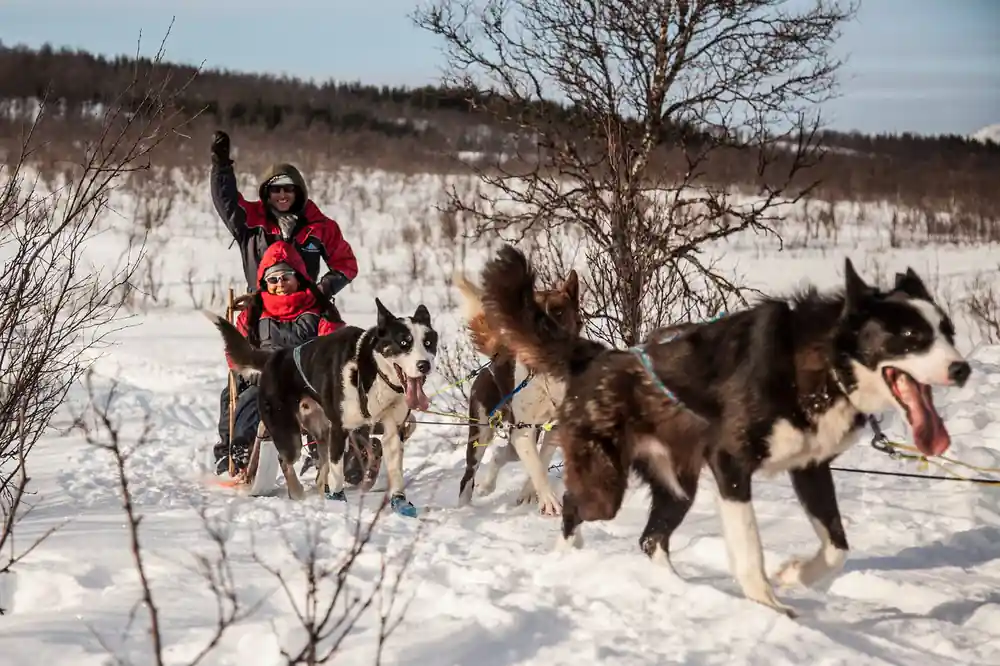
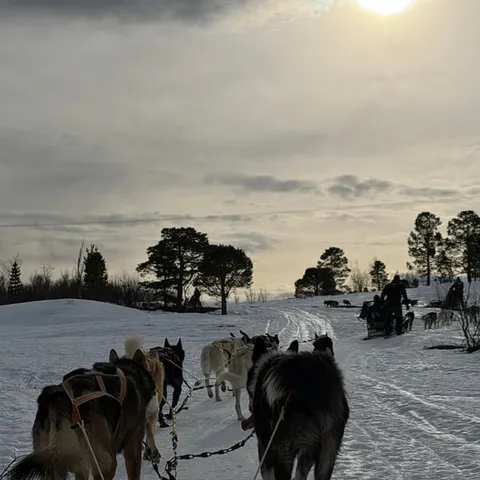
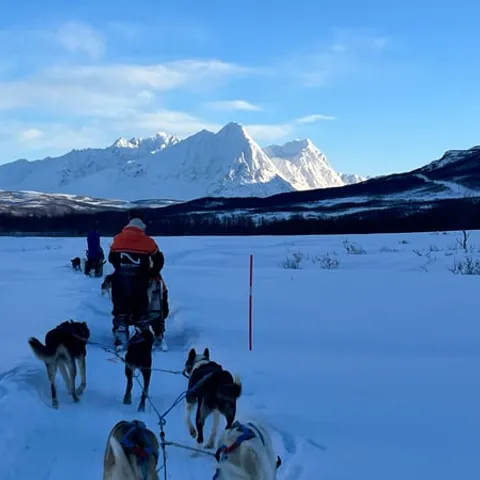
The average winter temperature in Tromsø is around −4°C.
Is the self-drive husky tour worth it in the cold?
Wear this
- Windproof shell over a warm mid layer
- Goggles or sunglasses to block wind and snow glare
- Mittens over thin liners so fingers stay covered
- Balaclava or neck gaiter to cover cheeks and nose
What the Tromsø temperature really feels like
The average winter temperature in Tromsø is around −4°C.[2] That figure surprises travellers who brace for a deep freeze, and it is the reason many people underdress on a first Arctic winter. Read it as an average across the season rather than a forecast for the day you ride. Snow, wind and the speed of a sled can push what your skin feels well past the number on a thermometer. Plan for a wider range, bring layers you can add and remove through the day, and treat any single reading as a starting point rather than a promise.
Timing shapes the cold as much as the temperature does. In Tromsø the Polar Night season begins on November 27th and lasts until January 15th each year.[6] The dog sledding season in Northern Norway typically runs from December to March, depending on snow conditions.[7] The Northern Lights season in Tromsø runs from late August to early April.[8] Between them those dates cover most of the winter, so plan your layers around short daylight, dark afternoons and the way the air bites once the sun is gone.
Wind chill at sled speed
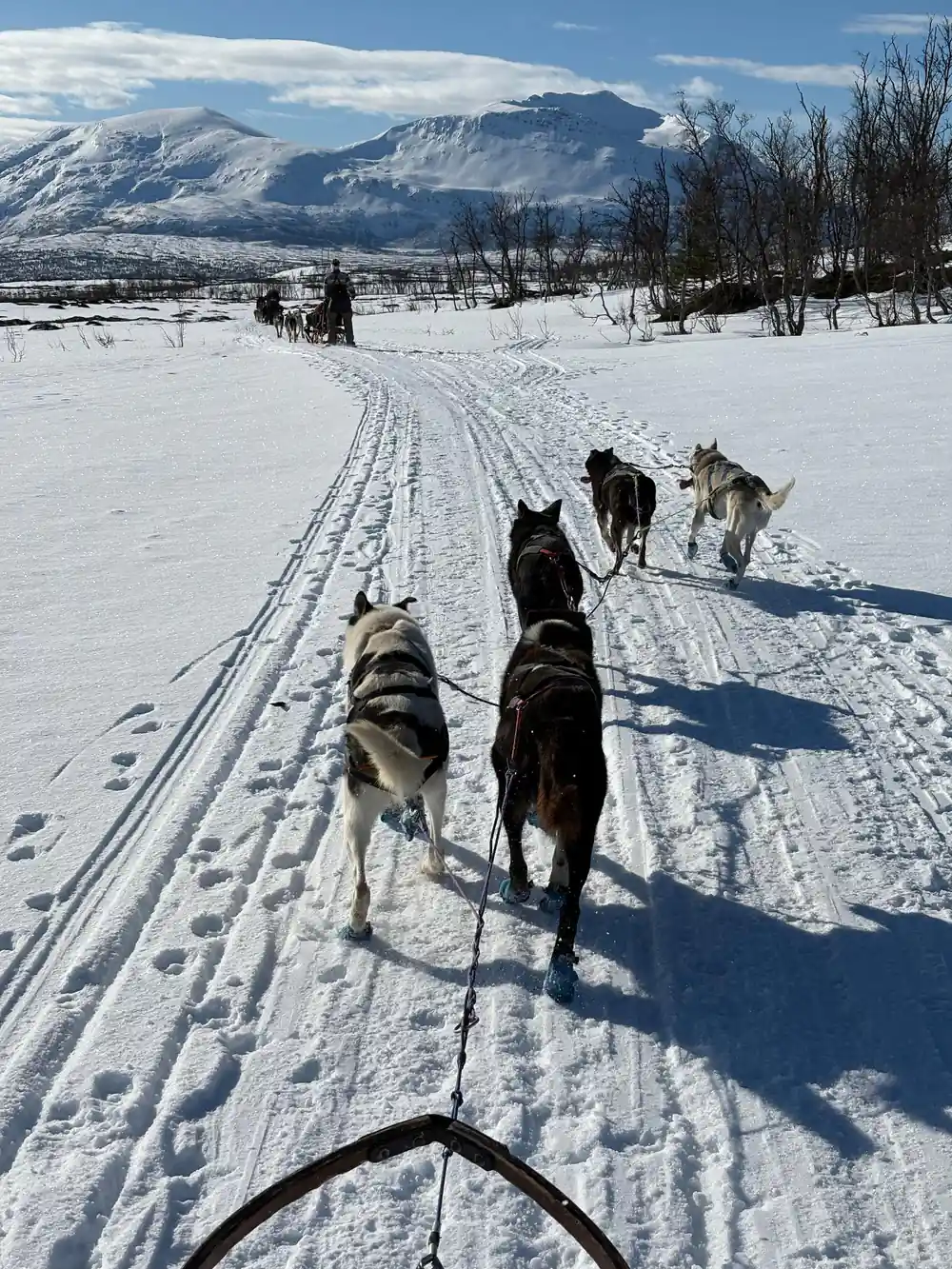
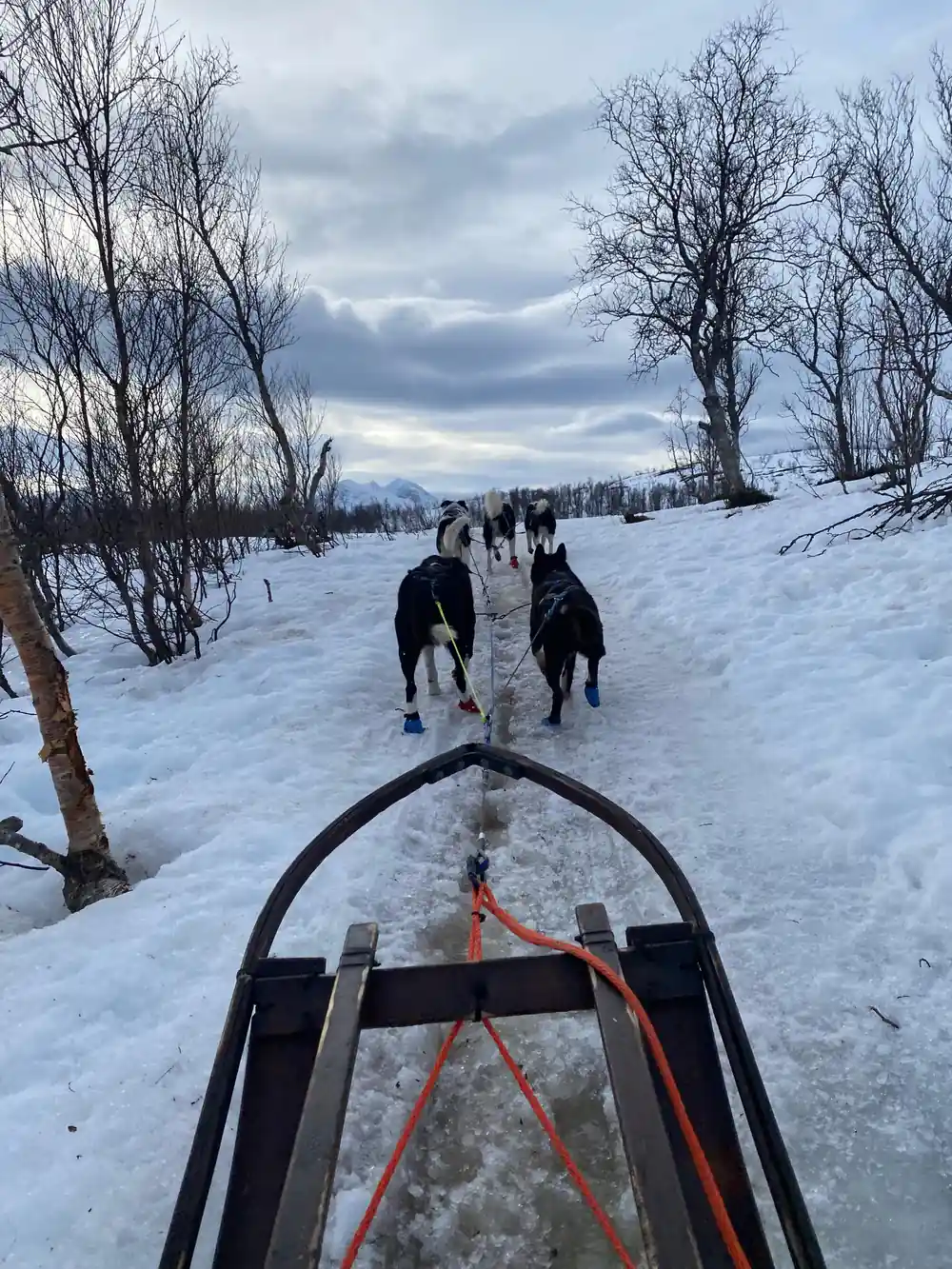
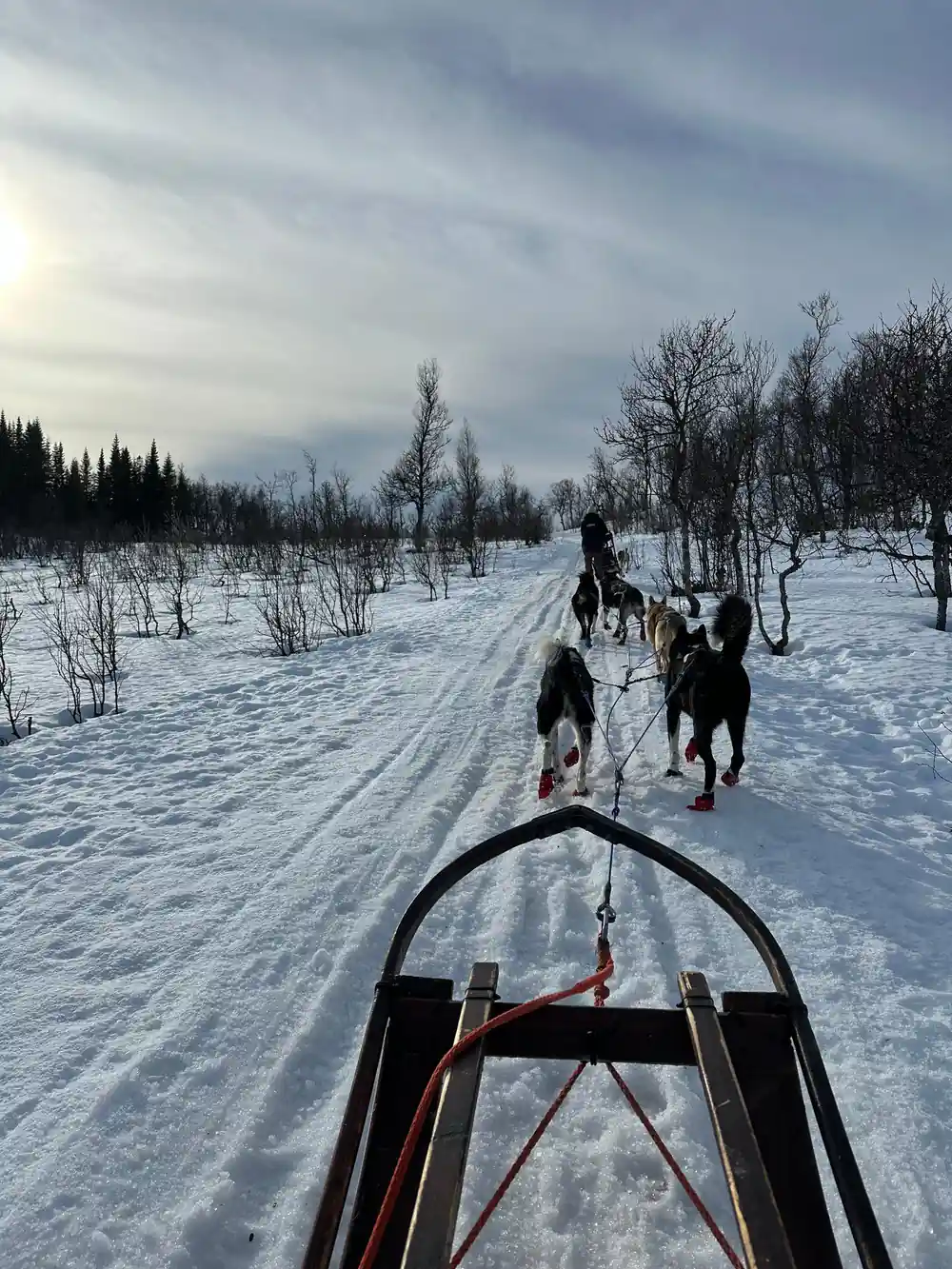
Standing still is one thing. Standing on the runners of a moving sled is another. Air that streams past your face pulls heat from bare skin far faster than the same air at rest, so cheeks, nose, ears and the thin strip around your eyes feel the bite first. A still, sunny morning in the yard can turn raw within minutes once the dogs find their pace. The thermometer has not moved, but your face is certain it has, and that gap is what catches people out.
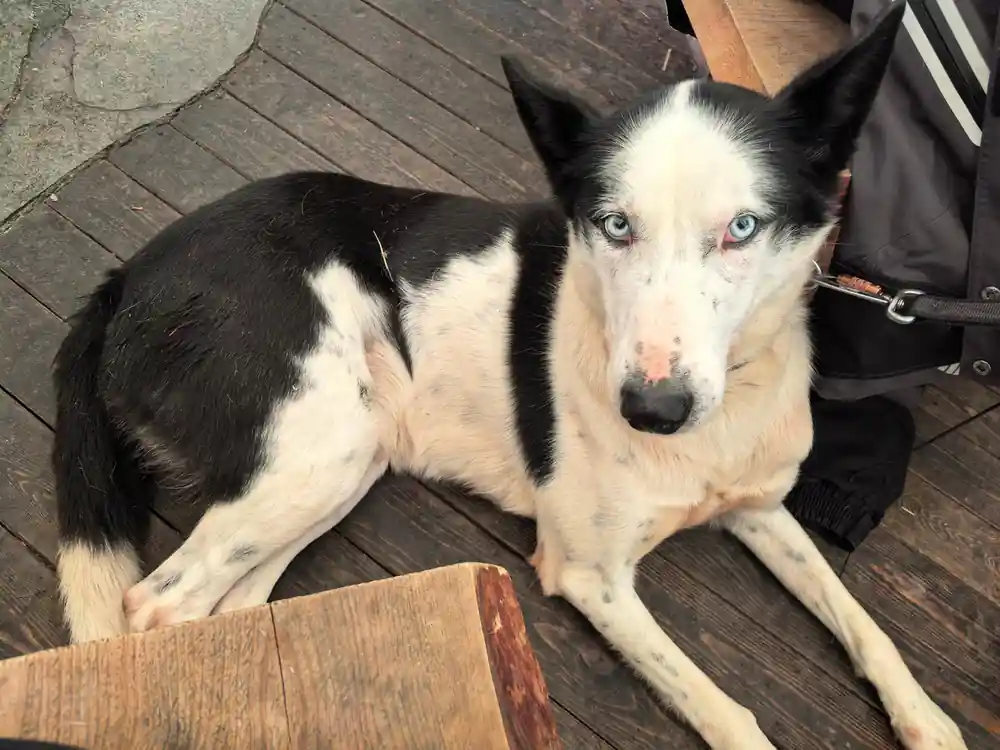
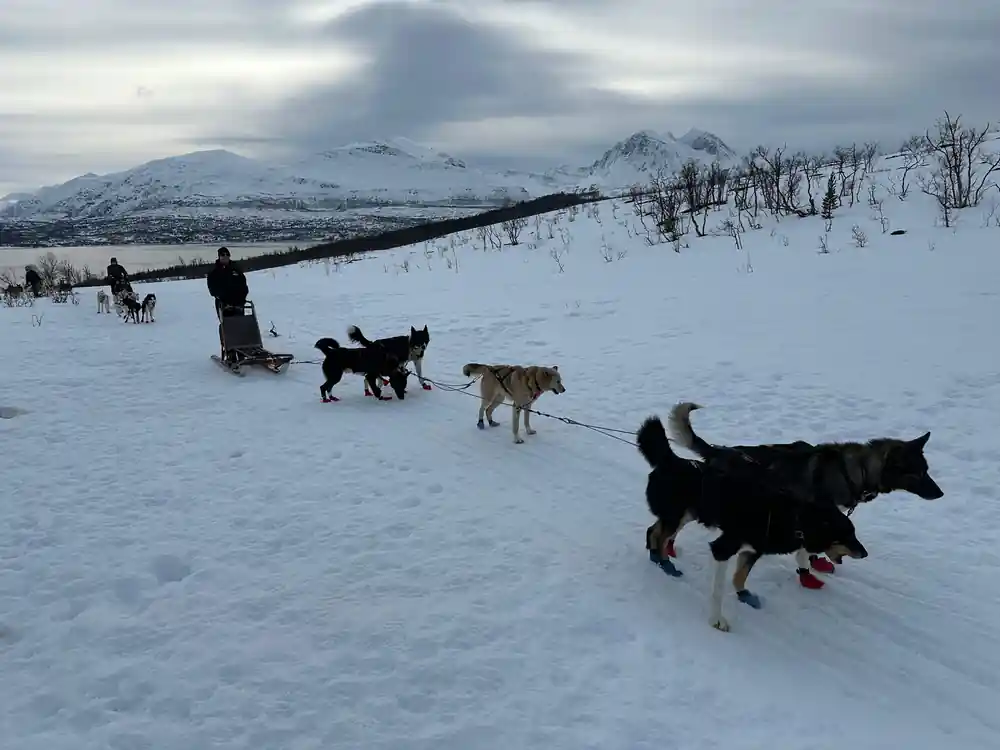
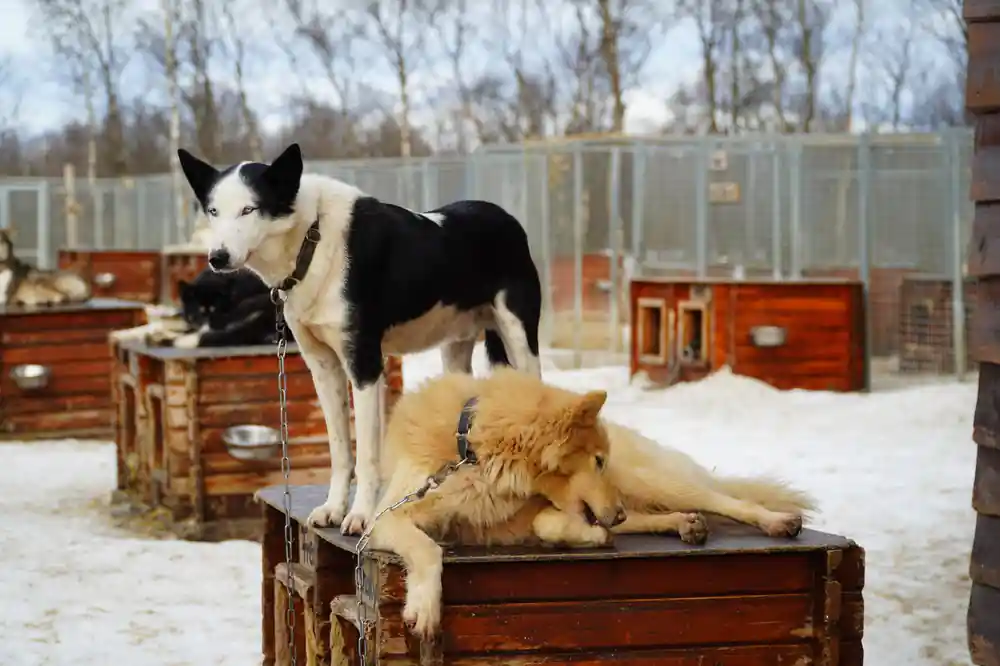
The dogs are built for this in a way you are not. The family at Holmen Husky Lodge has raised and raced Alaskan Huskies bred for endurance, resilience, and heart for over three decades and two generations.[9] Finnmarksløpet is the longest dog-sled race in Europe.[10] Running keeps the team warm while standing around cools them down, which is roughly the reverse of what happens to the person on the sled. A windproof outer layer and a hat that covers your ears do for you what thick fur does for them at rest.
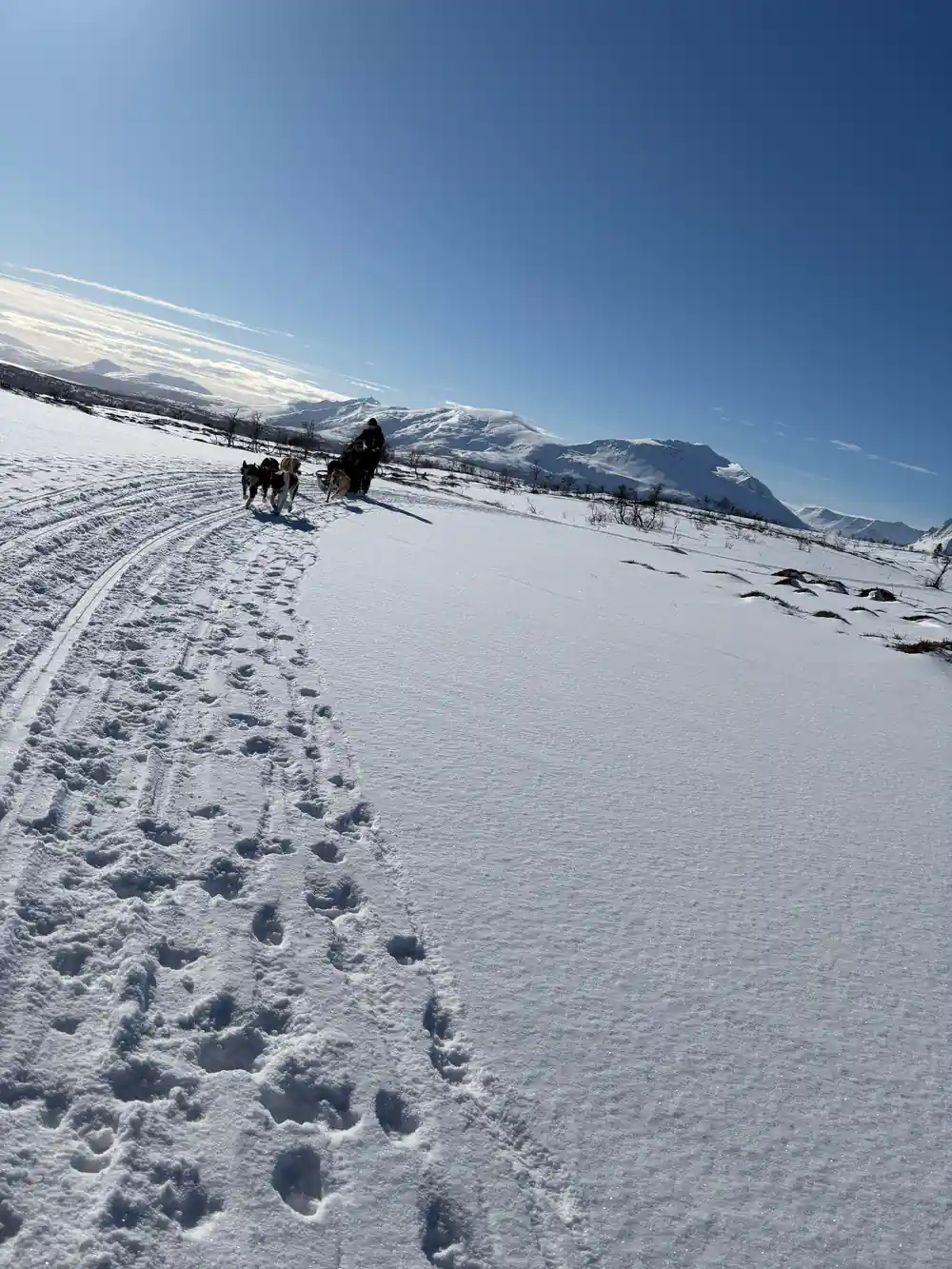
Layers, goggles and dry mittens matter more than any single number on a thermometer.
Frostbite and the first warning signs
Frostbite rarely announces itself. Skin goes cold, then numb, and often pale or waxy white in small patches on cheeks, nose, earlobes, fingertips and toes. A stinging or tingling feeling is an early flag. Numbness is not relief; it means the area has stopped reporting back to you. Because your own face is hard to see under a hood and goggles, check with a partner at each stop and ask them to look at your cheeks, nose and ears. Two sets of eyes beat one pair of cold hands.
If you find a white patch, warm it gently against a gloved hand, a warm layer or skin to skin contact, and tell your guide. Do not rub snow or ice into it, and do not rub the area hard. Rewarming can hurt, and that returning feeling is a good sign. Guides deal with cold hands and cheeks all season long, so saying something early is far easier than spending the second half of the run trying to ignore a face that has gone completely numb.
Eyewear and contact lenses in extreme cold
Goggles do two jobs at sled speed. They block the wind that makes your eyes stream, and they cut the glare that bounces off snow in flat, low light. Sunglasses are fine on a bright, still day, but a sealed goggle is safer once you are moving and snow is in the air. If you wear glasses, choose a goggle with room for them, or a prescription insert, so you are not fumbling with cold fingers on the trail. Keep a spare pair in a pocket close to your body so it stays warm and flexible.
Contact lens wearers often find lenses dry out in cold, moving air. Blink more often than feels natural, carry solution and a case, and consider packing glasses as a backup for the ride home. A balaclava pulled over your nose will fog almost any eyewear, so pick one you can breathe through, or pull the fabric down while you are moving and up again at stops. Small adjustments like these keep your vision clear without leaving skin exposed for long.
from US$351
Self-drive husky sledding from Tromsø, with free cancellation up to 24 hours in advance.[3]
Hand warmers, toe warmers and layers that work
Air-activated hand and toe warmers are light, easy to carry and genuinely useful on a four-hour outing.[3] Shake them to start the reaction, then drop them into a mitten pocket or the top of a boot rather than against bare skin. A pair for hands and a pair for feet, plus a spare, covers most of a cold day outdoors. Disposable models are for one use only. Whichever you choose, store them somewhere you can reach without taking your gloves off in the wind.
Layers matter more than any single accessory. Begin with a thin base layer that moves sweat away from your skin, add a warm mid layer, then a windproof shell. Keep boots roomy, because a tight boot presses the insulation flat and squeezes the blood flow that keeps toes warm. Mittens beat gloves for warmth, with a thin liner pair underneath so you can still use a camera. A hood, a neck gaiter and a hat that covers your ears finish the job. Add a layer before you feel properly cold, not after.
Eating, drinking and warming up
Your body burns fuel to stay warm, so eat a proper meal before departure and carry snacks in a pocket that stays close to your body. Water matters as much in the cold as in the heat, and it is easy to drink far less than you need when your hands are busy holding reins. A thermos of something hot earns its place in your bag. Go easy on alcohol before you ride, since it makes you feel warm while your body is actually losing heat faster than you would like.
Warming up happens in stages. Movement in the yard, helping with the dogs and shifting your weight on the sled all keep blood moving. Between runs there is usually a chance to step inside, hold a hot drink and let your fingers come back to life. Speak up if you are still cold after that, because shivering that will not stop is a signal to get somewhere warm for a while. The self-drive husky sledding adventure has a duration of 4 hours,[3] so the whole outing fits neatly into a day in Tromsø.
Driver versus passenger: who gets colder
If you are driving, your hands and your core carry the load. Gripping a handlebar or a sled frame keeps your fingers curled and your arms still, which is the worst combination for circulation in the cold. Passengers sit lower, move very little and feel the chill climb through their feet and legs instead. Neither seat is automatically warmer; they simply cool in different places, so pack for the role you booked and keep a spare pair of mittens somewhere you can reach without stopping.
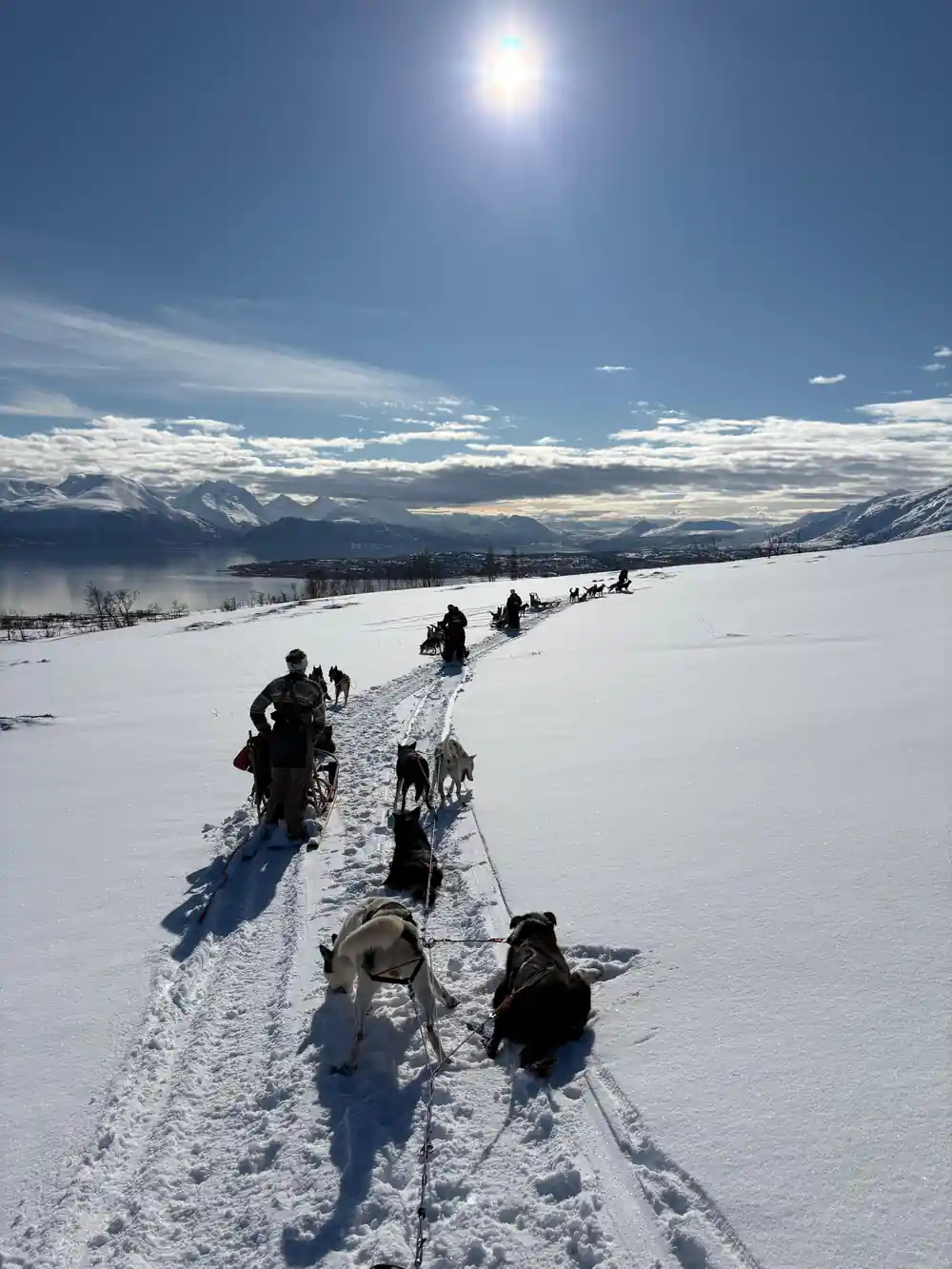
On the self-drive tour from Tromsø the stops are listed as Bus/coach, then Kvaløya, then Bus/coach,[3] and Kvaløya is less than 5 km from central Tromsø.[11] You are never far from the city or a warm vehicle, even on a biting day. An instructor who speaks English travels with the group,[3] so it is easy to ask about hand position, braking and where to tuck cold fingers between runs. Families have a gentler option too: on the Fun and Easy Dog Sledding tour children can join if they are at least 7 years old and accompanied by adults.[12]
How long you are out in the cold
Listed durations for husky sledding tours from Tromsø.[3][4][5][13][14]
From-prices for cold-weather husky sledding
US dollar from-prices.[3][5][15]
When the cold is at its sharpest
Getting ready for the cold
Eat and drink first
Have a proper meal before departure and carry water and snacks in a pocket that stays warm against your body. Use the bathroom before the coach leaves.
Dress in layers
Thin base layer, warm mid layer, windproof shell. Add a hat that covers your ears, a neck gaiter and mittens over thin liner gloves.
Sort your eyewear
Goggles for moving, sunglasses for still days, and a spare pair kept close to your body so the frame stays warm and flexible.
Pack your warmers
Air-activated hand and toe warmers go into mitten pockets and boot tops, never directly against bare skin, with one spare pair in reserve.
Check each other at stops
Look at your partner's cheeks, nose and ears at every stop, and speak up early if any skin looks pale or waxy white.
Take the reins on a cold-weather husky run from Tromsø
from US$351Reserve now & pay later